



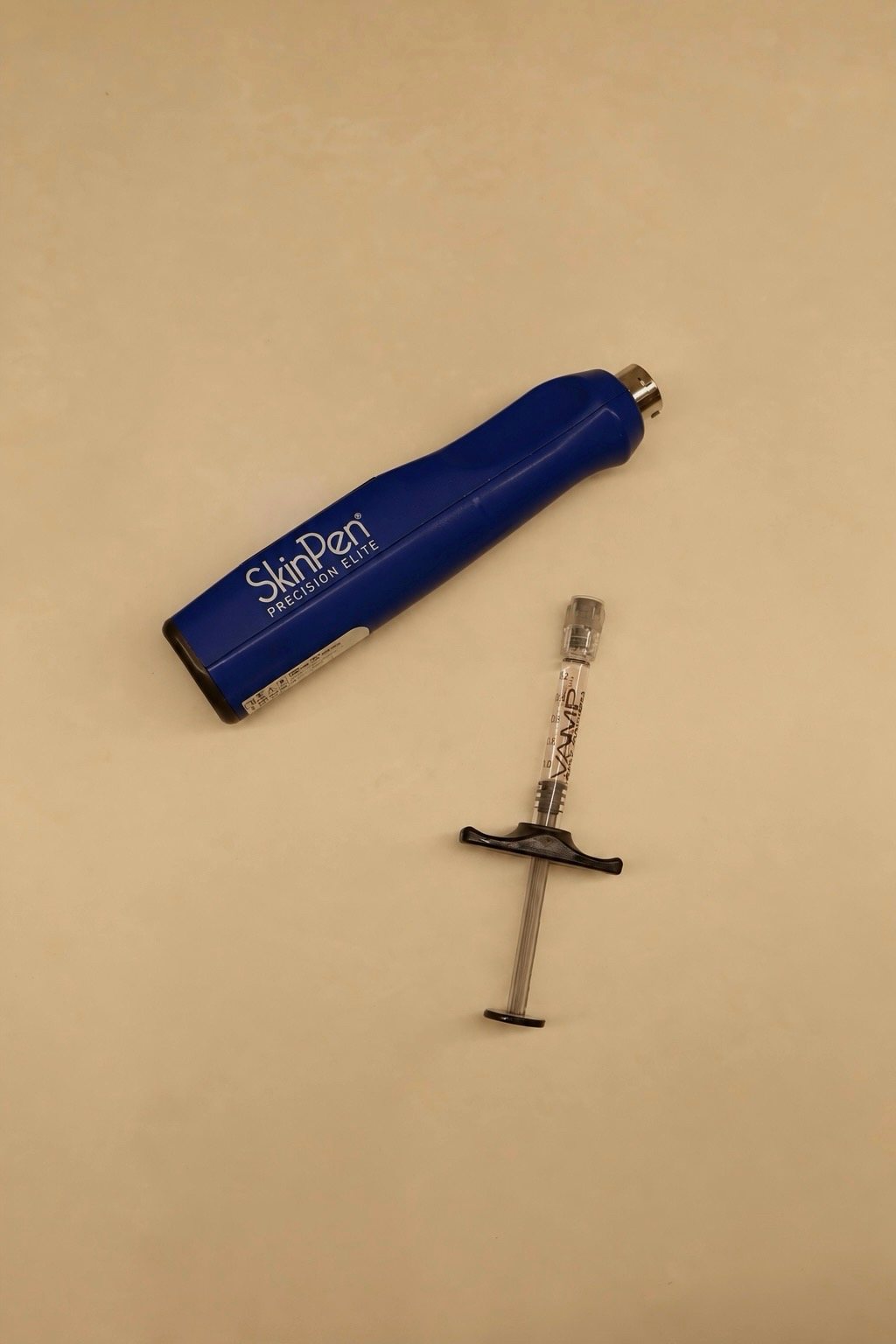
Salmon DNA (PDRN) in Atlanta, GA
Some skin is not asking for volume or for muscle relaxation. It is asking to behave like it used to — to hold water, to settle down, to stop looking thin and irritated. Polynucleotide treatments, widely known as salmon DNA, are a category of regenerative injectable built from purified DNA fragments that act as a repair signal in the dermis. They add no shape and no structure. What they aim at is skin quality, and the honest version of this page includes a regulatory note that anyone considering the treatment in the United States should read before anything else.
The Benefits
A Repair Signal
It acts as a repair and anti-inflammatory signal in the dermis rather than as a material that occupies space, which makes it a skin-quality treatment rather than a shaping one.
Not A Filler
It is not a filler: there is no hyaluronic acid, no cross-linking, and no capacity to create contour — so there is no risk of an overfilled or altered appearance.
Hydration From Within
Longer polynucleotide chains bind water within the dermis, which is associated with the suppleness and hydration patients most commonly describe.
Calms As It Builds
The proposed anti-inflammatory action means it is discussed for skin that is reactive and irritated as well as skin that is simply thin, addressing two problems through one mechanism.
Thin, Delicate Skin
It is used in areas where thin, delicate skin makes volumizing products a poor choice — beneath the eyes, on the neck, and on the décolleté.
Gradual And Cumulative
Change accumulates gradually across a course of treatment rather than appearing at once, which suits anyone who does not want a visible before-and-after moment.
Series-Based
It is delivered as a series with sessions spaced weeks apart, so the plan is transparent from the outset rather than open-ended.
Read The Regulatory Note
The material is metabolized by the body over weeks, so nothing is left behind long-term — which also means the effect is temporary and maintenance is part of the plan.
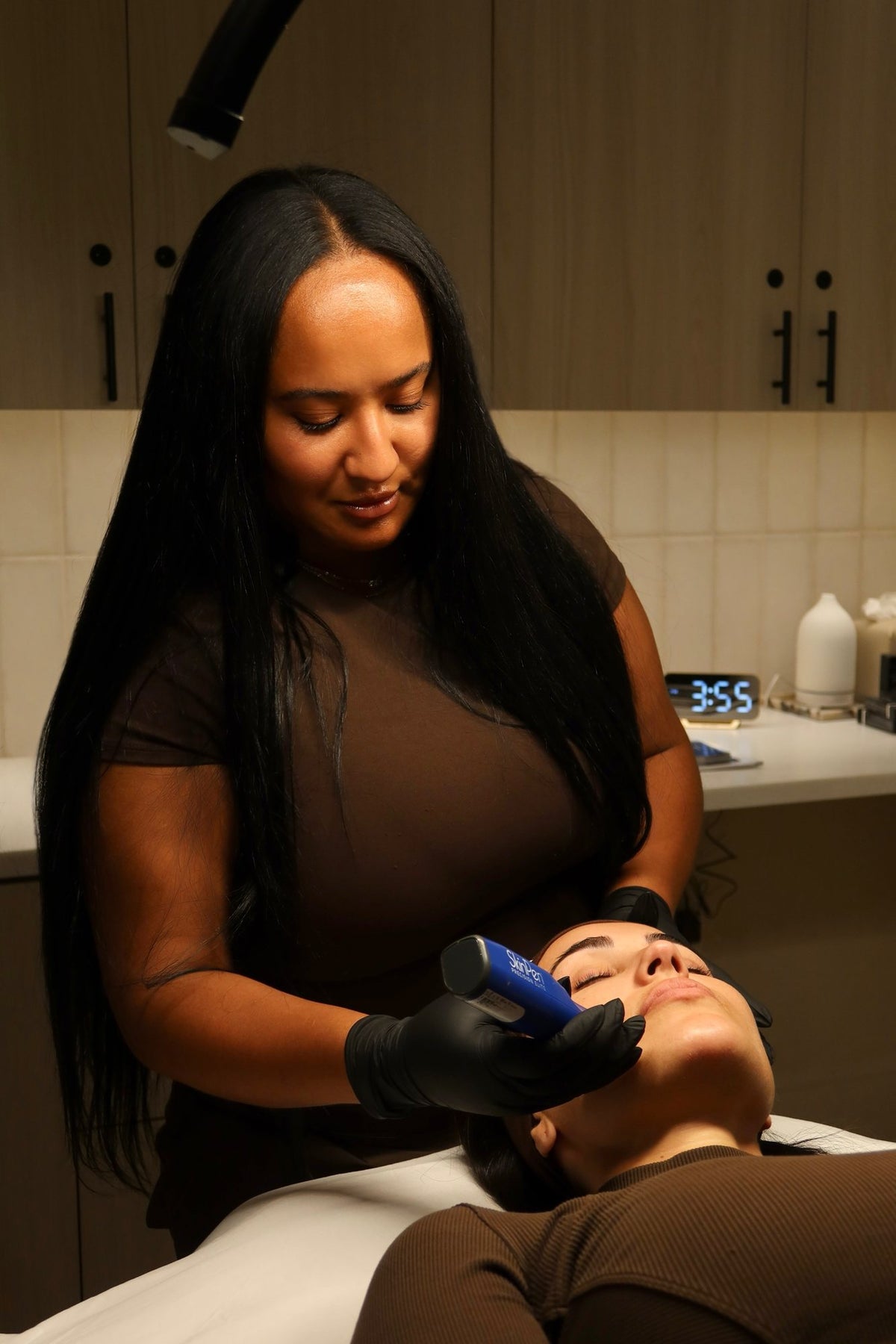
What Salmon DNA (PDRN) Is
Polynucleotides are chains of nucleotides — the building blocks of DNA. In this context they are extracted from the sperm cells of salmon or trout, then put through an extensive purification process that removes proteins, peptides, and other cellular material, leaving highly purified DNA fragments. The reason fish DNA is used is not marketing: it has a high degree of homology with human DNA, which allows it to be recognized by human cells, and it is available from a well-controlled source. The purification step is what makes the material biologically usable and is the reason the immune reaction people intuitively expect does not generally occur.
Two related terms get used somewhat loosely. PDRN — polydeoxyribonucleotide — refers to shorter fragments and is described primarily as a receptor-mediated agent. Polynucleotides, often abbreviated PN, refers to longer chains that behave additionally as a physical scaffold and water-binding gel within the tissue. Commercial products differ in fragment length, concentration, and formulation, which means they are not interchangeable and produce somewhat different effects. Anyone comparing options should ask specifically which is being used.
What these preparations are not is filler. They contain no hyaluronic acid, they are not cross-linked, and they are not designed to occupy space or create contour. If a treatment is being described to you as adding volume, lifting a fold, or building a jawline, that is a different product. Polynucleotides work at the level of the skin — hydration, texture, thickness, and inflammation — and the visible change is correspondingly subtler and slower.
The regulatory position needs stating directly. Injectable polynucleotide and PDRN products have been used widely in South Korea and parts of Europe, where specific branded preparations are registered for aesthetic use. In the United States, they are not FDA-approved for injectable aesthetic indications. That is a meaningful distinction rather than a technicality: it means these preparations have not been through the FDA's review for safety and effectiveness in this application, and it means the sourcing and regulatory status of any product being offered is a fair and important question to ask directly. Ask what product is being used, where it is sourced, and what its regulatory status is. A clear answer is reasonable to expect, and vagueness is informative.
How It Works
The proposed mechanism has two components, and different products lean on them to different degrees. The first is receptor-mediated. PDRN fragments are thought to act as an agonist at the adenosine A2A receptor, which is present on fibroblasts, immune cells, and endothelial cells. Activation of that receptor is associated with a shift away from inflammatory signaling and toward tissue repair — reduced production of inflammatory cytokines, increased production of growth factors including vascular endothelial growth factor, and stimulation of angiogenesis, the formation of small blood vessels. In tissue that is chronically low-grade inflamed, which describes a great deal of aged and sun-exposed skin, damping that signaling is itself part of the effect.
The second component is a salvage pathway. Purified DNA fragments are broken down within the tissue into nucleosides and nucleotides, which cells can take up and reuse to build their own nucleic acids. This is described as sparing cells the metabolic cost of synthesizing those building blocks from scratch, freeing capacity for the work of producing collagen and extracellular matrix. This part of the mechanism is more inferential than the receptor pathway and is best treated as a working model rather than an established fact.
Alongside both, longer polynucleotide chains behave as a hydrophilic scaffold within the dermis. They bind and hold water, which contributes to the immediate suppleness patients often report, and they provide a temporary physical matrix that fibroblasts can populate and work within. That scaffolding effect is biophysical rather than volumizing — it supports the tissue rather than expanding it — and it is temporary, since the material is metabolized over weeks.
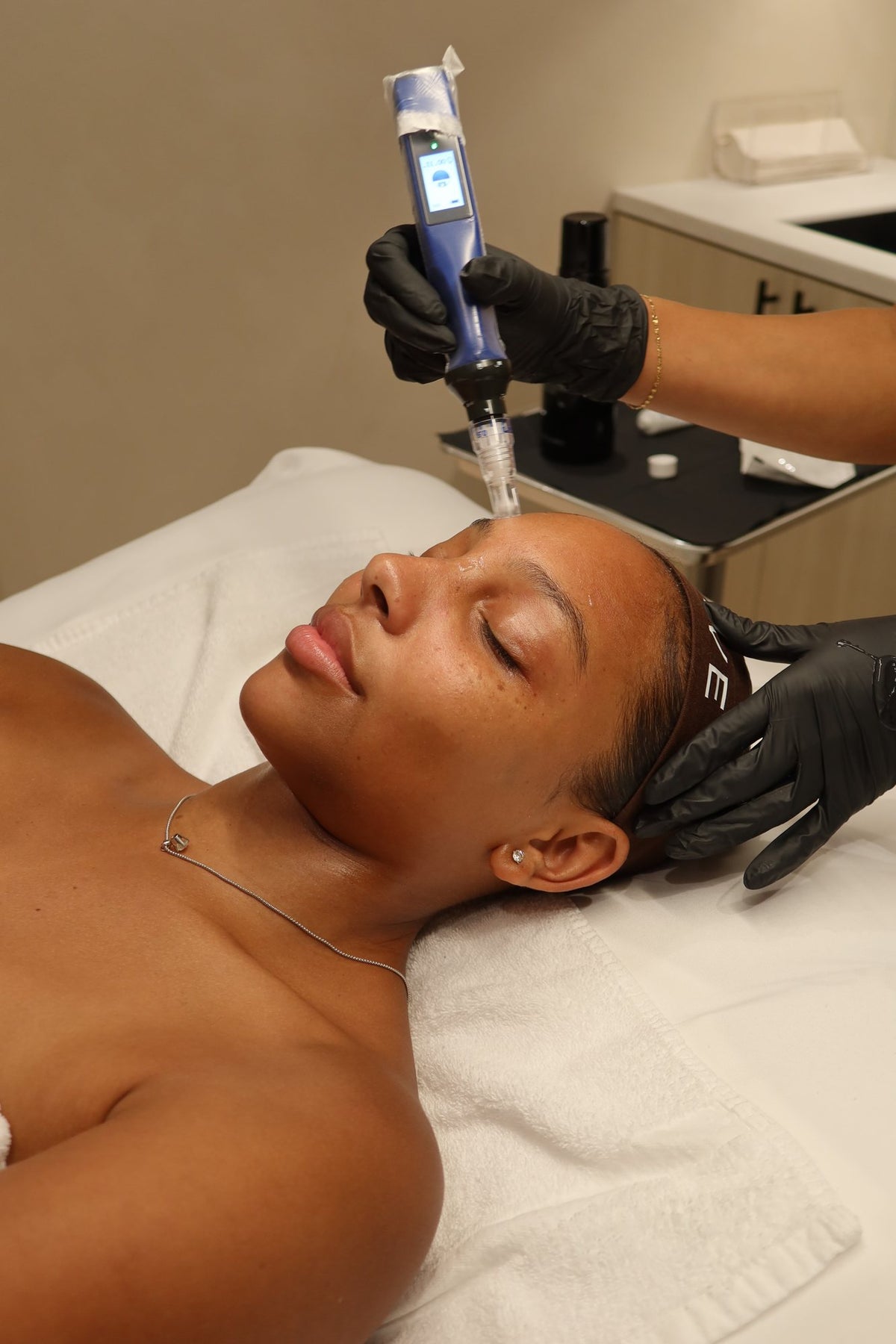
Delivery is by multiple small superficial injections placed across the treatment area in a grid or linear pattern, at a depth that puts the material in the dermis rather than beneath it. Small blebs or papules at each point immediately after treatment are expected and are a feature of the technique rather than a complication; they settle over hours to a day. Because the material is metabolized and because collagen remodeling is slow, the treatment is delivered as a course of sessions spaced weeks apart, with the effect building across the series rather than arriving after the first appointment.

What Salmon DNA (PDRN) Treats
Thin, crepey, or fragile skin
The clearest indication. Skin that has lost thickness and resilience — on the face, the neck, or beneath the eyes — is the target this category of treatment is most associated with.
Dehydrated, dull skin that does not hold moisture
Polynucleotides bind water within the dermis and are reported to improve the skin's own capacity to retain it. The effect is a quality of suppleness rather than a plumping of contour.
Fine lines and early textural change
Superficial lines associated with thinning dermal collagen may soften as the dermis is supported. Deep static folds and dynamic expression lines are different problems needing different treatments.
Under-eye skin quality
A frequently discussed application, where the skin is thinnest and where an approach that adds no volume has genuine appeal. The area has its own risks and its own assessment, and it should be discussed specifically rather than assumed.
Reactive, irritated, or inflamed skin
The anti-inflammatory component of the proposed mechanism is part of why this category is discussed for skin that runs hot and reactive. It is not a treatment for a diagnosed inflammatory skin disease, which needs dermatologic management.
Skin quality on the neck and décolleté
Areas with thin skin, limited subcutaneous support, and a poor tolerance for anything that adds bulk. A quality-focused approach suits them, though these regions heal more slowly than the face.
Post-procedure recovery and skin resilience
Polynucleotides are sometimes sequenced around resurfacing or needling with the intention of supporting recovery. Any such plan is a clinical judgment about timing, not something to arrange independently.
Skin quality alongside structural treatment
Where volume or contour is being addressed separately, this category is used to work on the skin envelope itself. Treating quality and structure as two problems generally produces a better result than asking one product to do both.
Is Salmon DNA (PDRN) Right For You?
You May Be A Good Candidate If
- Adults whose primary concern is skin quality — thinness, crepiness, dehydration, dullness, or fine texture — rather than volume loss or facial contour.
- People who want to avoid introducing a volumizing product, either by preference or because the area in question tolerates bulk poorly.
- People with reactive, easily irritated skin who are looking for an approach that calms as well as builds.
- People with realistic expectations about magnitude and pace. This is a subtle, cumulative, quality-level change assessed across a course rather than after a session.
- People able to commit to a series of appointments spaced weeks apart, and to maintenance afterward, since the material is metabolized and the effect is temporary.
- People with no allergy to fish or seafood, since the material is derived from salmon or trout DNA.
- People willing to ask direct questions about what product is being used, where it is sourced, and what its regulatory status is — and who want a clear answer before proceeding.
- People in generally good health, with any chronic condition well controlled, as assessed at a medical consultation.
This May Not Be Right For You If
- Anyone with a known allergy to fish or seafood. The material is derived from salmon or trout DNA, and while purification removes protein, this is not a risk to take casually — disclose it and take a no.
- Anyone with a known hypersensitivity to any component of the specific preparation being used.
- Anyone with an active infection at the treatment site, including active acne cysts, an open lesion, or a herpes simplex outbreak, until it has resolved.
- Anyone with an active inflammatory or autoimmune skin condition affecting the treatment area, without input from the physician managing it.
- Anyone with an autoimmune disease that is active or poorly controlled, or anyone on immunosuppressive therapy, without clearance from their treating physician.
- Anyone who is pregnant, trying to conceive, or breastfeeding. Elective aesthetic procedures are generally deferred, and safety data in this context is absent.
- Anyone with a bleeding or clotting disorder, or on anticoagulant therapy that cannot be safely paused — a decision belonging to the prescribing clinician alone.
- Anyone with an active or recent malignancy without clearance from their treating physician.
- Anyone with a skin cancer or undiagnosed lesion at the intended treatment site.
- Anyone expecting volume restoration, a lifted contour, or a change in facial shape. This category of treatment does not do those things.
- Anyone who is not comfortable proceeding with a product that is not FDA-approved for injectable aesthetic use in the United States. That is an entirely reasonable position to take, and it should be respected rather than argued with.
The regulatory status of this treatment makes the consultation more important than usual, not less. Ask directly what product is being used, where it is sourced, and what its regulatory status is in the United States — and expect a clear, specific answer rather than reassurance. A licensed provider should also take a full medical history, ask specifically about fish and seafood allergy, autoimmune conditions, pregnancy, bleeding disorders, and current medications, and be candid about what this treatment can and cannot achieve. If any part of the answer is vague, that is information worth acting on.
How Salmon DNA (PDRN) Compares
Polynucleotide treatments sit alongside several other skin-quality approaches, and they are frequently confused with filler because they are injected. The table sets out what each actually does.
| Feature | Polynucleotides / PDRN | Hyaluronic acid skin booster | PRP | Hyaluronic acid filler |
|---|---|---|---|---|
| What it is | Purified DNA fragments derived from salmon or trout | Uncross-linked or lightly cross-linked hyaluronic acid | A concentrate of your own platelets from a blood draw | Cross-linked hyaluronic acid gel designed to hold shape |
| Primary goal | Skin quality — thickness, hydration, texture, and calming inflammation | Skin hydration and quality | Skin quality via growth-factor signaling | Volume, structure, and contour |
| Proposed mechanism | Adenosine A2A receptor signaling, nucleotide salvage, and a hydrophilic scaffold in the dermis | Binds water directly and provides a hydrating matrix | Concentrated growth factors signal fibroblasts to produce collagen | Physically occupies space and draws in water |
| Source of material | Purified fish-derived DNA | Manufactured hyaluronic acid | Autologous — entirely your own blood | Manufactured hyaluronic acid, cross-linked |
| Adds volume | No | No, beyond a hydration effect | No | Yes — that is its purpose |
| Typical course | A series of sessions spaced weeks apart, then maintenance | A series of sessions, then maintenance | A series of sessions, then maintenance | A single appointment, repeated when the product resorbs |
| Reversibility | Not reversible; the material is metabolized over weeks | Reversible with hyaluronidase | Not reversible, but nothing was added to remove | Reversible with hyaluronidase |
| US regulatory status for this use | Not FDA-approved for injectable aesthetic use | Specific products are FDA-approved for defined indications | Off-label; PRP is not FDA-approved for aesthetic use | Several products are FDA-approved for specific facial indications |
These approaches overlap in intent and are sometimes combined or sequenced. Which one is appropriate — and whether any of them is — depends on your skin, your goals, your medical history, and, in this case, on how you weigh the regulatory position. That last consideration is genuinely yours to make, and a provider should give you the information to make it rather than making it for you.
What To Expect
Before The Treatment
- A consultation and skin assessment, including a full medical history, all current medications and supplements, and specific questions about fish and seafood allergy, autoimmune conditions, pregnancy, bleeding disorders, and any prior injectable treatment in the area.
- A direct conversation about what product is being used, where it is sourced, and its regulatory status in the United States. Ask if it is not volunteered.
- A discussion of what the treatment can and cannot do — specifically that it is not a filler, adds no volume, and produces gradual rather than immediate change.
- Guidance on pausing blood-thinning medications and supplements such as aspirin, non-steroidal anti-inflammatory drugs, fish oil, and vitamin E, where your prescribing clinician confirms it is safe to do so. Never stop a prescribed medication on your own.
- Advice to avoid alcohol for a day or two beforehand, since it increases the likelihood of bruising.
- If you have a history of cold sores and the treatment area is near the mouth, a prophylactic antiviral prescription may be appropriate.
- Instructions to arrive with clean skin, free of makeup and topical products.
Results: Onset And How Long It Lasts
Change is gradual and cumulative, and it is a change in skin quality rather than in facial shape. Patients most commonly describe skin that feels more hydrated and supple within the first weeks, followed over the course of a series by improvement in texture, a sense of the skin being less thin and fragile, and a calmer, less reactive quality. Because the material is metabolized within weeks and because collagen remodeling is slow, the effect is assessed at the end of a course rather than after any single session. What this treatment does not produce is volume, lift, contour, or a change in facial structure — nothing about the mechanism supports those, and any description promising them is describing a different product. Response varies considerably between individuals, and it varies with the specific preparation used, since fragment length, concentration, and formulation differ between products. This page publishes no numeric outcome figures: the available literature is largely from outside the United States, uses varied products and protocols, and averages drawn from it would not tell you anything reliable about your own skin. The effect is also temporary — skin continues to age and the material is fully metabolized — so maintenance is part of the plan rather than an afterthought.
During The Treatment
- The skin is cleaned and a topical anesthetic is usually applied and left in place for a period beforehand, since the treatment involves many small injections.
- The preparation is injected through a fine needle at multiple points across the treatment area, in a grid or linear pattern, placed superficially in the dermis rather than deeper.
- Expect many small injections rather than a few. The number depends on the area being treated.
- The sensation is generally described as small stings with a brief pressure or stinging as the fluid goes in. Most people find it manageable with numbing, and the more delicate areas are reported as least comfortable.
- Small raised blebs or papules appear at each injection point. These are expected, are a feature of the technique rather than a complication, and settle over hours to a day.
- The treatment itself is relatively quick; the appointment is mostly numbing time.
- Afterward the area will look pink and slightly swollen, with visible bumps that flatten over the following hours.
How Often, And Why
Polynucleotide treatment is planned as a course rather than as a single appointment. A common approach is a series of sessions spaced a few weeks apart — often three or four — with the effect building across the course as each round's signal compounds and as collagen laid down after earlier sessions matures. The exact number and spacing depends on the preparation being used, the area being treated, and the response, and it varies between protocols.
Maintenance is expected rather than optional. The material is fully metabolized within weeks, and the underlying process it is intended to influence — dermal thinning, chronic low-grade inflammation, declining collagen — continues regardless. Maintenance sessions are typically scheduled at intervals of several months, and they are intended to sustain a gain rather than to build a further one.
Because different products in this category vary in fragment length, concentration, and formulation, protocols are not transferable between them. If you have had this treatment elsewhere, the specific product used matters when planning a course, and it is worth knowing rather than assuming continuity. Where polynucleotides are being sequenced alongside other treatments — resurfacing, needling, or structural work — the ordering and spacing is planned at consultation, since combining procedures too closely can overwhelm the skin's capacity to heal.
Afterward
- Expect small raised bumps at the injection points for several hours, occasionally into the next day. These are normal and do not need intervention.
- Expect redness, mild swelling, and tenderness for a day or two.
- Bruising is common at injection points and may take several days to a week to fade, particularly in thin-skinned areas.
- Follow the specific interval your provider gives you before washing the area, applying skincare, or wearing makeup.
- Avoid active skincare — retinoids, exfoliating acids, vitamin C, and physical scrubs — until you are cleared to resume.
- Avoid strenuous exercise, saunas, steam rooms, hot tubs, and swimming pools for the period specified, since heat and sweat aggravate freshly treated skin and pools carry an infection risk while injection points are healing.
- Protect the treated area from sun and use broad-spectrum sunscreen once you are cleared to apply products.
- Avoid pressing, massaging, or manipulating the area unless specifically instructed to do so.
- Do not judge the result after a single session. This treatment is designed as a course, and the effect accumulates across it.
- Report anything that worsens rather than settles after the first few days — spreading redness, increasing pain, warmth, pus, or fever — promptly.

How Much Does Salmon DNA (PDRN) Cost in Atlanta, GA?
- What it is priced by: Per treatment
- Typical cost: From $800
The figure above is a starting point, not a quote. What you pay depends on how much product your anatomy actually needs, which is a clinical judgement made in person. Ask at your consultation.
Side Effects And Downtime
Common And Expected
- Small raised bumps or papules at each injection point, expected as part of the technique, settling over hours to a day
- Redness in the treated area for a day or two
- Mild swelling
- Bruising at injection points, sometimes lasting several days to a week, particularly in thin-skinned areas
- Tenderness or soreness to the touch
- A tight or full sensation in the treated area
- Itching during healing
- Temporary lumpiness that can be felt more than seen, settling as the material is metabolized
When To Seek Care
- Signs of infection: increasing rather than decreasing pain, spreading redness, warmth, swelling that worsens after the first few days, pus or discharge, or fever.
- Signs of an allergic reaction — hives, widespread rash, swelling of the face, lips, tongue, or throat, wheezing, or difficulty breathing or swallowing. Call 911.
- Skin that becomes mottled, dusky, white, or blotchy, or severe pain out of proportion to what you were told to expect. Seek assessment immediately.
- Any change in vision or severe pain around the eye if treatment was performed in that region. Seek emergency care immediately.
- A lump or nodule that persists beyond the settling period you were told to expect, or that grows, hardens, or becomes painful.
- Any area that blisters, ulcerates, or fails to heal.
- A cold sore outbreak, which should be treated promptly to reduce the risk of scarring in freshly treated skin.
Less Common, But Important To Know
- Allergic or hypersensitivity reaction. The material is derived from fish DNA and purified extensively, but anyone with a fish or seafood allergy should not have this treatment, and a reaction is possible to any injected preparation.
- Infection at an injection site — uncommon with sterile technique, but a genuine risk whenever the skin barrier is broken. Increasing pain, spreading redness, warmth, pus, or fever all warrant prompt medical attention.
- Persistent nodules or lumps lasting beyond the expected settling period, which should be assessed rather than waited out indefinitely.
- Prolonged swelling, particularly in thin-skinned regions such as beneath the eyes.
- Reactivation of herpes simplex producing a cold sore, in anyone with a history of it.
- Post-inflammatory hyperpigmentation — temporary darkening of treated skin — more likely in deeper skin tones and with inadequate sun protection afterward.
- Granulomatous or delayed inflammatory reaction, which is uncommon but reported with injectable products generally.
- Vascular complication from injection, which is rare with superficial placement of an aqueous preparation but is a recognized risk of any injection into facial tissue. Skin that becomes mottled, dusky, or white, or severe pain out of proportion to expectation, needs immediate assessment.
- Scarring, which is rare with appropriate technique but possible any time the skin is injured.
- No improvement at all, which is a real outcome and one an honest provider will have raised before you started.
Downtime
Downtime is short but visible in the first hours. The small raised bumps at each injection point are the distinctive feature of this treatment immediately afterward — they are expected, they are part of how it is delivered, and they flatten over the following hours, occasionally lingering into the next day. Beyond that, expect redness and mild swelling for a day or two and tenderness to the touch. Bruising at injection points is common and can take several days to a week to fade, more so in thin-skinned areas such as beneath the eyes or on the neck. Most people return to ordinary activity immediately, but the bumps make this a poor choice for the few hours before somewhere you need to be. Makeup waits for the interval your provider specifies. Exercise, saunas, steam, and swimming come back on the timeline you are given. The practical planning point is the first day, not the first week.
Who Performs This Treatment

Helen Zhang
Master Injector · Neuromodulators, filler, biostimulators and facial balancingHelen is one of Alcove's master injectors. Your appointment starts with an assessment of your face and your goals, and your plan is built from that conversation rather than from a menu.

Xing Xing Li
Master Injector · Neuromodulators, filler, biostimulators and facial balancingXing Xing is Alcove's master injector. Your appointment starts with an assessment of your face and your goals, and your plan is built from that conversation rather than from a menu.
Salmon DNA (PDRN) FAQs
No, and this is the most common misunderstanding. Filler is a cross-linked hyaluronic acid gel designed to occupy space and create contour. Polynucleotides contain no hyaluronic acid, are not cross-linked, and are not designed to add volume. They work at the level of skin quality — hydration, thickness, texture, and inflammation. If someone is describing this treatment as lifting or shaping, they are describing something else.
Injectable polynucleotide and PDRN products are not FDA-approved for aesthetic use in the United States, though specific branded preparations are registered for aesthetic use in South Korea and parts of Europe. That distinction is meaningful rather than technical: it means these preparations have not been through the FDA's review in this application. Ask directly what product is being used, where it is sourced, and what its regulatory status is — and expect a specific answer.
No. Anyone with a known allergy to fish or seafood should not have this treatment. The material is derived from salmon or trout DNA, and while the purification process removes proteins and peptides, this is not a risk worth taking on the strength of a manufacturing step. Disclose the allergy at consultation and expect the answer to be no.
They are expected, and they are a feature of how the treatment is delivered rather than a complication. The preparation is injected superficially at many small points, and each point leaves a small raised bleb that flattens over the following hours, occasionally lingering into the next day. If a bump persists well beyond that, have it assessed rather than waiting it out.
A course is standard — commonly three or four sessions spaced a few weeks apart — with maintenance afterward at intervals of several months. The exact number and spacing depends on the product being used, the area treated, and how you respond. A single session is not a plan, and the effect is assessed across the course rather than after the first appointment.
Both are regenerative treatments aimed at skin quality rather than volume, and both are delivered as a series. The difference is the material: PRP is made from your own blood, prepared at the visit, and works through concentrated growth factors. Polynucleotides are purified fish-derived DNA fragments, supplied as a manufactured product, and are proposed to work through receptor signaling, nucleotide salvage, and a hydrating scaffold. PRP has no allergy consideration; polynucleotides do.
It involves many small injections rather than a few, so most people describe a series of small stings with a brief pressure sensation as the fluid goes in. Topical numbing is generally applied and left in place beforehand, which makes it comfortable for most people. More delicate areas — beneath the eyes, around the mouth — are usually reported as least comfortable.
Not permanently. The material is fully metabolized within weeks, and the underlying process — dermal thinning, declining collagen, accumulated sun exposure — continues regardless. Maintenance at intervals of several months is part of the plan rather than an upsell, and it is intended to hold a gain rather than build further on it.
Hydration and suppleness are often described within the first weeks. The changes in texture and skin thickness that people are usually after accumulate more slowly, across the course of treatment, and are assessed at the end of a series rather than after a single session. Nothing about this treatment produces an immediate visible transformation, and any description suggesting otherwise is inaccurate.
It is frequently discussed for that area, and the appeal is real — the skin there is thinnest, and a treatment that adds no volume avoids the specific problems filler can create in the region. That said, the under-eye has its own anatomy, its own risks, and a greater tendency to bruise and swell. It should be assessed and discussed specifically rather than folded into a general facial plan.
No. Products differ in fragment length, concentration, and formulation, which means they behave differently and are not interchangeable. Shorter-fragment PDRN preparations and longer-chain polynucleotide preparations are described as emphasizing different aspects of the mechanism. If you have had this treatment before, the specific product used is worth knowing rather than assuming.
Frequently, and where skin quality and facial structure are both concerns, treating them separately generally produces a better result than asking one product to do both. Polynucleotides are also sometimes sequenced around resurfacing or needling. The ordering and spacing matter, since combining procedures too closely can overwhelm the skin's capacity to heal, and that sequencing is planned at consultation.
It is not a first-line treatment for atrophic acne scarring, which is generally addressed with modalities that remodel the scar itself — needling, resurfacing, or subcision depending on the scar type. Polynucleotides are sometimes included in a broader plan for the skin quality around scarring rather than for the scars themselves. Expect a proper assessment of scar type before any plan is proposed.
Pairs Well With


Book Your Consultation
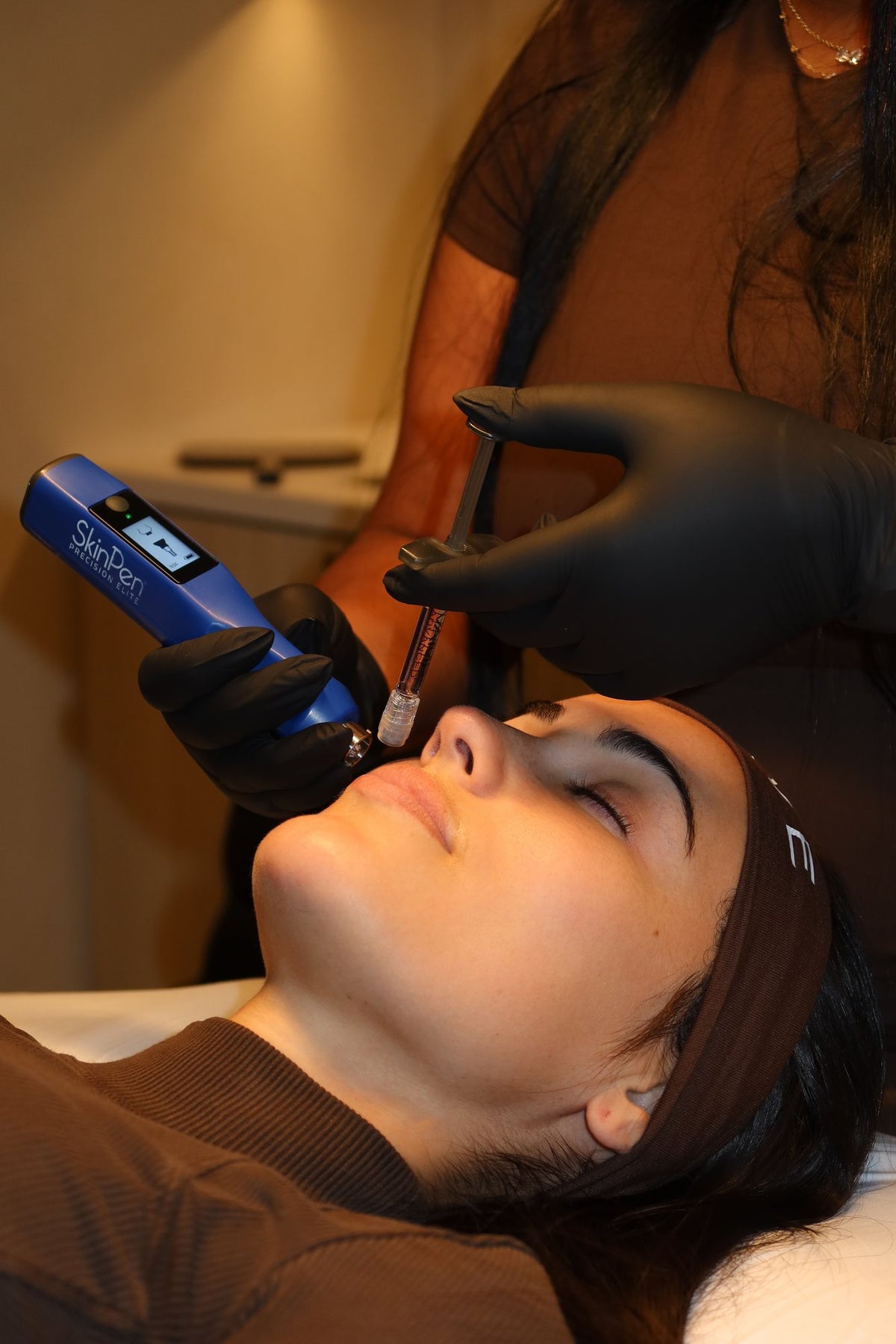
A consultation is a conversation about your face, not a sales appointment. Bring your questions about Salmon DNA (PDRN) and your medical history, and leave with an honest answer about whether it is the right treatment for you.