



PRP (facial rejuvenation) in Atlanta, GA
Some skin does not need volume added to it. It needs to behave better — to hold light more evenly, to recover faster, to look less tired at the end of a long week. Platelet-rich plasma is a treatment built entirely from your own blood, concentrated and returned to the skin to prompt its own repair machinery. Nothing synthetic is introduced and nothing is added for shape. It is a slow, cumulative treatment rather than an immediate one, and the honest framing matters: the biology is well described, while the aesthetic evidence is still developing.
The Benefits
Your Own Blood
The entire preparation comes from your own blood, so there is no donor material, no synthetic implant, and no possibility of an allergic reaction to a foreign substance.
Growth Factors, Concentrated
Concentrating platelets concentrates the growth factors they carry — the same signaling proteins the body uses to coordinate repair after an injury.
Builds Rather Than Fills
It works by prompting your own fibroblasts to produce collagen and elastin, so any improvement is your own tissue rather than an introduced material occupying space.
Texture And Tone
The reported effects are on skin quality — texture, tone, evenness, and light reflection — which is a different category of improvement from what filler or a neuromodulator provides.
Pairs With Microneedling
It combines naturally with microneedling, where the micro-channels give the preparation a route past the skin barrier and the needling itself supplies the repair signal.
No Filler Look
There is no risk of an overfilled or altered appearance, because nothing is being added for shape and no volume is being placed.
Gradual By Design
Change accumulates gradually over months as new collagen matures, which suits anyone who does not want a visible before-and-after moment.
Honest About Evidence
The mechanism is well characterized, though aesthetic use remains off-label and published results vary considerably with preparation method — a limitation worth knowing before you start rather than after.
What PRP (facial rejuvenation) Is
Platelet-rich plasma is a concentrate made from a small sample of your own blood. The sample is drawn the same way it would be for routine laboratory work, then spun in a centrifuge, which separates it by density into red cells, a plasma layer, and a narrow band where platelets collect. That platelet-enriched plasma fraction is drawn off and used as the treatment. Because the entire preparation originates in your body and is returned to it within the same visit, there is no donor material, no synthetic filler, and no risk of an allergic reaction to a foreign substance.
Platelets are best known for clotting, but that is only half of what they do. They also carry storage compartments called alpha granules, packed with signaling proteins — platelet-derived growth factor, transforming growth factor beta, vascular endothelial growth factor, epidermal growth factor, and insulin-like growth factor among them. When platelets are activated at a site of injury, those granules release their contents and coordinate the repair response: recruiting cells, prompting new collagen, and encouraging the formation of small blood vessels. Concentrating platelets concentrates that signal.
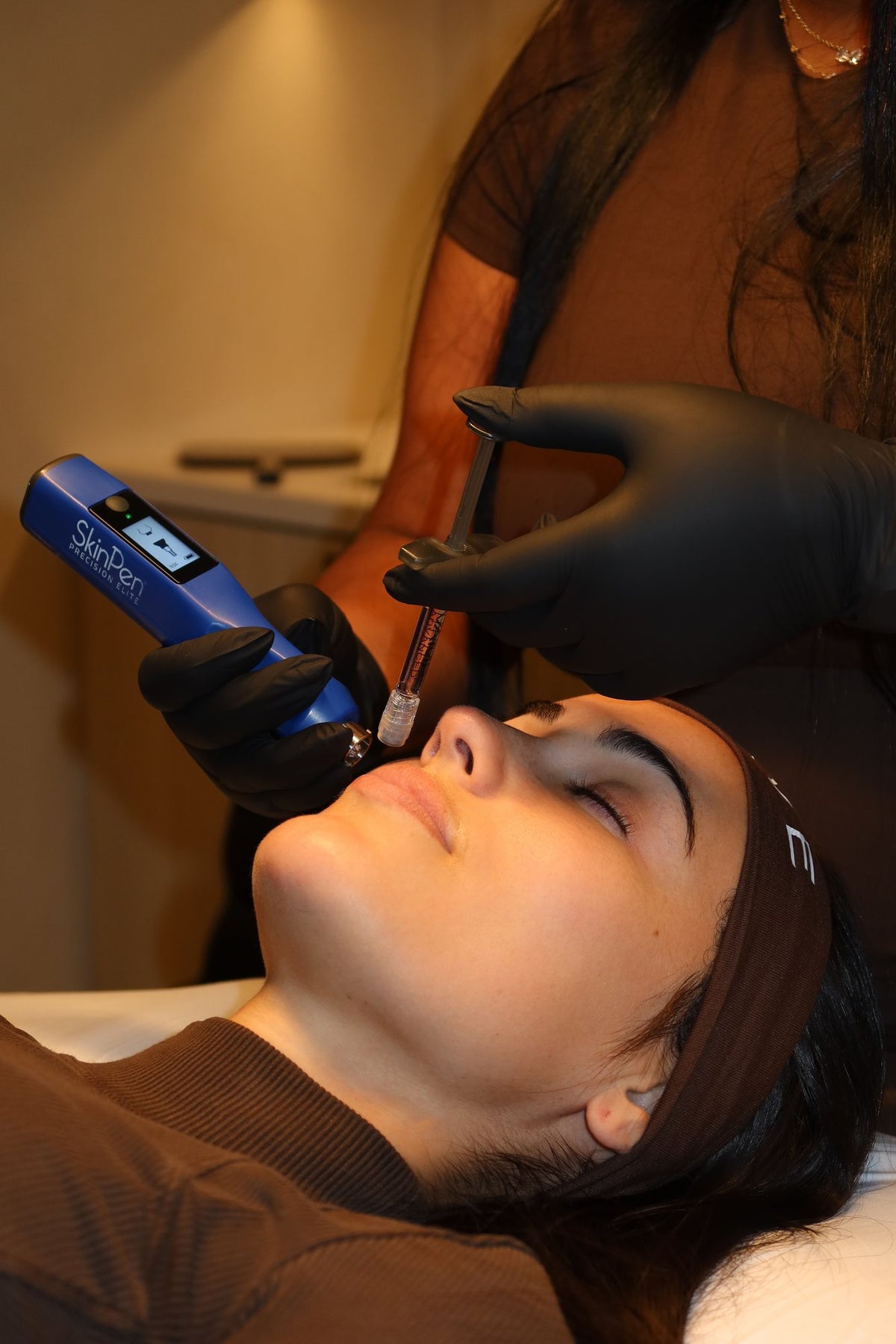
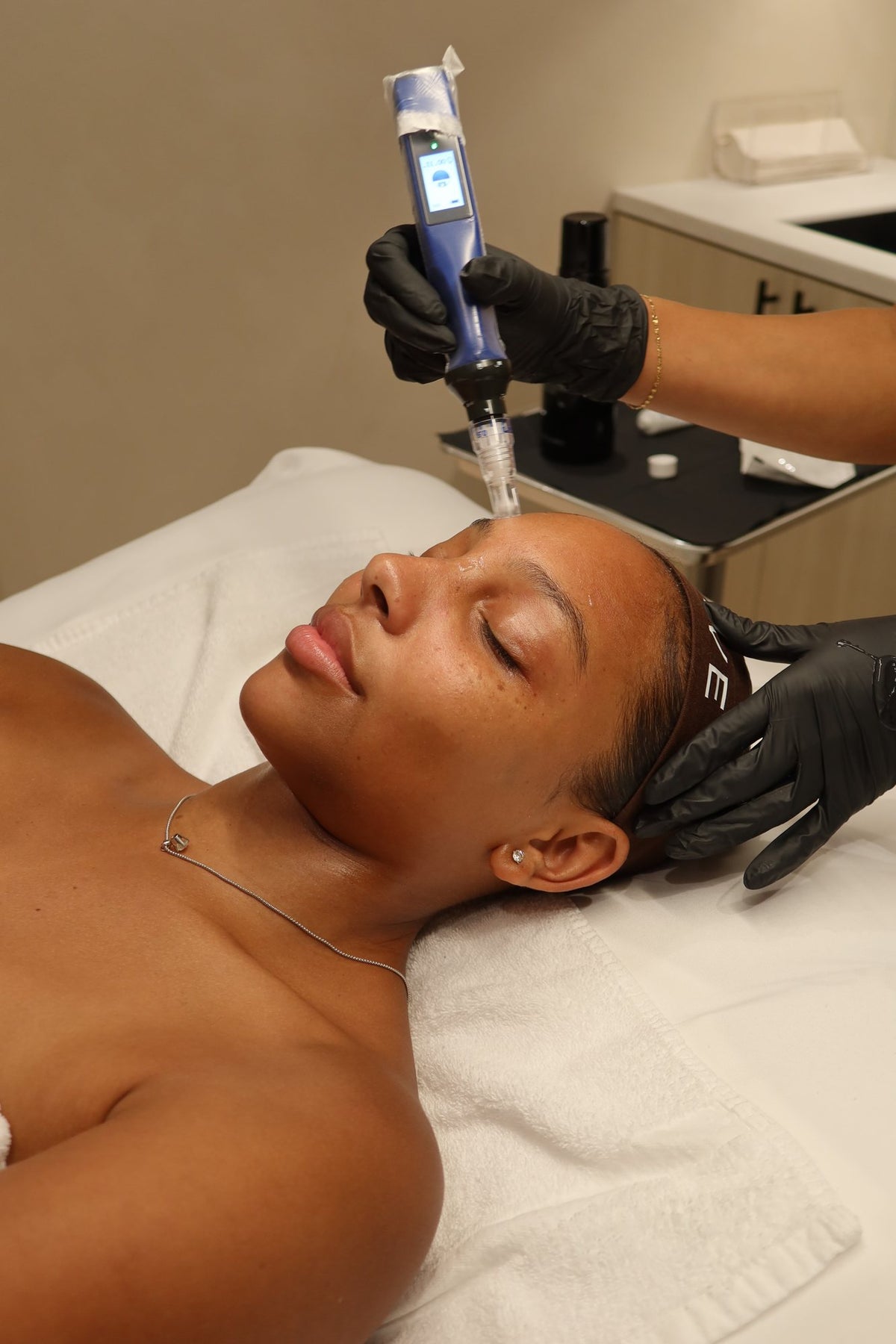
On the face, PRP is used to prompt that repair response in skin that is not injured but is showing the accumulated effects of time, sun, and inflammation. It is delivered either as a series of small injections into the dermis, or applied to the surface immediately after microneedling so that the freshly created channels carry it into the skin. Some protocols use both. The colloquial name for the microneedling combination is the vampire facial, which is memorable marketing and tells you nothing clinically useful.
One point deserves stating plainly rather than in a footnote. PRP is not FDA-approved for cosmetic or aesthetic use. The centrifuge systems used to prepare it are cleared as devices for preparing platelet-rich plasma, generally in orthopedic and surgical contexts, and using the resulting preparation for facial rejuvenation is an off-label application. Off-label does not mean improper — it is common and legal in medicine — but it does mean the aesthetic use has not been through the approval process, that published results vary with preparation method and protocol, and that anyone describing this as a proven, standardized treatment is overstating what is known.
How It Works
The procedure begins with a blood draw — a small volume, taken from the arm exactly as it would be for a routine blood test. The tube is placed in a centrifuge and spun, which separates the sample by density. Red blood cells, being heaviest, settle at the bottom. Plasma rises to the top. Platelets concentrate in a thin layer between them. The plasma fraction enriched with those platelets is drawn off, and that is the material used. Different systems and spin protocols produce preparations with different platelet concentrations and different white blood cell content, which is one reason results reported in the literature are inconsistent between studies.
Once delivered into or onto the skin, the platelets degranulate and release their stored growth factors. These proteins do not themselves become skin. They act as signals — binding to receptors on fibroblasts, endothelial cells, and stem cell populations already resident in the dermis, and instructing them to behave as they would during wound healing. Fibroblasts are prompted to proliferate and to lay down new collagen and elastin. Endothelial cells are prompted toward angiogenesis, the formation of small new blood vessels, which improves the delivery of oxygen and nutrients to the tissue.
Delivery method matters. Injected PRP places the concentrate directly into the dermis at a controlled depth, which is the more precise route. Topical PRP applied after microneedling relies on the thousands of temporary micro-channels created by the needling to carry the preparation past the stratum corneum, the skin's outermost barrier, which is otherwise very good at keeping large proteins out. Applied to intact skin with no channels, growth factors of this size do not meaningfully penetrate — a point worth remembering when a topical product claims otherwise.
The result of all this is a remodeling process, not a filling one. New collagen deposition and dermal reorganization take weeks to months, which is why the visible change from PRP is slow and why a single session is rarely the plan. Most protocols use a series spaced several weeks apart, so that each session's repair signal builds on the last while the previous round's collagen is still maturing.

What PRP (facial rejuvenation) Treats
Overall skin quality, tone, and radiance
The most consistently reported effect is a general improvement in how skin looks and behaves — smoother, more even, better light reflection. This is a quality change rather than a structural one, and it is gradual.
Fine lines and early textural change
PRP is aimed at the fine, superficial lines associated with thinning dermal collagen rather than at deep folds or expression lines. Deeper static folds generally need volume or a neuromodulator, and PRP will not substitute for either.
Thin, crepey, or dull-looking skin
Skin that has lost thickness and elasticity is the classic target for a collagen-stimulating approach. Improvement, where it occurs, comes from dermal remodeling over months rather than from anything visible in the first days.
Acne scarring and post-inflammatory texture
PRP is frequently combined with microneedling for atrophic acne scarring, where the needling creates the injury signal and the plasma supplies growth factors into it. Scar treatment is a series commitment, and complete resolution is not a realistic goal.
Dull, uneven, or sun-affected skin
Cumulative ultraviolet exposure degrades collagen and elastin and disrupts pigment. A regenerative approach can support the skin's own repair, but it does not address pigment directly — that usually needs a different modality.
Under-eye hollowing and dark circles
PRP is sometimes used in the infraorbital area where filler would be too heavy or too risky for the anatomy. This is a distinct treatment with its own considerations and is covered on its own page.
Skin that reacts poorly to synthetic products
Because the preparation is entirely autologous, PRP avoids the question of sensitivity to an introduced material. That is a genuine advantage for some people, though it does not make the procedure risk-free.
Maintenance alongside other treatments
PRP is often used as the regenerative layer in a broader plan that also includes resurfacing, biostimulation, or neuromodulators. It complements those rather than competing with them.
Is PRP (facial rejuvenation) Right For You?
You May Be A Good Candidate If
- Adults in generally good health with early to moderate signs of skin aging — fine lines, dullness, uneven texture, or a loss of firmness — who want improvement in skin quality rather than a change in facial shape.
- People who prefer an approach built from their own biological material over a synthetic filler or implant.
- People with atrophic acne scarring or post-inflammatory textural change who understand that scar treatment requires a series and that complete resolution is not the goal.
- People with realistic expectations about pace. This treatment is gradual, cumulative, and best judged after a full series rather than after one session.
- People able to commit to a series of appointments spaced several weeks apart, and to maintenance afterward, since the effect is not permanent.
- People with normal platelet counts and no bleeding or clotting disorder, as determined by a provider who reviews your history and any relevant laboratory work.
- People who can pause blood-thinning medications or supplements safely — and only where the prescribing clinician agrees that pausing is safe, which is not always the case.
- People willing to ask direct questions about how the preparation is handled, labeled, and disposed of. Any procedure involving a blood product deserves that scrutiny.
This May Not Be Right For You If
- Anyone with a platelet disorder, thrombocytopenia, a bleeding or clotting disorder, or a diagnosed dysfunction of platelet activity, since the entire treatment depends on healthy platelets.
- Anyone with a hematologic malignancy such as leukemia or lymphoma, or with a history of one, without specific clearance from their treating physician.
- Anyone on anticoagulant or antiplatelet therapy that cannot be safely paused. That decision belongs to the prescribing clinician, never to an aesthetic provider and never to you alone.
- Anyone with an active infection — systemic, or in the skin at the treatment site — including active acne cysts, herpes simplex outbreaks, or any open lesion.
- Anyone with a chronic liver condition, severe anemia, sepsis, or an acute or chronic infection such as hepatitis or HIV, where blood-derived treatment requires specialist input.
- Anyone who is pregnant or breastfeeding, since aesthetic procedures are generally deferred and safety data in this context is absent.
- Anyone with a skin cancer or an undiagnosed lesion at the intended treatment site.
- Anyone with an active inflammatory or autoimmune skin condition affecting the area, or an autoimmune disease that is poorly controlled, without input from the physician managing it.
- Anyone recently treated with systemic corticosteroids or certain immunosuppressive therapies, which can affect both platelet function and healing — timing needs to be discussed.
- Anyone expecting volume restoration, a lifted contour, or a change in facial shape. PRP does not do any of those things, and no amount of it will.
Whether PRP is appropriate for you is determined at a medical consultation, not from a list. A licensed provider should take a full medical history, review every medication and supplement you take, ask specifically about bleeding disorders, blood-borne infection, autoimmune conditions, and cancer history, and order any laboratory work your history indicates. Because this treatment involves drawing, processing, and re-injecting your own blood, it also deserves questions most aesthetic procedures do not: how the sample is labeled, whether it ever leaves the room, how equipment is sterilized between patients, and how the preparation is disposed of. A well-run practice will answer all of that without hesitation.
How PRP (facial rejuvenation) Compares
Patients considering PRP for the face are usually weighing it against other approaches to skin quality, and against filler — which is a different category of treatment altogether. The table below sets out what each does, so the distinction is clear before a decision is made.
| Feature | PRP (facial) | Microneedling alone | Hyaluronic acid filler |
|---|---|---|---|
| What it is | A concentrate of your own platelets, prepared from a blood draw taken the same visit | Controlled micro-injury to the skin using fine needles, with no product added | A synthetic hyaluronic acid gel placed to occupy space |
| Primary goal | Skin quality — texture, tone, firmness, evenness | Skin quality and texture, particularly scarring | Volume, structure, and contour |
| Mechanism | Concentrated growth factors signal fibroblasts to produce new collagen and elastin | The micro-injury itself triggers the wound-healing and collagen response | The gel physically occupies space and draws in water; some collagen response over time |
| Source of material | Autologous — entirely your own blood | None; nothing is introduced | Manufactured hyaluronic acid, cross-linked to control longevity |
| Onset of visible change | Gradual over months as collagen remodels | Gradual over months, with early surface improvement sooner | Immediate, with swelling settling over the following weeks |
| Typical course | A series of sessions spaced several weeks apart, then periodic maintenance | A series of sessions, then periodic maintenance | A single appointment, repeated when the product resorbs |
| Reversibility | Not reversible — but nothing was added, so there is nothing to remove | Not applicable | Reversible; hyaluronidase dissolves hyaluronic acid filler |
| Regulatory status for this use | Off-label; PRP is not FDA-approved for aesthetic indications | Device-based; specific devices are FDA-cleared for defined indications | Several products are FDA-approved for specific facial indications |
| Main limitation | Evidence quality varies, preparation methods are not standardized, and results differ between individuals | Does not add volume; limited benefit for deep structural change | Does not improve skin quality; can look unnatural if overdone |
These approaches are not mutually exclusive and are frequently combined — PRP with microneedling in the same session is among the most common pairings in aesthetic practice. Which combination suits you, in what order, and over what timeline is a clinical judgment made at consultation with a licensed provider who has examined your skin, not a choice to be made from a comparison table.
What To Expect
Before The Treatment
- A consultation and skin assessment, including a full medical history, every medication and supplement you take, and specific questions about bleeding disorders, anticoagulants, autoimmune conditions, blood-borne infection, and cancer history.
- A discussion of what PRP can and cannot do, and explicit acknowledgment that aesthetic use is off-label and that results vary between individuals and between preparation protocols.
- Guidance on pausing blood-thinning medications and supplements such as aspirin, non-steroidal anti-inflammatory drugs, fish oil, vitamin E, and certain herbal preparations — but only where your prescribing clinician confirms it is safe to pause them. Never stop a prescribed medication on your own.
- Advice to hydrate well in the days beforehand and to arrive well hydrated on the day, which makes the blood draw easier and can improve the quality of the sample.
- Advice to avoid alcohol for a day or two beforehand and to eat before your appointment, both of which reduce the chance of feeling faint during the draw.
- If you have a history of cold sores and the treatment area is near the mouth, a prophylactic antiviral prescription, since any procedure creating micro-injury can trigger an outbreak.
- Instructions to arrive with clean skin, free of makeup, sunscreen, and topical products.
Results: Onset And How Long It Lasts
Change from PRP is gradual and cumulative rather than immediate. The first days involve redness and healing rather than improvement, and any early glow reflects the inflammatory response rather than new collagen. Reported change in skin texture, tone, and firmness develops over the following months as fibroblasts lay down collagen and the dermis remodels, and it is generally assessed at the end of a series rather than after a single session. Results vary considerably between individuals, and they vary with preparation method, platelet concentration, delivery technique, and how many sessions are completed — which is a substantial part of why the published literature is inconsistent. Some people see a clear improvement in skin quality; others see modest change. This page publishes no numeric outcome figures, because averages drawn from small studies with differing protocols would not tell you anything reliable about your own skin. The effect is also not permanent: skin continues to age, and maintenance sessions are part of the plan rather than an upsell.
During The Treatment
- A blood draw from the arm, using the same technique as a routine blood test. This takes a few minutes and is the part most people are apprehensive about and then find unremarkable.
- The sample is spun in a centrifuge in the treatment room while topical numbing cream is applied to the face. The separation takes several minutes, and the numbing is typically left in place for around half an hour.
- The platelet-rich fraction is drawn off into a syringe. It is a straw-colored liquid, sometimes with a slight pink tinge depending on the preparation.
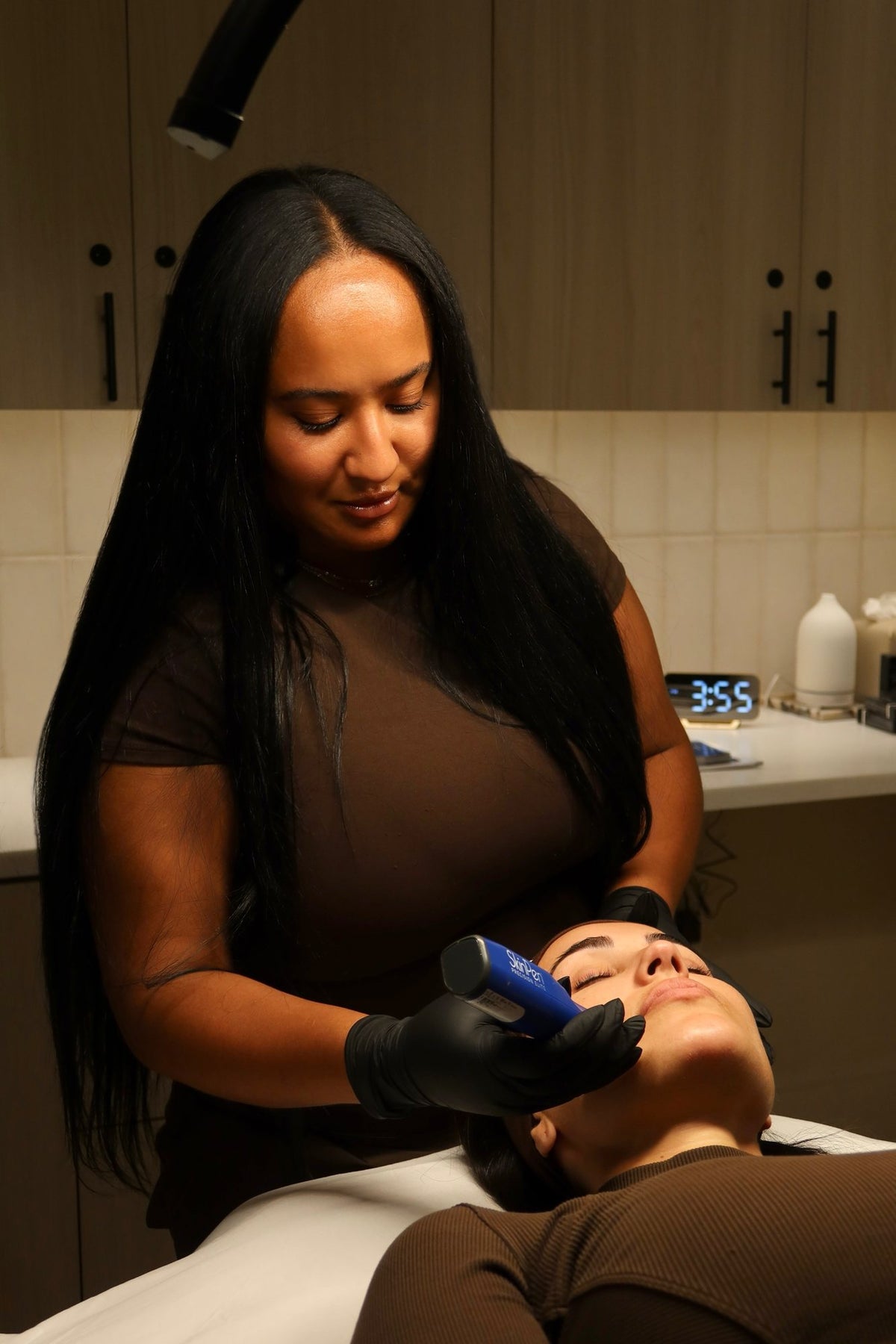
- Delivery is either by a series of small injections into the dermis using a fine needle or cannula, or by application to the surface immediately after microneedling, or a combination of both — decided at consultation based on what is being treated.
- The sensation is generally described as tolerable with numbing: pressure, small stings, and a scratchy quality where microneedling is used. Sensitive areas such as the forehead and around the nose are usually reported as the least comfortable.
- A session commonly runs somewhere between one hour and ninety minutes, most of which is preparation and numbing rather than treatment.
- Afterward the skin will look flushed and feel warm and tight, similar to a moderate sunburn, and there may be small marks at injection points.
How Often, And Why
PRP for facial rejuvenation is almost always planned as a series rather than a single appointment. A common approach is three sessions spaced several weeks apart, which allows each session's repair signal to build on the last while collagen laid down after the previous round is still maturing. The exact number and spacing is a clinical decision that depends on what is being treated — skin quality alone generally needs fewer sessions than atrophic acne scarring, which is often planned as a longer course.
After an initial series, maintenance is typically scheduled at intervals of several months to a year, depending on how your skin responds and what else is in your treatment plan. The improvement is not permanent, because the underlying process is not halted: skin continues to age, sun exposure continues to accumulate, and collagen continues to decline with time. Maintenance sessions are intended to sustain a gain rather than to chase a further one.
PRP is also frequently sequenced alongside other treatments — resurfacing, biostimulators, neuromodulators — and the ordering and spacing of those matters. Combining procedures too closely can overwhelm the skin's healing capacity, while spacing them sensibly lets each do its job. That sequencing is planned at consultation rather than assembled treatment by treatment.
Afterward
- Expect redness, warmth, and mild swelling for a day or two, sometimes longer where microneedling was used. Pinpoint bruising at injection sites is common and usually resolves within a week.
- Leave the skin alone for the first several hours. Follow the specific timeline your provider gives you for when you may wash your face, and use only lukewarm water and clean hands when you do.
- Avoid makeup for the interval your provider specifies, since the micro-channels created by needling remain open for a period and are a route for bacteria.
- Avoid active skincare — retinoids, exfoliating acids, vitamin C, benzoyl peroxide, and physical scrubs — until your provider clears you to resume. Bland moisturizer and a gentle cleanser are what the skin wants.
- Avoid strenuous exercise, saunas, steam rooms, hot tubs, and swimming pools for the period you are given. Heat and sweat both aggravate freshly treated skin, and pools carry an infection risk while channels remain open.
- Protect the area from sun rigorously and use broad-spectrum sunscreen once your provider confirms you may apply products again. Treated skin is more vulnerable to ultraviolet damage and to post-inflammatory pigmentation.
- Sleep on your back for the first night or two where practical, and avoid pressing a phone against a freshly treated cheek.
- Do not judge results early. Any surface glow in the first week is largely the healing response. The collagen change that matters accrues over months, which is why assessment happens at the end of a series rather than after a single session.
- Report anything that worsens rather than improves after the first few days — spreading redness, increasing pain, warmth, pus, or fever — promptly.

How Much Does PRP (facial rejuvenation) Cost in Atlanta, GA?
- What it is priced by: Per treatment
- Typical cost: From $800 / treatment
The figure above is a starting point, not a quote. What you pay depends on how much product your anatomy actually needs, which is a clinical judgement made in person. Ask at your consultation.
Side Effects And Downtime
Common And Expected
- Redness and flushing, most pronounced in the first day or two and more so where microneedling was used
- Swelling, typically mild and settling within a few days
- Bruising, both at the blood draw site in the arm and at facial injection points
- Tenderness, tightness, or a sunburn-like sensation in the treated area
- Pinpoint bleeding at the time of treatment and small scabs or flaking in the days afterward where needling was used
- Temporary dryness, roughness, or a rough sandpaper texture as the surface heals
- Itching during healing, which is common and should not be scratched
- Lightheadedness or feeling faint at the time of the blood draw, particularly if you are dehydrated or have not eaten
When To Seek Care
- Signs of infection: increasing pain rather than decreasing, spreading redness, warmth, swelling that worsens after the first few days, pus or discharge, or fever.
- Redness that spreads outward in streaks, which can indicate a deeper soft-tissue infection and needs same-day assessment.
- Severe or worsening pain that is out of proportion to what you were told to expect.
- Any change in vision, or severe pain around the eye, if treatment was performed near the eye area. Seek emergency care immediately.
- Signs of an allergic reaction — hives, swelling of the face, lips, tongue, or throat, or difficulty breathing. Call 911. This is not expected with an autologous preparation, but numbing agents and antiseptics can cause reactions.
- A cold sore outbreak, which should be treated promptly to reduce the risk of scarring in freshly treated skin.
- Any wound that is not healing, or an area that darkens, blisters, or ulcerates.
Less Common, But Important To Know
- Infection at the treatment site — uncommon with sterile technique, but a genuine risk any time the skin barrier is broken. Signs are increasing pain, spreading redness, warmth, pus, or fever, and any of them warrants prompt medical attention.
- Blood-borne infection transmitted through unsafe handling of blood products. This is not theoretical: a documented cluster of HIV transmissions was linked to an unlicensed facility performing microneedling with blood products under unsanitary conditions. It is entirely preventable with proper sterile technique, single-use equipment, and correct labeling — which is precisely why it is fair to ask a practice exactly how these things are handled.
- Reactivation of herpes simplex, producing a cold sore outbreak, in anyone with a history of it. Prophylactic antiviral medication is standard when the treatment area is near the mouth.
- Post-inflammatory hyperpigmentation — temporary darkening of treated skin, more likely in deeper skin tones and where sun protection after treatment is inadequate.
- Prolonged swelling or persistent redness lasting beyond the expected window.
- Granuloma or nodule formation, which is rare with an autologous preparation but has been reported.
- Scarring, which is rare with appropriate technique but possible any time the skin is injured, and more likely if healing is disrupted by picking or infection.
- Vasovagal syncope — fainting — associated with the blood draw or injections rather than with the preparation itself.
- No improvement at all. PRP does not work for everyone, and a series that produces no visible change is a real outcome that an honest provider will have raised beforehand.
Downtime
Social downtime is usually short but real. Expect to look visibly flushed for a day or two, as though moderately sunburned, with the treated skin feeling warm and tight. Where PRP is combined with microneedling, that flush is more pronounced and may be accompanied by mild swelling and, over the following days, some dryness and light flaking as the surface turns over. Pinpoint bruising is common and, on the face, is often the part people most want to plan around; it typically settles within a week. Makeup is generally off the table for the interval your provider specifies, which makes this a treatment worth scheduling with a few clear days rather than the afternoon before an event. Most people return to ordinary activity immediately and simply look like they have caught the sun. Exercise, saunas, steam, and swimming come back later on the timeline your provider gives you, and sun protection matters more than usual for several weeks afterward.
Who Performs This Treatment

Helen Zhang
Master Injector · Neuromodulators, filler, biostimulators and facial balancingHelen is one of Alcove's master injectors. Your appointment starts with an assessment of your face and your goals, and your plan is built from that conversation rather than from a menu.

Xing Xing Li
Master Injector · Neuromodulators, filler, biostimulators and facial balancingXing Xing is Alcove's master injector. Your appointment starts with an assessment of your face and your goals, and your plan is built from that conversation rather than from a menu.
PRP (facial rejuvenation) FAQs
Broadly, yes — vampire facial is a colloquial name for PRP applied to the skin after microneedling. It is a marketing term rather than a clinical one, and it describes the delivery method rather than the treatment itself. PRP can also be injected into the dermis rather than applied topically, which is a different technique with the same underlying material.
Most people describe it as tolerable rather than painful. Topical numbing cream is applied and left in place before treatment, which takes the edge off considerably. The blood draw feels like any routine blood test. Injections feel like small stings and pressure; microneedling feels scratchy and prickly, and is usually reported as least comfortable on the forehead and around the nose.
They do different jobs. Filler is a synthetic hyaluronic acid gel placed to occupy space, so it changes volume and contour immediately. PRP adds no volume at all — it is a signal to your own cells to produce collagen, so it targets skin quality and takes months to show. If your concern is a hollow or a fold, filler is the relevant treatment. If it is texture, tone, or crepiness, PRP is the relevant conversation.
A series is the norm rather than the exception, commonly around three sessions spaced several weeks apart, followed by maintenance. The exact plan depends on what is being treated and how your skin responds — acne scarring generally requires a longer course than skin quality alone. A provider who proposes a single session and promises a transformation is not describing how this treatment works.
The improvement is not permanent, because nothing has halted the underlying process. Skin continues to age, and sun exposure continues to accumulate. Most plans include maintenance sessions at intervals of several months to a year to sustain what was gained. How long any individual holds a result varies widely with age, skin condition, sun exposure, and general health.
No, and that is worth being clear about. The centrifuge systems used to prepare PRP are cleared as devices, generally for orthopedic and surgical contexts, but using the resulting preparation for facial rejuvenation is off-label. Off-label use is common and legal in medicine, but it means aesthetic use has not been through the approval process and that published results vary considerably with preparation method and protocol.
Not to the preparation itself — it is made entirely from your own blood, so there is no foreign material to react against. That is one of the genuine advantages of an autologous treatment. You can still react to something else used during the appointment, such as a topical anesthetic or an antiseptic, so allergies should still be disclosed at consultation.
The concern is legitimate and worth understanding accurately. A documented cluster of HIV transmissions was linked to an unlicensed facility performing microneedling with blood products under unsanitary conditions — unsterile equipment, improper handling, and unlabeled blood. The risk comes from unsafe practice rather than from the treatment itself, and it is preventable with sterile single-use equipment, proper labeling, and correct disposal. Ask any practice directly how they handle these things; a good one will tell you without hesitation.
Expect to look flushed, as though moderately sunburned, for a day or two, with tightness and warmth in the treated skin. Where microneedling is used there may also be mild swelling and some dryness or light flaking over the following days. Pinpoint bruising is common and usually settles within a week. Makeup is off the table for the interval your provider specifies, so plan a few clear days rather than treating the day before an event.
It depends entirely on the medication and on why you take it, and that decision belongs to your prescribing clinician rather than to an aesthetic provider. Some blood-thinning medications and supplements can be paused safely; others absolutely cannot, and stopping them carries real risk. Never pause a prescribed medication on your own initiative. Disclose everything you take at consultation, including over-the-counter supplements such as fish oil and vitamin E.
Frequently, and that is often the better plan. Microneedling with PRP in the same session is among the most common pairings. PRP is also sequenced alongside resurfacing, biostimulators, and neuromodulators, which address different aspects of aging. The sequencing and spacing matter, since combining procedures too closely can overwhelm the skin's capacity to heal — that is planned at consultation.
A small volume, comparable to what is taken for routine laboratory work, and drawn from the arm in the same way. The exact amount depends on the preparation system used and on the size of the area being treated. Eating beforehand and arriving well hydrated both make the draw easier and reduce the chance of feeling lightheaded.
PRP is sometimes used in the infraorbital area, where it is chosen for skin quality and thin, crepey texture rather than for volume. Whether it helps depends heavily on what is actually causing the darkness — hollowing, thin skin showing underlying vasculature, or pigment are three different problems with three different answers. That area has its own anatomy and its own risks, and is covered on its own page.
Pairs Well With


Book Your Consultation
A consultation is a conversation about your face, not a sales appointment. Bring your questions about PRP (facial rejuvenation) and your medical history, and leave with an honest answer about whether it is the right treatment for you.