



CO2 Resurfacing Laser in Atlanta, GA
This is the treatment people arrive at when the gentler things have not been enough. Fractional CO2 resurfacing removes and remodels skin at a depth nothing topical can reach, and it does more for texture, etched lines, and scarring than any single alternative. It also asks for something in return: genuine downtime, strict sun discipline, and a willingness to be told no if your skin or your history makes it a poor idea. Anyone describing this as a lunchtime treatment is describing something else.
The Benefits
The Deepest Resurfacing
It reaches a depth in the dermis that topical treatments and superficial procedures cannot, which is why it addresses problems those approaches leave untouched.
Fractional, Not Total
Fractional delivery treats only a portion of the surface at a time, leaving intact skin between the columns to drive healing — the change that made ablative resurfacing recoverable.
Two Zones Of Effect
Each treated column both ablates tissue at its center and heats tissue around it, so the treatment resurfaces the surface and remodels the dermis in one pass.
Texture And Scarring
Atrophic acne scarring and deep photodamage are among its strongest indications, and it does more for both than any single alternative treatment.
Adjustable Depth
Depth and density are adjustable across a wide range, so the same technology covers everything from a light refresh to a genuinely corrective procedure.
One Course, Not Many
A meaningful result is often achieved in a small number of sessions rather than an open-ended series, which suits people who would rather do one demanding thing than many mild ones.
Real Downtime
The downtime is real and should be planned for honestly — several days of visible healing and weeks of residual redness — rather than minimized in the selling of it.
Sun Protection Is Not Optional
Results continue developing for months as collagen remodels, provided the treated skin is protected from sun; without that protection much of the gain is undone.
Real Results
Before & After
 After
After Before
 After
After Before
 After
After Before
 After
After Before
 After
After Before
 After
After Before
 After
After Before
 After
After Before
 After
After Before
 After
After Before
What CO2 Resurfacing Laser Is
A carbon dioxide laser emits infrared light at a wavelength strongly absorbed by water. Since skin is largely water, that energy is absorbed almost immediately at the surface, heating the tissue past the point of vaporization. The result is controlled removal of skin — ablation — together with a zone of heated tissue beneath each treated point. Both parts matter, and they do different jobs.
Early CO2 resurfacing treated the entire surface at once. It was highly effective and correspondingly punishing: weeks of raw healing, months of redness, and a real incidence of scarring and permanent pigment change. Fractional delivery, which is now the standard approach, changed the arithmetic. Instead of removing the whole surface, the beam is split into a grid of narrow microscopic columns, so only a fraction of the treated area is ablated at any session while the untreated skin between the columns is left intact. Those untreated bridges are reservoirs of living tissue that migrate across and close the wounds, which is what makes healing far faster and complications far less likely.
Each column has two components. At its center, tissue is vaporized outright, creating a microscopic channel through the epidermis and into the dermis. Surrounding that channel is a zone of coagulated, heated tissue that is not removed. That thermal zone is where much of the long-term benefit comes from: heat causes immediate contraction of existing collagen and triggers a wound-healing response that lays down new collagen over the months that follow. Ablation resurfaces; coagulation remodels.
Depth and density are both adjustable, and this is the reason the same device covers a wide range of treatments. Run superficially and sparsely, a fractional CO2 laser produces a light refresh with brief recovery. Run deeper and denser, it becomes a genuinely corrective procedure for scarring and deep photodamage, with recovery measured in weeks. These are not different machines so much as different settings, and the settings are chosen for your skin and your goals rather than from a menu.
Specific devices and their settings vary between practices. Ask what device is being used, at what depth and density, and what recovery that particular plan implies — the answer is what determines your experience, far more than the category name does.
How It Works
The laser delivers energy in a grid of narrow columns across the treatment area. Within each column, water in the tissue absorbs the energy almost instantly and is heated past vaporization, removing a microscopic core of epidermis and upper dermis. Immediately surrounding that core is a rim of tissue heated enough to denature its proteins but not enough to vaporize — the zone of coagulation. Between the columns, skin is untouched.
Those untouched bridges are the whole reason fractional treatment recovers as it does. Re-epithelialization proceeds from the edges of each microscopic wound and from the adnexal structures — hair follicles and sebaceous glands — in the intervening skin. With a large reservoir of undamaged tissue immediately adjacent to every treated column, the surface closes within days rather than weeks, and the risk of scarring drops substantially compared with treating the entire surface.
The thermal zone drives the longer-term change. Collagen exposed to heat contracts immediately, which accounts for some of the tightening effect seen early. More importantly, the heated tissue initiates a wound-healing cascade: inflammatory cells arrive, fibroblasts proliferate, and new collagen and extracellular matrix are laid down and then remodeled over a period of months. That process is why the result continues to improve long after the surface has healed, and why final assessment happens months rather than weeks after treatment.
Density and depth are the two levers. Density is the proportion of the surface treated in one session — higher density means more columns, more total injury, greater effect, and longer recovery. Depth is how far into the dermis each column reaches, and it is set according to what is being treated: superficial texture needs less depth than dermal scarring. Increasing either increases both the result and the risk, which is why the settings are a clinical decision rather than a preference.
One consequence of the mechanism deserves emphasis. Because the energy is absorbed by water rather than by pigment, this laser does not selectively target melanin — but the heat and the injury still provoke pigment-producing cells. Post-inflammatory hyperpigmentation is the most common significant complication, particularly in deeper skin tones, and managing it is a matter of appropriate settings, pre-treatment preparation, and rigorous sun protection rather than luck.

What CO2 Resurfacing Laser Treats
Atrophic acne scarring
One of the strongest indications. Fractional CO2 reaches a depth that topicals and superficial treatments cannot, and remodels the dermis beneath the scar. Rolling and boxcar scars respond better than ice-pick scars; improvement rather than resolution is the realistic goal.
Deep photodamage and rough, weathered texture
Decades of accumulated sun exposure produce coarse texture, irregular pigment, and thickened patches. This is the treatment category most associated with meaningful correction of that picture.
Fine and moderate static wrinkles
Etched lines that remain when the face is at rest — around the mouth in particular — respond to a combination of surface resurfacing and dermal collagen remodeling. Lines driven by muscle movement need a neuromodulator instead.
Perioral lines
The vertical lines around the mouth are notoriously resistant to most treatments and are a classic indication for ablative resurfacing, where the depth of the treatment matches the depth of the problem.
Uneven skin tone and sun-related pigmentation
Ablation removes pigmented surface layers and the healing response can even out tone. Melasma is a specific exception — it can be worsened by heat and requires a different approach and specific caution.
Enlarged-looking pores and coarse skin
Resurfacing the surface and remodeling the surrounding dermis changes how prominent pores appear. No treatment closes them, and any claim otherwise is inaccurate.
Surgical and traumatic scars
Fractional resurfacing is used to improve the texture and appearance of scars from surgery or injury, generally once they are mature. Timing relative to the original injury matters and is a clinical judgment.
Actinic damage and precancerous change
Sun-damaged skin sometimes carries actinic keratoses, which are a medical rather than cosmetic finding. These need dermatologic assessment and treatment in their own right, not a cosmetic resurfacing plan built around them.
Is CO2 Resurfacing Laser Right For You?
You May Be A Good Candidate If
- Adults with atrophic acne scarring, significant photodamage, coarse texture, or etched static lines who have found gentler treatments insufficient.
- People who can take genuine downtime — several days of visible healing and weeks of residual redness — and who plan the treatment around that rather than hoping to avoid it.
- People willing to commit to strict sun avoidance before treatment and rigorous sun protection afterward, indefinitely. This is not advice; it is a condition of a good outcome.
- People able to follow a detailed aftercare protocol, including antiviral medication, specific cleansing and moisturizing routines, and a clear list of what not to do.
- People who prefer a small number of substantial treatments over a long series of mild ones.
- People with realistic expectations: improvement rather than perfection, particularly for scarring, and final assessment months after the last session.
- People who have completed any needed skin preparation, which for some skin types means a period of topical treatment before the laser to reduce pigmentary risk.
- People in good general health, not smoking, and without a condition that impairs wound healing.
This May Not Be Right For You If
- Anyone currently taking isotretinoin, or who has recently completed a course. The traditional interval before ablative resurfacing is a long one, and while the evidence around it has been re-examined, this remains a decision for the prescribing clinician rather than an assumption.
- Anyone with an active skin infection, an open lesion, or an active herpes simplex outbreak in the treatment area. Antiviral prophylaxis before treatment is standard regardless of history.
- Anyone with a history of keloid or hypertrophic scarring, where deliberate deep injury to the skin carries real risk of producing exactly that.
- Anyone with recently tanned skin, whether from sun or from self-tanner. Treating tanned skin substantially raises the risk of pigmentary complications, and appointments are rescheduled rather than proceeded with.
- Anyone with melasma, which is characteristically worsened by heat and by inflammation. It is not an absolute bar in every case, but it requires specific expertise and a different plan, and reaching for an ablative laser is often the wrong move.
- Anyone with an active inflammatory skin condition in the area — eczema, psoriasis, or rosacea in flare — or a connective tissue or autoimmune disease affecting healing, without clearance from the physician managing it.
- Anyone who is pregnant or breastfeeding, since elective procedures are deferred and safety data is absent.
- Anyone who is immunosuppressed, has poorly controlled diabetes, or has another condition that materially impairs wound healing.
- Anyone who has had radiation treatment to the area, where skin healing is unpredictable.
- Anyone with a history of vitiligo or another condition of pigment loss, where injury can trigger new patches.
- Anyone with a bleeding disorder or on anticoagulant therapy that cannot be safely paused — a decision belonging to the prescribing clinician alone.
- Anyone who cannot commit to the sun protection and aftercare the treatment requires. Wanting the result is not the same as being able to protect it.
- Anyone who smokes and is unwilling to stop for the peri-treatment period, since smoking materially impairs wound healing.
- Anyone expecting a lift or a change in facial contour. Resurfacing treats the skin; it does not reposition tissue.
This treatment demands more of the consultation than most. A licensed provider should assess your skin type and your risk of pigmentary complications specifically, take a full medical and medication history, ask directly about isotretinoin, cold sores, keloid tendency, autoimmune and connective tissue disease, prior radiation, and healing problems, and examine the treatment area for lesions that need medical rather than cosmetic attention. Expect a frank conversation about downtime, and expect to be given antiviral medication and a written aftercare protocol before the day. For some skin types a period of topical preparation before treatment is part of the plan rather than an optional extra. If a provider proposes ablative resurfacing without discussing your pigmentary risk and your sun habits, that is a reason to pause.
How CO2 Resurfacing Laser Compares
Resurfacing exists on a spectrum, and the trade-off along it is consistent: more depth means more result and more recovery. The table places fractional CO2 against the alternatives people usually weigh it against.
| Feature | Fractional CO2 | Low-downtime CO2 mode | Microneedling | Medium-depth chemical peel |
|---|---|---|---|---|
| How it works | Vaporizes microscopic columns of tissue and heats the tissue around them | The same laser at superficial settings, removing far less tissue | Mechanical micro-injury from fine needles, with no heat | A chemical agent that causes controlled injury to a set depth |
| Depth reached | Into the dermis, adjustable across a wide range | Superficial — epidermis and the very upper dermis | Upper to mid dermis, depending on needle depth | Epidermis into the papillary dermis |
| Best-associated use | Atrophic scarring, deep photodamage, etched static lines | Texture, tone, and a refreshed surface with little disruption | Texture, early laxity, and scarring, across skin tones | Pigment, tone, and surface texture |
| Typical downtime | Several days of visible healing, then weeks of residual redness | A day or two of redness and roughness | A day or two of redness, then several days of flaking | Several days of peeling |
| Sessions usually needed | A small number, sometimes one | A series | A series | A series |
| Considerations in deeper skin tones | Requires real caution and preparation; pigmentary risk is the main concern | Lower risk than deeper settings but still requires care | Generally the safer option, since there is no heat and no pigment target | Depends heavily on the agent and depth; requires expertise |
| Effect on melasma | Can worsen it; generally not the right tool | Still involves heat; requires caution | Sometimes used cautiously as part of a plan | Specific peel formulations are used, with expertise |
| Main limitation | Downtime, pigmentary risk, and a longer list of contraindications | Correspondingly more modest results | Does not reach the depth CO2 does | Limited effect on deep scarring and texture |
Choosing along this spectrum is a matter of matching depth to problem while respecting your skin type, your tolerance for downtime, and your medical history. More is not better — an ablative laser aimed at a problem that did not need it is how complications happen. That judgment belongs to a provider who has examined your skin in person.
What To Expect
Before The Treatment
- A consultation covering your skin type, your specific risk of pigmentary complications, and a full medical and medication history, with direct questions about isotretinoin, cold sores, keloid tendency, autoimmune and connective tissue disease, prior radiation, diabetes, smoking, and healing problems.
- An examination of the treatment area for lesions needing medical rather than cosmetic assessment. Sun-damaged skin sometimes carries findings that need a dermatologist rather than a laser.
- A frank conversation about downtime, with a realistic timeline, so the treatment can be planned around your life rather than the reverse.
- Antiviral medication prescribed to start before treatment, which is standard regardless of whether you have a history of cold sores.
- For some skin types, a period of topical preparation before the laser — often several weeks — intended to reduce the risk of post-inflammatory pigmentation. This is part of the plan rather than an optional extra.
- Strict instructions to avoid sun exposure and all self-tanning products in the weeks beforehand. Treating tanned skin substantially raises pigmentary risk, and an appointment will be rescheduled rather than proceeded with.
- Instructions to stop retinoids and exfoliating acids for a specified period beforehand, and guidance on pausing blood-thinning medication and supplements where your prescribing clinician confirms it is safe.
- Written aftercare instructions and any prescribed medication in hand before the day, along with arrangements for getting home if sedation or oral medication is part of the plan.
Results: Onset And How Long It Lasts
The visible sequence is long. The first days are healing rather than improvement — redness, swelling, oozing at deeper settings, then crusting and peeling as the surface closes. Beneath that, the new surface emerges pink and will remain visibly red for weeks, sometimes considerably longer where treatment was deep. Improvement in texture and tone becomes apparent as that redness settles, and it continues to develop for months as collagen is laid down and remodeled in the dermis. Final assessment belongs at the far end of that timeline rather than at the point the skin looks normal again. For atrophic acne scarring — one of the strongest indications — the realistic goal is meaningful improvement in scar depth and in how light falls across the skin, not resolution; scar morphology substantially affects how much is achievable, which is why assessment before treatment matters. For photodamage and etched lines, the correction is often the most substantial available from any single treatment. What resurfacing does not do is lift tissue, restore volume, or change facial contour. Response varies with skin type, the extent of damage, the settings used, and how rigorously the skin is protected afterward — that last factor is genuinely within your control and genuinely determines part of the outcome. This page publishes no numeric outcome figures: settings, devices, and protocols vary too widely for averages to mean anything about your own skin.
During The Treatment
- The area is cleansed and topical numbing cream is applied and left in place, often for a substantial period. Deeper treatments may involve additional local anesthetic, nerve blocks, or oral medication depending on the plan.
- Protective eyewear is worn throughout and is not optional. Where treatment extends close to the eyelid margin, protective shields may be placed directly on the eye.
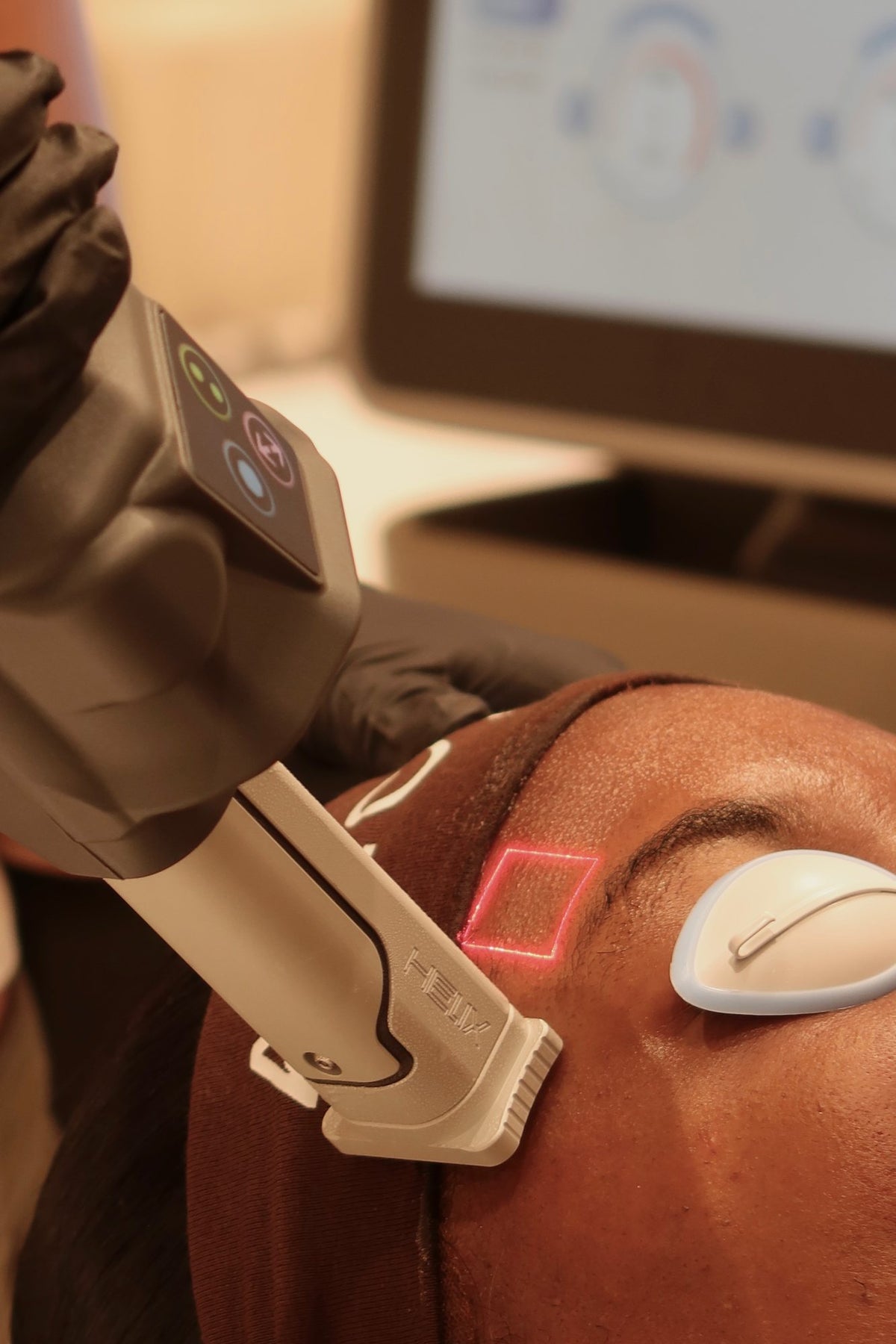
- The handpiece is passed across the treatment area, delivering the grid of laser columns. Settings for depth and density are chosen for the area and the indication, and may vary across different parts of the face.
- The sensation is generally described as hot, snapping, or prickling, with a sensation of heat that builds across an area. Cool air is often directed at the skin during treatment to make it tolerable.
- There is a distinctive smell, which is tissue being vaporized. It is expected and is usually managed with smoke evacuation.
- Treatment time depends on the area and the settings — a full face at corrective settings takes considerably longer than a targeted area at light ones.
- Immediately afterward the skin will be red, hot, swollen, and tight, and may show a fine grid pattern where the columns were placed. That appearance is expected.
How Often, And Why
Fractional CO2 resurfacing is usually planned as a small number of substantial treatments rather than as an open-ended series. Depending on the settings and the indication, a meaningful result may come from a single session, or from a short course spaced several months apart. That spacing is not arbitrary: collagen remodeling continues for months after treatment, and assessing — let alone repeating — before that process has run is premature.
The depth of the treatment largely determines the interval. Lighter settings can be repeated sooner and are sometimes used in a series; corrective settings need considerably longer between sessions and are sometimes done once with no repeat planned. Scarring in particular is generally approached as a staged process, with the result reassessed months later before deciding whether further treatment is warranted.
Maintenance, where it applies, is a different question from repeating a corrective course. Skin continues to age and to accumulate sun exposure, and some people return for lighter treatments at longer intervals to sustain what was achieved. Others do not, and simply protect the result. What genuinely determines how long the benefit lasts is sun protection, which is why it is framed here as a condition of treatment rather than as aftercare advice.
Where resurfacing is part of a broader plan alongside injectables or other modalities, sequencing and spacing matter and are decided at consultation. Treatments that injure the skin are not stacked casually, and the interval between them is a safety consideration rather than a scheduling preference.
Afterward
- Expect significant redness, heat, swelling, and tightness in the first days. Swelling is often most pronounced on the second morning and can be marked, particularly around the eyes.
- Expect oozing or weeping in the first day or two at deeper settings, followed by crusting and then peeling as the surface closes. Follow your provider's cleansing and moisturizing protocol exactly — this is the part of aftercare that most affects the outcome.
- Do not pick, peel, scratch, or exfoliate anything. Interfering with healing skin is a direct route to scarring and pigment change.
- Take the antiviral medication as prescribed for the full course, whether or not you have ever had a cold sore.
- Expect residual redness for weeks after the surface has healed, sometimes considerably longer at deeper settings. This is normal and fades gradually.
- Avoid all sun exposure while healing and use rigorous broad-spectrum protection afterward — indefinitely, not for a fortnight. Sun exposure on freshly resurfaced skin is the commonest cause of pigmentary complications and can undo much of the result.
- Avoid makeup until your provider clears you, then reintroduce it gradually. Avoid all active skincare — retinoids, acids, vitamin C — until specifically told to resume.
- Avoid strenuous exercise, saunas, steam rooms, hot tubs, and swimming for the period specified. Heat and sweat both aggravate healing skin, and pools carry infection risk while the barrier is compromised.
- Sleep with your head elevated for the first nights to reduce swelling, and keep the treated area off pillows where practical.
- Attend the follow-up appointments arranged for you. Early recognition of a problem is what keeps it small.
- Do not judge the result while healing. Final assessment is months after treatment, once collagen remodeling has run its course.

How Much Does CO2 Resurfacing Laser Cost in Atlanta, GA?
- What it is priced by: Per treatment
- Cost: $1,500
- Included: the aftercare skincare you use while your skin heals
Looking for a lighter resurfacing option? CoolPeel is $850. Your provider will tell you at consultation which of the two fits your skin and the downtime you can take.
Side Effects And Downtime
Common And Expected
- Marked redness, heat, and a sunburn-like sensation in the first days
- Swelling, often most pronounced on the second morning and sometimes significant around the eyes
- Oozing or weeping in the first day or two at deeper settings
- Crusting, flaking, and peeling as the surface closes
- Itching during healing, which must not be scratched
- Tightness and dryness in the treated skin
- A visible grid pattern in the skin immediately after treatment, settling as healing progresses
- Residual pinkness or redness lasting weeks after the surface has healed, and longer at deeper settings
- Temporary sensitivity to skincare products and to sun
- Small blemishes or milia appearing during the healing phase
When To Seek Care
- Signs of infection: increasing rather than decreasing pain, spreading redness, warmth, worsening swelling after the first days, pus or yellow-green discharge, an unpleasant odor, or fever.
- A widespread outbreak of small painful blisters or erosions across the treated area, which may indicate herpes reactivation and needs treatment urgently to prevent scarring.
- Severe or worsening pain out of proportion to what you were told to expect.
- Any area that ulcerates, turns dark or black, or fails to heal within the expected window.
- A raised, firm, or thickening area developing in the treated skin, which may indicate hypertrophic or keloid scarring and should be assessed early rather than watched.
- Any change in vision, eye pain, or persistent light sensitivity after treatment near the eyes. Seek assessment immediately.
- Difficulty closing the eye fully, or the lower lid appearing to pull away from the eye.
- Signs of an allergic reaction to a product used in aftercare — spreading rash, marked itching, or swelling.
- Any concern at all during the first week. Providers expect these calls, and early recognition of a problem is what keeps it small.
Less Common, But Important To Know
- Post-inflammatory hyperpigmentation — darkening of treated skin — which is the most common significant complication and is substantially more likely in deeper skin tones. Pre-treatment preparation, appropriate settings, and rigorous sun protection are how it is managed.
- Delayed-onset hypopigmentation — permanent lightening of treated skin — which can appear months to years after treatment and is one of the more difficult complications to address. It is a recognized risk of ablative resurfacing rather than a rarity worth dismissing.
- Infection, bacterial, viral, or fungal. Resurfaced skin has lost its barrier across the treated area, which is why antiviral prophylaxis is standard and why any sign of infection needs prompt attention.
- Reactivation of herpes simplex producing a widespread outbreak across treated skin, which is why prophylaxis is given regardless of history and why the full course must be completed.
- Scarring, including hypertrophic scarring, which is more likely at deeper settings, in areas that heal poorly such as the neck, and in anyone predisposed to it.
- Prolonged erythema — redness persisting well beyond the expected window, occasionally for many months.
- Ectropion — outward turning of the lower eyelid — from contraction of treated skin near the lid margin. Uncommon, but a recognized risk of treating close to the eye.
- Worsening of melasma, which is characteristically aggravated by heat and inflammation.
- Acneiform eruption or folliculitis during the healing phase.
- Contact dermatitis from products applied during recovery, which is why the aftercare protocol specifies exactly what to use.
- Delayed healing in smokers, in poorly controlled diabetes, and in anyone whose immune function or circulation is impaired.
- Persistent textural irregularity or a demarcation line between treated and untreated areas.
- Eye injury from inadequate protection. Protective eyewear during treatment is not a formality.
Downtime
This is the part to plan honestly, because it is the main reason people either love this treatment or regret scheduling it badly. Expect several days during which you will not want to be seen and will not be able to wear makeup: marked redness and heat, significant swelling that usually peaks on the second morning, oozing at deeper settings, and then crusting and peeling as the new surface closes. Aftercare during this phase is detailed and matters more than any other factor within your control — the cleansing and moisturizing protocol is not optional, and picking at anything is a direct route to a scar. Once the surface has healed you will still be visibly pink, and that residual redness lasts weeks and sometimes considerably longer at deeper settings; makeup can generally cover it once you are cleared. Sun avoidance during healing is absolute and sun protection afterward is indefinite. Exercise, saunas, steam, and swimming return on the timeline you are given. In practical terms: book this with a clear week, not a clear afternoon, and do not book it in the run-up to anything that matters.
Who Performs This Treatment

Brianna Harris
Aesthetician · Facials, peels, microneedling and resurfacingBrianna is one of Alcove's aestheticians. Every treatment starts with a look at your skin and what you want from it, and your plan, including what you use at home, is built from there.

Shaina Paul
Aesthetician · Facials, peels, microneedling and resurfacingShaina is Alcove's aesthetician. Every treatment starts with a look at your skin and what you want from it, and your plan, including what you use at home, is built from there.
CO2 Resurfacing Laser FAQs
Several days during which you will not want to be seen and cannot wear makeup — redness, significant swelling peaking around the second morning, oozing at deeper settings, then crusting and peeling. After the surface heals you will remain visibly pink for weeks, sometimes considerably longer at deeper settings, though makeup can usually cover that once you are cleared. Book this with a clear week, not a clear afternoon.
Topical numbing is applied and left in place beforehand, and deeper treatments may involve additional local anesthetic, nerve blocks, or oral medication. During treatment the sensation is hot, snapping, and prickling, with heat building across an area; cool air is usually directed at the skin to make it tolerable. Afterward it feels like a significant sunburn for the first days.
Usually a small number, and sometimes one. That is the trade this treatment offers — more downtime per session in exchange for fewer sessions. Corrective settings need months between treatments, because collagen remodeling continues for that long and repeating before it has run is premature. Scarring is often approached in stages with reassessment months later.
It requires real caution rather than being ruled out. The main concern is post-inflammatory hyperpigmentation, which is substantially more likely in deeper skin tones and is the most common significant complication of this treatment. Appropriate settings, a period of topical preparation beforehand, and rigorous sun protection afterward all matter. Microneedling is often the safer route to a similar goal, since it involves no heat and does not target pigment.
This is one of its strongest indications, and it does more for atrophic scarring than most alternatives because it reaches the depth the problem occupies. The realistic goal is meaningful improvement rather than resolution. Scar morphology matters considerably — rolling and boxcar scars generally respond better than ice-pick scars — which is why assessment before treatment is worth doing properly.
Generally not, and reaching for an ablative laser here is often the wrong move. Melasma is characteristically worsened by heat and by inflammation, both of which this treatment produces. It is not an absolute bar in every case, but it requires specific expertise and usually a different plan. If you have melasma, say so explicitly and be cautious of a provider who does not change the recommendation.
Because resurfacing removes the skin barrier across the treated area, and herpes simplex reactivation in that setting can produce a widespread outbreak that risks scarring. The virus is extremely common and many people carry it without ever having had a visible outbreak. Prophylaxis is standard regardless of history, and the full course should be completed rather than stopped when the skin looks better.
The same underlying technology at different settings. Superficial, sparse settings remove very little tissue and recover in a day or two, producing a refreshed surface. Deeper, denser settings reach into the dermis and are genuinely corrective for scarring and deep photodamage, at the cost of real recovery. They are points on one spectrum rather than different machines, and which is appropriate depends on what you are treating.
The correction itself is durable — resurfaced and remodeled skin does not simply revert. What determines how long you keep it is what happens afterward: skin continues to age and to accumulate sun damage, and unprotected sun exposure on treated skin will undo much of the gain. That is why sun protection here is framed as a condition of treatment rather than as advice.
Not without a decision from your prescribing clinician. The traditional guidance is a long interval between finishing isotretinoin and any ablative resurfacing, based on concern about impaired healing and scarring. The evidence behind that interval has been re-examined in recent years, but this remains a decision for the prescriber who knows your course and your skin, not an assumption to make at an aesthetic consultation.
Because treating skin with recently increased melanin substantially raises the risk of pigmentary complications, which are the most common significant problem with this treatment. That includes self-tanner, not only sun exposure. A provider who reschedules you for this reason is doing the right thing, and it is worth planning the appointment for a season and a stretch when you can genuinely stay out of the sun.
Not meaningfully. There is some immediate contraction of collagen from the heat, and dermal remodeling improves skin quality over months, but resurfacing treats the skin rather than repositioning tissue. Loose skin that hangs is a laxity problem with different answers, and expecting a lift from a resurfacing treatment is the commonest way to be disappointed by an otherwise good result.
What device is being used, at what depth and density, and what recovery that specific plan implies. Those answers determine your experience far more than the category name does. Also ask what preparation your skin type needs beforehand, what the aftercare protocol involves day by day, and what the provider's experience is with your skin type specifically.
Pairs Well With

Book Your Consultation
A consultation is a conversation about your face, not a sales appointment. Bring your questions about CO2 Resurfacing Laser and your medical history, and leave with an honest answer about whether it is the right treatment for you.