


CoolPeel in Atlanta, GA
Most people who want resurfacing do not want a week indoors. This is the version of CO2 laser treatment built around that constraint — the same wavelength, delivered so briefly that heat does not have time to spread, removing the outer layer without cooking what lies beneath it. The trade is honest: less recovery, correspondingly less correction, and a series rather than a single event. For texture, tone, and general skin quality it is a genuinely useful treatment. For deep scarring it is not the right tool.
The Benefits
CO2 Without The Week
It delivers genuine CO2 laser resurfacing with recovery measured in days rather than in a week or more of visible healing.
Heat That Does Not Linger
Very short pulse durations vaporize tissue before heat can spread into the surrounding skin, which is the mechanism behind the reduced inflammation and swelling.
Texture And Tone
Texture and tone are the core targets, and improved surface quality and light reflection is what patients most consistently report.
A Series, Not An Event
It is designed as a series with sessions spaced weeks apart, so the effect accumulates gradually rather than arriving as a single disruptive event.
Fits A Real Schedule
The short recovery makes it schedulable around ordinary working life, which matters if the realistic alternative is not having resurfacing at all.
Same Laser, Lighter Hand
It uses the same technology as deep ablative resurfacing at lighter settings, so a plan can move along that spectrum as your goals and tolerance change.
Cumulative Results
Results build across a course and are often used to maintain a result achieved by a more substantial treatment, without repeating that downtime.
Still A Laser
It remains an ablative laser with real heat involved — low downtime does not mean low risk, and the pigmentary considerations still apply.
Real Results
Before & After
 After
After Before
 After
After Before
 After
After Before
 After
After Before
What CoolPeel Is
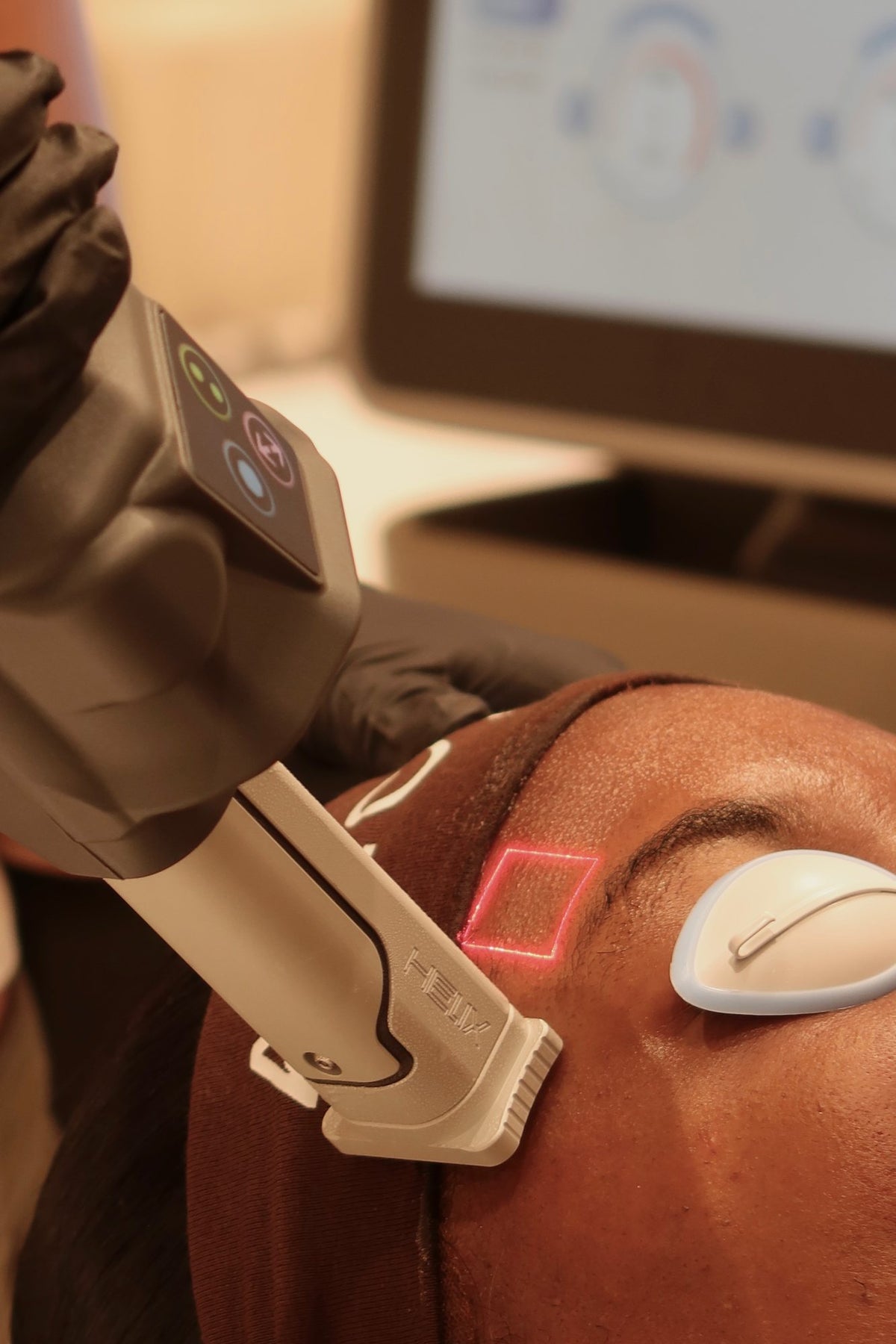
This is a fractional CO2 laser treatment performed at deliberately superficial settings using very short pulse durations. The wavelength is the same as any CO2 laser — infrared light strongly absorbed by water — and the delivery is fractional, meaning the beam is split into a grid of narrow columns so that only a portion of the surface is treated at a time while untreated skin between the columns drives the healing.
What distinguishes this mode is pulse duration, and the principle behind it is worth understanding because it is the whole basis of the treatment. When laser energy is absorbed by tissue, the tissue heats. That heat then begins to spread outward into surrounding tissue by conduction, and the time it takes to dissipate is a physical property of the tissue itself. If energy is delivered over a period longer than that dissipation time, heat accumulates and spreads, producing a substantial zone of thermally damaged tissue around each treated point. If energy is delivered fast enough — in a pulse shorter than the tissue's thermal relaxation time — the target is vaporized before meaningful heat has time to conduct outward.
That is what this mode does. Tissue at the treated point is ablated cleanly, and the surrounding tissue is left with far less residual thermal injury than a conventional CO2 pulse produces. Less collateral heating means less inflammation, less swelling, and dramatically shorter recovery. It also means less of the deep collagen contraction and remodeling that comes precisely from that thermal zone — which is the honest trade and the reason this treatment is a series rather than a single corrective event.
In practical terms it sits at the light end of the same spectrum that produces deep ablative resurfacing at the other. The technology is not different; the settings and the pulse characteristics are. That is why the same platform can offer a treatment you recover from over a weekend and one you plan a week around, and why the conversation at consultation should be about which end of that spectrum your particular concern belongs at.
Devices, settings, and protocols vary between practices. Ask what device is being used, what settings are planned, and what recovery those specific settings imply — the answer determines your experience far more than the treatment's name does.
How It Works
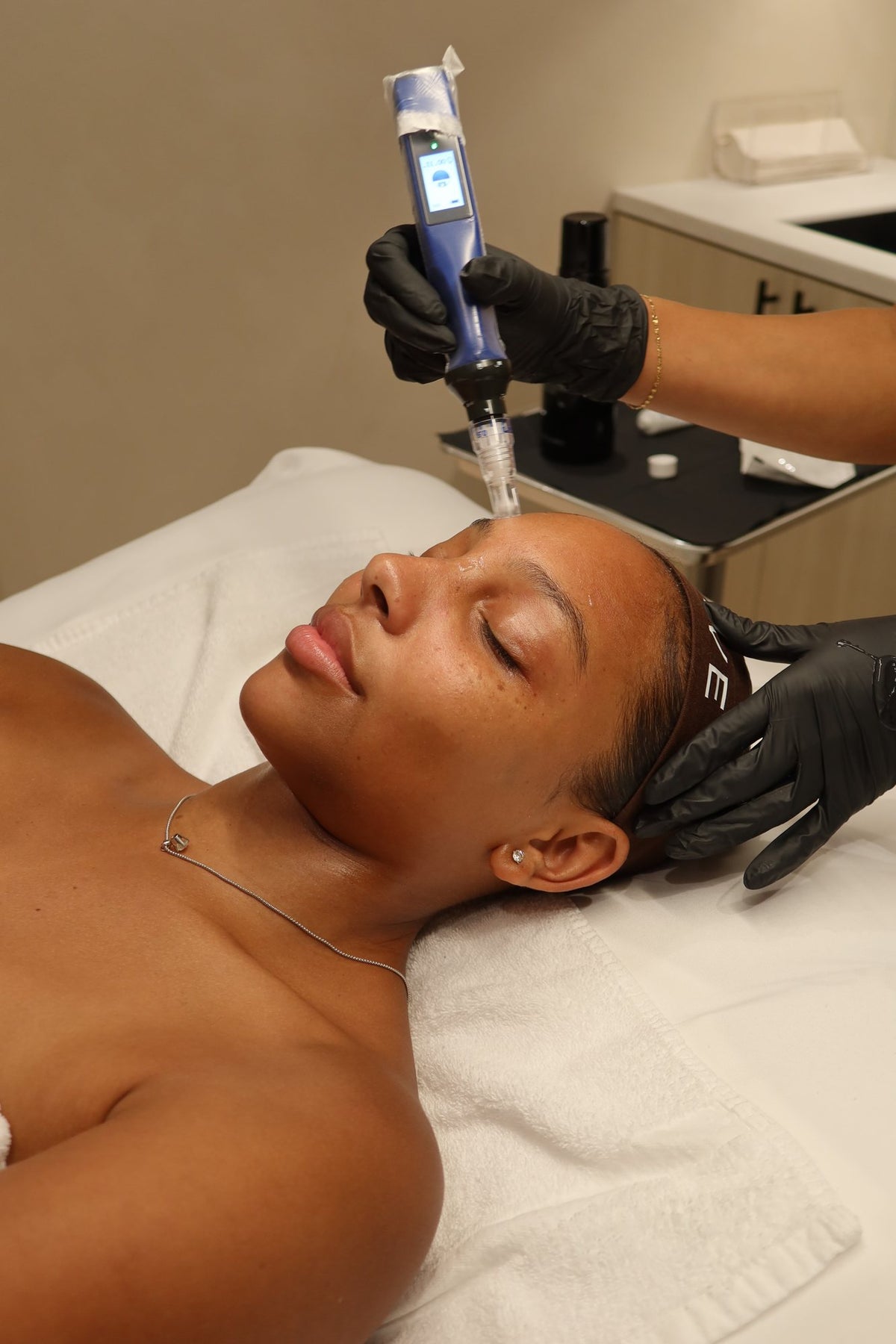
The laser delivers energy in a fractional grid of narrow columns across the treatment area. Within each column, water in the tissue absorbs the infrared energy and is heated past vaporization, removing a microscopic core of the outer skin. Between the columns, skin is left untouched, and those intact bridges are what allow the surface to close quickly.
The distinguishing feature is how briefly the energy is delivered. Every tissue has a characteristic time over which absorbed heat dissipates into its surroundings. Deliver energy more slowly than that and heat builds and spreads, producing a wide zone of thermally coagulated tissue around each treated point. Deliver it faster and the target is vaporized before heat has time to conduct outward, leaving surrounding tissue comparatively spared. This mode is built around the second approach, using pulses short enough that ablation happens without a large residual thermal zone.
The consequences follow directly. Less collateral heating means less inflammatory response, so redness and swelling are markedly reduced and the surface closes within a day or two rather than over a week. It also means less of the deep collagen contraction and neocollagenesis that the thermal zone drives in conventional CO2 treatment. The benefit here comes principally from surface renewal and from the milder healing response — real, but smaller per session than a deeper treatment produces.
That is why the treatment is designed as a series. Each session removes a thin layer and prompts a modest round of turnover and repair; the effect compounds across sessions spaced several weeks apart. It is the opposite trade from deep resurfacing, which concentrates a large effect and a long recovery into one appointment.
One caution follows from the physics rather than the marketing. This remains an ablative laser and it still generates heat. Reduced thermal injury is not no thermal injury, and post-inflammatory hyperpigmentation remains a real risk, particularly in deeper skin tones and on recently tanned skin. Low downtime is not the same as low risk, and appropriate settings and sun discipline still matter.

What CoolPeel Treats
Rough or uneven skin texture
The core indication. Removing the outermost layer and prompting turnover produces a smoother surface, and the effect accumulates across a series rather than arriving after one session.
Dull, tired-looking skin
Improved light reflection from a fresher surface is the most consistently reported effect, and often the most immediately noticeable once the initial redness has settled.
Uneven tone and superficial sun damage
Surface pigment from accumulated sun exposure sits in layers this treatment removes. Deeper pigment and melasma are different problems requiring different approaches and specific caution.
Fine lines
Superficial etched lines soften as the surface is resurfaced and turnover increases. Deeper static folds and lines driven by muscle movement are not what this treats.
Enlarged-looking pores
No treatment closes pores. Resurfacing the surface around them changes how prominent they appear, which is a modest and cumulative change.
Mild acne scarring and post-inflammatory texture
Superficial textural irregularity responds. Deep atrophic scarring generally needs the deeper end of the same spectrum, and expecting this treatment to address it is the commonest mismatch.
Maintenance after a deeper resurfacing course
Frequently used at intervals to sustain a result achieved by a more substantial treatment, without repeating the downtime that produced it.
Skin quality before an event, with adequate lead time
Its short recovery makes it schedulable in a way deeper resurfacing is not — but it still needs a clear few days, and treating the week of an event is a poor idea.
Is CoolPeel Right For You?
You May Be A Good Candidate If
- Adults whose concerns are texture, tone, dullness, superficial sun damage, or fine lines rather than deep scarring or significant photodamage.
- People who want resurfacing but cannot take the downtime a deeper treatment requires, and who understand that the result is correspondingly more modest.
- People able to commit to a series of sessions spaced several weeks apart, since a single session is not the plan.
- People who have had deeper resurfacing and want to maintain the result at intervals without repeating that recovery.
- People willing to protect treated skin from sun rigorously, which matters here as it does with any ablative treatment.
- People with realistic expectations about magnitude. This is a genuine treatment with genuine limits, and it is not a light version of a corrective procedure.
- People who can keep a few clear days around the appointment, even though recovery is short.
- People in generally good health without a condition that impairs wound healing.
This May Not Be Right For You If
- Anyone with an active skin infection, an open lesion, or an active herpes simplex outbreak in the treatment area. Antiviral prophylaxis before treatment is standard.
- Anyone with recently tanned skin, whether from sun or self-tanner. Treating tanned skin raises pigmentary risk substantially, and an appointment should be rescheduled rather than proceeded with.
- Anyone currently taking isotretinoin, or who has recently completed a course, without a decision from the prescribing clinician about timing.
- Anyone with a history of keloid or hypertrophic scarring, where deliberate injury to the skin carries risk of producing exactly that.
- Anyone with melasma, which is characteristically worsened by heat. This treatment involves less heat than deeper CO2 modes but it is not heat-free, and melasma requires a different plan and specific expertise.
- Anyone with an active inflammatory skin condition in the area — eczema, psoriasis, or rosacea in flare — until it is controlled.
- Anyone with a connective tissue or autoimmune disease affecting healing, or who is immunosuppressed, without clearance from the physician managing it.
- Anyone who is pregnant or breastfeeding, since elective procedures are deferred and safety data is absent.
- Anyone with poorly controlled diabetes or another condition that materially impairs wound healing.
- Anyone who has had radiation treatment to the area, where healing is unpredictable.
- Anyone with a history of vitiligo or another condition of pigment loss, where injury can trigger new patches.
- Anyone with deep atrophic acne scarring who expects this to address it. That belongs at the deeper end of the resurfacing spectrum, and using a light treatment for it wastes a course.
- Anyone expecting lifting, tightening, or a change in facial contour. Resurfacing treats the skin, not the tissue beneath it.
The most useful thing a consultation does here is establish whether your concern actually belongs at this end of the resurfacing spectrum. Deep scarring and significant photodamage generally do not, and a series of light treatments aimed at them is a slow way to arrive at disappointment. A licensed provider should assess your skin type and pigmentary risk, take a full medical and medication history, ask directly about isotretinoin, cold sores, keloid tendency, autoimmune conditions, and recent sun exposure, and be candid about what this treatment achieves relative to the alternatives. Ask what device is being used, what settings are planned, and what recovery those settings imply.
How CoolPeel Compares
The most common question here is how this compares to the deeper version of the same technology, and to the non-laser alternatives people weigh alongside it. The table sets that out.
| Feature | Low-downtime CO2 | Deep fractional CO2 | Microneedling | Superficial chemical peel |
|---|---|---|---|---|
| Depth reached | Epidermis and the very upper dermis | Into the dermis, adjustable across a wide range | Upper to mid dermis, depending on needle depth | Epidermis, sometimes to the upper dermis |
| Heat involved | Yes, but pulses are too brief for much heat to spread | Yes, and the thermal zone is much of the point | None — the injury is purely mechanical | None — the injury is chemical |
| Typical downtime | A day or two of redness and roughness | Several days of visible healing, then weeks of redness | A day or two of redness, then several days of flaking | Several days of light peeling |
| Sessions usually needed | A series spaced weeks apart | A small number, sometimes one | A series | A series |
| Best-associated use | Texture, tone, dullness, fine lines, maintenance | Atrophic scarring, deep photodamage, etched lines | Texture, early laxity, scarring, across skin tones | Tone, superficial pigment, surface texture |
| Effect on deep acne scarring | Limited — this is the wrong end of the spectrum for it | One of its strongest indications | Meaningful, particularly across a longer course | Limited |
| Considerations in deeper skin tones | Lower risk than deeper settings, but heat and pigmentary risk remain | Requires real caution and preparation | Generally the safer option; no heat, no pigment target | Depends heavily on the agent and depth |
| Main limitation | Correspondingly modest results per session | Downtime and a longer list of contraindications | Does not reach the depth CO2 does | Limited effect on texture and scarring |
The trade along this spectrum is consistent: depth buys result and costs recovery. Choosing well means matching the depth to the problem rather than to the schedule — a light treatment aimed at a deep problem is not a gentler route to the same place, it is a different destination. That judgment belongs to a provider who has examined your skin.
What To Expect
Before The Treatment
- A consultation covering your skin type, pigmentary risk, and — most usefully — whether your concern actually belongs at this end of the resurfacing spectrum rather than the deeper one.
- A full medical and medication history with direct questions about isotretinoin, cold sores, keloid tendency, autoimmune and connective tissue disease, diabetes, and healing problems.
- Antiviral medication prescribed to start before treatment, which is standard for ablative resurfacing regardless of cold sore history.
- Instructions to avoid sun exposure and all self-tanning products in the weeks beforehand. Treating tanned skin raises pigmentary risk, and appointments are rescheduled rather than proceeded with.
- Instructions to stop retinoids and exfoliating acids for a specified period beforehand.
- For some skin types, a period of topical preparation before treatment intended to reduce the risk of post-inflammatory pigmentation.
- A realistic account of recovery — short, but not nothing — so the appointment can be scheduled with a few clear days rather than the day before something.
- Instructions to arrive with clean skin, free of makeup, sunscreen, and topical products.
Results: Onset And How Long It Lasts
Improvement is modest per session and cumulative across a course, which is the defining characteristic of this treatment. The first day or two is redness and healing rather than improvement; over the following several days a fine flaking phase reveals a fresher surface, and most people notice better light reflection and a smoother feel within the first week or two after each session. Across a series, the reported changes are smoother texture, more even tone, softened fine lines, and less prominent-looking pores, with the effect building session on session. What it does not do is address deep atrophic scarring, significant photodamage, or etched deep lines — those belong at the deeper end of the same technology, and a series of light treatments aimed at them is a slow route to disappointment rather than a gentler route to the same result. It also does not lift, tighten, or change facial contour. Response varies with skin type, the extent of existing damage, the settings used, and how rigorously the skin is protected from sun afterward. This page publishes no numeric outcome figures: settings, devices, and protocols vary too widely between practices for averages to say anything reliable about your own skin. Skin continues to age and to accumulate sun exposure, so maintenance sessions are part of a longer plan rather than an upsell.
During The Treatment
- The area is cleansed and topical numbing cream is applied and left in place, typically for around half an hour.
- Protective eyewear is worn throughout and is not optional.
- The handpiece is passed across the treatment area delivering the fractional grid, with settings chosen for the area and your skin.
- The sensation is generally described as hot and prickling with a snapping quality, and it is brief. Most people find it considerably more comfortable than deeper resurfacing, and cool air is often directed at the skin during treatment.
- There is a distinctive smell, which is tissue being vaporized. It is expected and usually managed with smoke evacuation.
- A full-face treatment at these settings is generally quick once numbing is complete — the appointment is dominated by numbing time.
- Immediately afterward the skin will be red, warm, and tight, similar to a strong sunburn, and may show a fine grid pattern where the columns were placed.
How Often, And Why
This treatment is designed as a series. A common approach is a course of sessions spaced several weeks apart — the interval allowing the surface to fully recover and the modest healing response from each session to complete before the next. The number of sessions depends on what is being treated and on the settings used, and it is generally higher than a deep resurfacing plan would require, which is the expected trade for the shorter recovery.
After an initial course, maintenance at longer intervals — typically several months — is common. Skin continues to age and to accumulate sun exposure regardless of treatment, so maintenance is intended to sustain a gain rather than build a further one. Some people use this treatment specifically as maintenance after a deeper resurfacing course, keeping the result without repeating the week of recovery that achieved it.
Spacing is not a scheduling convenience. Even at light settings this is an ablative treatment, and treating again before the surface has fully recovered accumulates injury rather than accelerating results. If a plan proposes intervals noticeably shorter than several weeks, it is fair to ask what justifies that.
Where this sits alongside other treatments — injectables, needling, or deeper resurfacing at intervals — the sequencing and spacing are decided at consultation. Procedures that injure the skin are not stacked casually, and the interval between them is a safety consideration.
Afterward
- Expect redness and warmth for a day or two, with the skin feeling tight and sensitive, and mild swelling that is often most noticeable the following morning.
- Expect a fine sandpaper texture and light flaking over the following several days as the treated surface turns over. Let it shed on its own rather than picking or exfoliating.
- Follow the cleansing and moisturizing protocol you are given exactly. Bland products and gentle handling are what freshly resurfaced skin needs.
- Take the antiviral medication as prescribed for the full course.
- Avoid makeup until your provider clears you, then reintroduce it gradually.
- Avoid all active skincare — retinoids, exfoliating acids, vitamin C, benzoyl peroxide, and scrubs — until specifically told to resume.
- Avoid strenuous exercise, saunas, steam rooms, hot tubs, and swimming for the period specified. Heat and sweat both aggravate healing skin.
- Protect the treated area from sun rigorously and use broad-spectrum sunscreen once cleared to apply products. This is an ablative treatment, and freshly resurfaced skin is genuinely vulnerable.
- Sleep with your head slightly elevated for the first night to reduce swelling.
- Do not judge results from a single session. The effect is designed to accumulate across a series.
- Report anything worsening rather than settling after the first days — spreading redness, increasing pain, warmth, pus, or fever — promptly.

How Much Does CoolPeel Cost in Atlanta, GA?
- What it is priced by: Per treatment
- Cost: $850
Looking for deeper correction? CO2 resurfacing is $1,500 and includes your aftercare skincare. Your provider will tell you at consultation which of the two fits your skin.
Side Effects And Downtime
Common And Expected
- Redness and warmth for a day or two, similar to a strong sunburn
- Mild swelling, often most noticeable the morning after treatment
- Tightness, sensitivity, and a fine sandpaper texture in the treated skin
- Light flaking or peeling over the following several days as the surface turns over
- A visible grid pattern in the skin immediately after treatment, settling as healing progresses
- Itching during healing, which should not be scratched
- Temporary dryness and sensitivity to skincare products and to sun
- Small blemishes or milia appearing during the healing phase
When To Seek Care
- Signs of infection: increasing rather than decreasing pain, spreading redness, warmth, worsening swelling after the first days, pus or discharge, an unpleasant odor, or fever.
- An outbreak of small painful blisters or erosions across the treated area, which may indicate herpes reactivation and needs prompt treatment to prevent scarring.
- Severe or worsening pain out of proportion to what you were told to expect.
- Any area that ulcerates, blisters, darkens, or fails to heal within the expected window.
- A raised, firm, or thickening area developing in the treated skin, which should be assessed early rather than watched.
- Any change in vision, eye pain, or persistent light sensitivity after treatment. Seek assessment immediately.
- Signs of an allergic reaction to a product used in aftercare — spreading rash, marked itching, or swelling.
- Any concern during the first week. Early recognition of a problem is what keeps it small.
Less Common, But Important To Know
- Post-inflammatory hyperpigmentation — darkening of treated skin — which remains the most likely significant complication despite the reduced thermal injury, and is more common in deeper skin tones and on recently tanned skin.
- Hypopigmentation — lightening of treated skin — which is less likely than with deeper ablative settings but remains a recognized risk of ablative treatment.
- Infection, bacterial, viral, or fungal, since the skin barrier is disrupted across the treated area. Any sign of it warrants prompt attention.
- Reactivation of herpes simplex producing an outbreak across treated skin, which is why antiviral prophylaxis is standard and why the full course should be completed.
- Prolonged redness lasting beyond the expected window.
- Scarring, which is uncommon at these settings but possible, particularly if healing is disrupted by picking or infection, or in anyone predisposed to it.
- Worsening of melasma, which is characteristically aggravated by heat — less heat is not no heat.
- Acneiform eruption or folliculitis during the healing phase.
- Contact dermatitis from products applied during recovery, which is why the aftercare protocol specifies what to use.
- Eye injury from inadequate protection during treatment. Protective eyewear is not a formality.
- Less improvement than hoped, which is a realistic outcome where the underlying problem needed a deeper treatment than this one.
Downtime
Short, but real — plan a few clear days rather than an afternoon. The first day or two you will be visibly red and feel warm and tight, much like a strong sunburn, with mild swelling that is often most noticeable the following morning. Over the next several days the skin develops a fine sandpaper texture and flakes lightly as the treated surface turns over; that phase is more of a cosmetic nuisance than the redness and should be allowed to shed rather than exfoliated. Makeup waits until your provider clears you, and active skincare waits longer. Exercise, saunas, steam, and swimming return on the timeline you are given. Sun protection afterward is not optional — this is an ablative treatment and the new surface is genuinely vulnerable. Most people schedule this comfortably around a working week; the sensible approach is to treat with several days before anything you want to look well for, rather than assuming you will be presentable the next morning.
Who Performs This Treatment

Brianna Harris
Aesthetician · Facials, peels, microneedling and resurfacingBrianna is one of Alcove's aestheticians. Every treatment starts with a look at your skin and what you want from it, and your plan, including what you use at home, is built from there.

Shaina Paul
Aesthetician · Facials, peels, microneedling and resurfacingShaina is Alcove's aesthetician. Every treatment starts with a look at your skin and what you want from it, and your plan, including what you use at home, is built from there.
CoolPeel FAQs
Same wavelength, same fractional delivery, different pulse duration and settings. Here the energy is delivered in pulses too brief for much heat to conduct into surrounding tissue, so the treated point is vaporized without a large zone of thermal damage around it. That is what cuts the recovery from a week to a couple of days — and it also cuts the depth of the result, which is why this is a series rather than a single corrective treatment.
A day or two of visible redness and warmth, with mild swelling often most noticeable the next morning, followed by several days of fine sandpaper texture and light flaking. Makeup waits until you are cleared. Plan a few clear days rather than assuming you will be presentable the next morning — it is short, but it is not nothing.
Superficial textural irregularity responds. Deep atrophic scarring generally does not, and this is the commonest mismatch people make with this treatment. Deep scarring belongs at the deeper end of the same technology. A series of light treatments aimed at it is not a gentler route to the same result — it is a slower route to being disappointed.
Topical numbing is applied and left in place beforehand, and most people find this considerably more comfortable than deeper resurfacing. The sensation during treatment is hot and prickling with a snapping quality, and it is brief. Cool air is usually directed at the skin during treatment. Afterward it feels like a strong sunburn for a day or two.
A course spaced several weeks apart, with the number depending on what you are treating and the settings used. It is generally more sessions than a deep resurfacing plan would need, which is the expected trade for shorter recovery. After the initial course, maintenance at intervals of several months is common.
It carries less risk than deeper CO2 settings, but low downtime is not the same as low risk. This remains an ablative laser generating real heat, and post-inflammatory hyperpigmentation is still the most likely significant complication, particularly in deeper skin tones. Appropriate settings, topical preparation where indicated, and rigorous sun protection all still matter. Microneedling remains the option involving no heat at all.
With adequate lead time, yes — its short recovery is much of its appeal. But allow at least a week or two, not a few days. You will be red for a day or two and flaking for several after that, and makeup waits until you are cleared. Treating the week of an event is a poor idea even with a light treatment.
Because any ablative resurfacing disrupts the skin barrier across the treated area, and herpes simplex reactivation in that setting can produce a widespread outbreak with real scarring risk. The virus is very common and many people carry it without having had a visible outbreak. Prophylaxis is standard regardless of history, and the course should be completed rather than stopped when the skin looks better.
It requires real caution and is generally not the right first choice. Melasma is characteristically worsened by heat and inflammation, and while this mode produces less heat than deeper CO2 settings, less is not none. If you have melasma, say so explicitly and expect the plan to change rather than proceed unchanged.
Because treating skin with recently increased melanin substantially raises the risk of pigmentary complications, which are the most likely significant problem with any ablative treatment. That includes self-tanner, not just sun. A provider who reschedules you for this is doing the right thing, and it is worth planning the course for a stretch when you can genuinely stay out of the sun.
The surface renewal from each session is temporary in the sense that skin continues to turn over, age, and accumulate sun exposure. The cumulative improvement from a course holds for a period and is then maintained with sessions at longer intervals. What most affects how long you keep it is sun protection, which is genuinely within your control.
Not meaningfully. Much of the tightening effect associated with CO2 resurfacing comes from the thermal zone around each treated column, and this mode deliberately minimizes that zone — which is exactly why the recovery is short. Loose skin is a laxity problem with different answers, and expecting tightening from a light resurfacing treatment is the commonest way to be disappointed by it.
Pairs Well With

Book Your Consultation
A consultation is a conversation about your face, not a sales appointment. Bring your questions about CoolPeel and your medical history, and leave with an honest answer about whether it is the right treatment for you.