



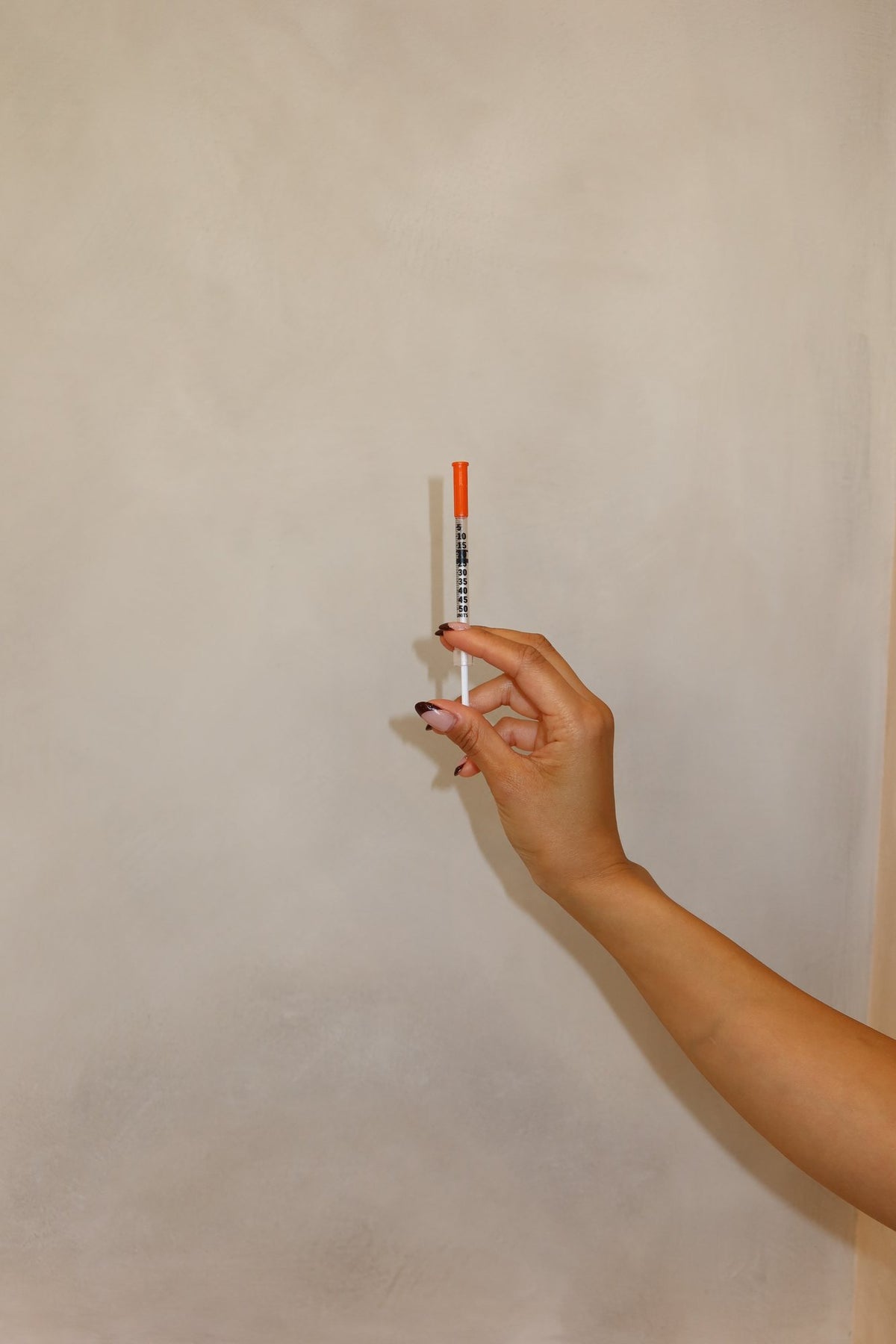
Semaglutide in Atlanta, GA
Semaglutide is a prescription GLP-1 receptor agonist used in medically supervised weight management. It mimics a natural gut hormone that regulates appetite and fullness, and it is prescribed as an adjunct to a reduced-calorie diet and increased physical activity — not as a replacement for them. It is not appropriate for everyone, and eligibility is determined through a medical evaluation.
The Benefits
Appetite Regulation
Acts on GLP-1 receptors involved in appetite regulation, which many patients experience as reduced hunger and less preoccupation with food.
Fullness That Holds
Slows gastric emptying, so a smaller volume of food tends to produce fullness and that fullness tends to last longer.
Steadier Blood Sugar
Enhances glucose-dependent insulin secretion and suppresses glucagon, supporting more stable post-meal blood sugar.
Once Weekly
Dosed once weekly by subcutaneous injection, which is a simpler regimen than daily medications for most people to sustain.
Gradual Titration
Delivered through a slow titration schedule specifically designed to let the gastrointestinal tract adapt and to keep side effects tolerable where possible.
Extensively Studied
Studied extensively in large randomized controlled trials for both glycemic control and chronic weight management, so its effects and its risks are unusually well characterized for this category.
Supervised Throughout
Used within a supervised program, it is paired with follow-up visits, monitoring, and coaching on nutrition, protein intake, and resistance training rather than being handed over as a standalone fix.
Not A Willpower Problem
Because the effect on appetite is pharmacologic rather than motivational, many patients find that the behavioral changes they have already tried become easier to sustain — though the medication does not make those changes for you, and results differ from person to person.
Real Results
Before & After
 After
After Before
 After
After Before
What Semaglutide Is
Semaglutide is a synthetic analog of glucagon-like peptide-1 (GLP-1), a hormone your small intestine releases after you eat. Natural GLP-1 breaks down within minutes; semaglutide is engineered to resist that breakdown, so a single subcutaneous injection keeps working across a full week. Because it activates the same receptors as the natural hormone, it belongs to a drug class called GLP-1 receptor agonists — the same family as liraglutide and, in a related but distinct dual-agonist class, tirzepatide.
Semaglutide is the active molecule inside several brand-name medications. Ozempic is FDA-approved for improving glycemic control in adults with type 2 diabetes. Wegovy is FDA-approved for chronic weight management in adults and adolescents who meet specific clinical criteria. Rybelsus is an oral semaglutide tablet approved for type 2 diabetes. The molecule is the same; the approved indication, dosing, and labeling differ by product. Referring to these brands here is factual context about the medication, not a statement about what any particular clinic dispenses.
Semaglutide is prescription-only in the United States, and prescribing it is an individualized medical decision. A licensed provider reviews your health history, current medications, prior weight-management attempts, and any laboratory work indicated by that history before determining whether treatment is appropriate, and if so, what product, dose, and monitoring schedule apply. There is no version of this medication that is safe to obtain or self-manage without clinical oversight, and a legitimate program will decline to treat people for whom the risks outweigh the potential benefit.

How It Works
GLP-1 is an incretin hormone released by the gut in response to food. Semaglutide binds to and activates GLP-1 receptors, which are found not only in the pancreas and gastrointestinal tract but also in areas of the brain that regulate hunger and satiety — most notably the hypothalamus and the hindbrain. Activating those central receptors is thought to be the main reason patients report feeling less hungry, feeling full sooner, and thinking about food less often. Because the drug is modified to resist enzymatic degradation and to bind to albumin in the bloodstream, it has a half-life of roughly a week, which is what makes once-weekly dosing possible.
In the digestive tract, GLP-1 receptor agonism slows gastric emptying, meaning food leaves the stomach more gradually. That prolongs fullness after a meal and blunts the post-meal glucose spike. It is also the direct cause of the class's most common side effects: nausea, early fullness, reflux, bloating, and constipation. This is why the medication is started at a low dose and increased slowly — the goal of titration is to give the gut time to adapt while appetite signaling shifts.
In the pancreas, semaglutide enhances insulin secretion in a glucose-dependent way — it stimulates insulin release when blood sugar is elevated and much less so when it is normal — and it suppresses glucagon, the hormone that raises blood sugar. That glucose-dependence is why semaglutide alone carries a relatively low risk of hypoglycemia in people without diabetes. That protection does not extend to people taking insulin or sulfonylureas, where the combination can cause serious low blood sugar and usually requires those doses to be adjusted by the prescriber.

What Semaglutide Treats
Chronic weight management
Semaglutide is used, under the appropriate approved labeling, as an adjunct to a reduced-calorie diet and increased physical activity in adults who meet clinical criteria for pharmacologic weight management. It is intended for long-term use, not a short-term reset.
Appetite and hunger regulation
Many patients describe a reduction in hunger cues and in persistent, intrusive thoughts about food. This is a pharmacologic effect on appetite signaling rather than a promised amount of weight change, and the degree of effect varies considerably between individuals.
Early satiety and portion control
By slowing how quickly the stomach empties, semaglutide tends to make a smaller volume of food feel satisfying and to prolong the sensation of fullness after meals. This same mechanism is responsible for much of the nausea seen during dose escalation.
Type 2 diabetes and glycemic control
Certain semaglutide products are FDA-approved to improve blood sugar control in adults with type 2 diabetes, alongside diet and exercise. Whether that applies to you is a matter for your prescribing provider and your broader diabetes care team, not a decision made at a med spa in isolation.
Weight-related metabolic risk factors
Clinical evaluation for weight management routinely considers weight-related conditions such as high blood pressure, dyslipidemia, obstructive sleep apnea, and prediabetes. These may inform whether treatment is indicated, but semaglutide is not a treatment for any of them on its own, and existing medications for them must be reviewed.
Weight maintenance after prior loss
Because appetite and metabolic adaptation tend to push weight back up after loss, some patients continue GLP-1 therapy specifically for maintenance. Any decision to continue, pause, or stop is made with a provider, with a clear plan for what happens next.
Structured, supervised weight-management programs
Medication is one component of a program that should also address nutrition, adequate protein intake, resistance training, sleep, and follow-up monitoring. Prescribing without that scaffolding is not good medicine, and outcomes in the clinical trials were achieved with lifestyle intervention included.
Is Semaglutide Right For You?
You May Be A Good Candidate If
- Adults who meet the clinical criteria for pharmacologic weight management under the approved labeling — criteria that involve body mass index thresholds and the presence of weight-related conditions, and that are assessed by a licensed provider rather than self-determined.
- People who have made genuine attempts at diet and activity changes and have found that appetite, hunger, and metabolic adaptation keep undermining them.
- People who are prepared to treat this as a long-term medical therapy with ongoing follow-up, not a short course to be abandoned once a number is reached.
- People willing to commit to the non-pharmacologic side of the program: adequate protein, resistance training to protect lean muscle mass, hydration, and honest reporting of side effects.
- People who can give a complete and accurate medical history — including all current medications, supplements, and any personal or family history of thyroid, pancreatic, gallbladder, kidney, or eating-disorder conditions.
- People without any of the contraindications below, as determined at a medical evaluation.
This May Not Be Right For You If
- Anyone with a personal or family history of medullary thyroid carcinoma (MTC), or with Multiple Endocrine Neoplasia syndrome type 2 (MEN 2). This is an absolute contraindication carried in the class's boxed warning.
- Anyone who is pregnant, trying to conceive, or breastfeeding. Semaglutide is contraindicated in pregnancy, and the labeling advises discontinuing it well in advance of a planned pregnancy — discuss the specific interval and reliable contraception with your provider.
- Anyone with known hypersensitivity to semaglutide or to any component of the formulation, or who has had a serious allergic reaction to a GLP-1 receptor agonist.
- Anyone with a history of pancreatitis, which requires careful specialist input and is generally a reason not to prescribe this class.
- Anyone with an active or recent eating disorder, or a history of one, where appetite-suppressing medication can be actively harmful.
- Anyone with severe gastrointestinal disease, gastroparesis, or significant delayed gastric emptying, since the drug's mechanism directly worsens that physiology.
- Anyone with active gallbladder disease, and — as a caution rather than a bright line — anyone with a history of gallstones, diabetic retinopathy, significant kidney disease, or a history of thyroid nodules, all of which require specific evaluation before any decision is made.
- Anyone taking insulin or a sulfonylurea without coordinated management, because the combination carries a real risk of hypoglycemia and those doses must be reviewed by the prescriber.
None of the above is a substitute for a medical evaluation, and none of it is a checklist you can complete on your own. Semaglutide is a prescription medication with a boxed warning and a real risk profile, and deciding whether it is appropriate for you requires a licensed provider who takes a full history, reviews your medications, orders any laboratory work your history indicates, and discusses the risks and alternatives with you. A responsible program will tell some people no. If any part of your history touches the contraindications listed here, say so plainly at your consultation — the point of the evaluation is to catch exactly those things.
How Semaglutide Compares
Semaglutide and tirzepatide are the two incretin-based medications most often discussed for weight management, and patients frequently ask how they differ. They are related but not interchangeable: they act on overlapping but distinct receptor targets, carry broadly similar warnings, and have been studied in separate trial programs. The table below is factual comparison, not a recommendation of one over the other.
| Feature | Semaglutide | Tirzepatide |
|---|---|---|
| Drug class | GLP-1 receptor agonist | Dual GIP and GLP-1 receptor agonist |
| Brand names of the molecule | Ozempic and Rybelsus (type 2 diabetes); Wegovy (chronic weight management) | Mounjaro (type 2 diabetes); Zepbound (chronic weight management) |
| Route and dosing | Once-weekly subcutaneous injection (an oral tablet formulation also exists for type 2 diabetes) | Once-weekly subcutaneous injection |
| Dose escalation | Started low and increased in stepwise intervals over months, on a schedule set by the prescriber | Started low and increased in stepwise intervals over months, on a schedule set by the prescriber |
| Primary mechanism | Appetite regulation in the brain, slowed gastric emptying, glucose-dependent insulin secretion, glucagon suppression | The same GLP-1 effects, plus additional GIP receptor activity, which is thought to contribute to its metabolic effects |
| Common side effects | Nausea, vomiting, diarrhea, constipation, abdominal pain, reflux — usually dose-related and most pronounced during titration | Nausea, vomiting, diarrhea, constipation, abdominal pain, reflux — a broadly similar gastrointestinal profile |
| Boxed warning | Thyroid C-cell tumors in rodent studies; contraindicated with personal or family history of MTC or MEN 2 | Thyroid C-cell tumors in rodent studies; contraindicated with personal or family history of MTC or MEN 2 |
Head-to-head comparison of average results across separate trial programs is not straightforward, and average trial figures say nothing about what any individual will experience. Which medication — if either — is appropriate for you is a clinical decision made with a licensed provider, based on your medical history, your other medications, your tolerance of side effects, your insurance and access situation, and how you respond over time. Neither drug is a better drug in the abstract.
What To Expect
Before The Treatment
- Medical consultation and evaluation. A licensed provider takes a full medical history, reviews every medication and supplement you take, discusses your weight history and prior attempts, and asks specifically about thyroid cancer, MEN 2, pancreatitis, gallbladder disease, kidney disease, gastrointestinal disorders, diabetic retinopathy, eating disorders, and pregnancy or plans to conceive.
- Baseline measurements and any laboratory work indicated by your history — which may include metabolic and kidney function panels, blood glucose or A1c, or other testing your provider determines is appropriate. What is ordered depends on your individual clinical picture.
- An informed-consent discussion covering the boxed warning, the contraindications, the common and serious side effects, the fact that the medication is an adjunct to diet and exercise, and the likelihood of weight regain if treatment stops.
- If treatment is appropriate, a prescription and a titration plan, along with instruction on injection technique, storage, and what to do about a missed dose.
- A plan for the non-medication side of treatment: protein targets, resistance training, hydration, and a follow-up cadence.
Results: Onset And How Long It Lasts
Change is gradual, unfolding over months as the dose is titrated. In clinical trials of semaglutide for chronic weight management, participants saw average total body weight reduction in the mid-teens percent range over roughly 68 weeks, combined with diet and exercise. Those are trial averages, not promises: individual results vary widely, some people respond minimally, and no outcome is guaranteed.
During The Treatment
- Semaglutide is given as a subcutaneous injection once weekly, on the same day each week, with or without food. You can change the day of the week if needed, provided the interval between doses is at least the minimum your prescriber specifies.
- Treatment starts at a low introductory dose. That first dose is not intended to be an effective weight-management dose — it exists to let your gut adapt.
- The dose is increased stepwise at intervals set by your prescriber, typically after several weeks at each level, and only if you are tolerating the current dose. Titration is not a race, and it is common and appropriate to hold at a dose, slow the schedule, or step back down if side effects are significant.
- Inject into subcutaneous fat in the abdomen, thigh, or upper arm. Rotate sites and rotate the specific spot within a site each week to avoid irritation and lipohypertrophy. Do not inject into muscle or vein.
- The needle is very fine and short, and most people describe the injection as a brief pinch or as barely noticeable. Mild redness, itching, or a small bump at the site can occur and typically settles quickly.
- Follow the storage instructions for your specific product, and never share a pen or needle with anyone else, even with a new needle attached.
How Often, And Why
Semaglutide is dosed once weekly by subcutaneous injection, on the same day each week. Treatment begins at a low introductory dose that is deliberately below the effective range, and the dose is increased in steps at intervals set by your prescriber — typically after several weeks at each level, and only if the current dose is being tolerated. Some people settle at a maintenance dose below the maximum, which is a perfectly legitimate outcome. Titration is individualized: holding a dose, extending the interval between increases, or stepping back down are all normal clinical responses to side effects, not failures.
This is best understood as a long-term treatment decision rather than a short course. Obesity is managed as a chronic condition, and the appetite-regulating effect of the medication lasts only as long as the medication is present. Studies of GLP-1 therapy have consistently shown that appetite tends to return and that substantial weight regain is common after discontinuation — an important reality to weigh before starting, and one reason nutrition, protein intake, resistance training, and sustainable habits are built into treatment from day one rather than added at the end. If and when you and your provider decide to stop or taper, do it as a planned conversation with a maintenance strategy in place, not by simply stopping.
Afterward
- Follow-up visits on the cadence your provider sets — more frequently early on and around dose increases, then at longer intervals once you are stable. Follow-up is where the dose gets adjusted and where problems get caught.
- Manage nausea proactively: smaller portions, eating slowly and stopping at the first sense of fullness, avoiding large fatty or greasy meals, and avoiding lying down immediately after eating. Nausea is usually dose-dependent and often improves as the body adapts to a given dose. Tell your provider if it does not.
- Hydrate deliberately. Reduced appetite often means reduced fluid intake, and dehydration — particularly alongside vomiting or diarrhea — is the mechanism by which this class can cause acute kidney injury.
- Prioritize protein at every meal and do resistance training at least twice weekly. Weight lost on any calorie deficit includes lean muscle mass, and protecting muscle is one of the most important things you can do while on a GLP-1. This is not optional advice.
- Continue the reduced-calorie diet and increased physical activity that the medication is prescribed as an adjunct to. In the clinical trials, the medication was always given alongside lifestyle intervention, never instead of it.
- Report promptly: severe or persistent abdominal pain, persistent vomiting or an inability to keep fluids down, symptoms of a gallbladder attack, a lump or swelling in the neck, hoarseness, or trouble swallowing. Also report low blood sugar symptoms if you take insulin or a sulfonylurea.
- Tell every clinician who treats you that you are on a GLP-1 receptor agonist — especially before any surgery, endoscopy, or procedure involving sedation or anesthesia, because delayed gastric emptying has been associated with reports of aspiration risk and your anesthesia plan may need to change.

How Much Does Semaglutide Cost in Atlanta, GA?
- What it is priced by: Per month
- Typical cost: From $499 / month
The figure above is a starting point, not a quote. What you pay depends on how much product your anatomy actually needs, which is a clinical judgement made in person. Ask at your consultation.
Side Effects And Downtime
Common And Expected
- Nausea — the most frequently reported effect, usually dose-dependent and often improving as the body adapts to each dose level
- Vomiting
- Diarrhea
- Constipation
- Abdominal pain, cramping, or bloating
- Acid reflux, heartburn, or belching
- Fatigue
- Headache, dizziness, and injection-site reactions such as redness, itching, or a small bump
When To Seek Care
- Severe, persistent abdominal pain — especially pain that radiates to the back, with or without vomiting. This can be pancreatitis. Stop the medication and seek emergency care.
- Persistent vomiting or diarrhea, an inability to keep fluids down, or signs of dehydration such as dark urine, markedly reduced urination, dizziness on standing, or confusion.
- Symptoms of a gallbladder attack: pain in the upper right abdomen, fever, yellowing of the skin or eyes (jaundice), or clay-colored stools.
- A lump or swelling in the neck, persistent hoarseness, trouble swallowing, or shortness of breath — report these to a physician promptly given the boxed warning regarding thyroid C-cell tumors.
- Signs of a serious allergic reaction: rash or hives, swelling of the face, lips, tongue, or throat, or difficulty breathing or swallowing. Call 911.
- Symptoms of low blood sugar — shakiness, sweating, confusion, rapid heartbeat, blurred vision — particularly if you also take insulin or a sulfonylurea.
Less Common, But Important To Know
- Pancreatitis (inflammation of the pancreas) — uncommon but serious; the classic presentation is severe, persistent abdominal pain that may radiate to the back, with or without vomiting. Stop the medication and seek medical care immediately.
- Gallbladder disease, including gallstones and cholecystitis — risk is associated with GLP-1 therapy itself and with rapid weight loss generally; may require surgery.
- Acute kidney injury, typically driven by dehydration from persistent vomiting or diarrhea.
- Boxed warning — thyroid C-cell tumors: in rodent studies, GLP-1 receptor agonists including semaglutide caused thyroid C-cell tumors, including medullary thyroid carcinoma. Whether this occurs in humans has not been determined. The medication is contraindicated in anyone with a personal or family history of medullary thyroid carcinoma (MTC) or Multiple Endocrine Neoplasia syndrome type 2 (MEN 2).
- Aspiration under anesthesia — because the drug delays gastric emptying, food may remain in the stomach longer than expected during sedation or general anesthesia. There have been reports of aspiration risk. Always tell your surgeon and anesthesiologist that you take a GLP-1 receptor agonist, well before any procedure.
- Hypoglycemia — uncommon with semaglutide alone in people without diabetes, but a genuine risk when combined with insulin or sulfonylureas, which may need dose adjustment by the prescriber.
- Other reported risks include worsening of diabetic retinopathy in people with diabetes, increased heart rate, severe gastrointestinal reactions, gastroparesis or ileus, and serious hypersensitivity reactions.
Downtime
There is no procedural downtime. A weekly subcutaneous injection takes seconds, requires no numbing, and you go straight back to your day — there is nothing to recover from in the way there is with an in-office procedure. The real story of tolerability is gastrointestinal. The days following an injection, and particularly the week or two after each dose increase, are when nausea, reflux, constipation, or fatigue are most likely to show up. For many people these are manageable and settle as the body adapts to a given dose; for some they are significant enough that the titration needs to be slowed, held, or reversed, and for a minority they are a reason to stop the medication altogether. Plan dose increases for weeks when you have some flexibility, and tell your provider what you are experiencing rather than pushing through it silently.
Who Performs This Treatment

Helen Zhang
Master Injector · Neuromodulators, filler, biostimulators and facial balancingHelen is one of Alcove's master injectors. Your appointment starts with an assessment of your face and your goals, and your plan is built from that conversation rather than from a menu.

Xing Xing Li
Master Injector · Neuromodulators, filler, biostimulators and facial balancingXing Xing is Alcove's master injector. Your appointment starts with an assessment of your face and your goals, and your plan is built from that conversation rather than from a menu.
Semaglutide FAQs
Not quickly, and that is by design. The starting dose is intentionally below the effective range and exists mainly to let your gut adapt. Appetite changes are often noticed within the first weeks, but meaningful change is gradual and unfolds over months as the dose is titrated upward. Anyone promising rapid results is not describing how this medication works.
Most people find it far easier than they expect. The needle is very fine and very short, and it goes into subcutaneous fat rather than muscle — most patients describe a brief pinch or say they barely feel it. Mild redness, itching, or a small bump at the site can occur and usually settles quickly. Rotating injection sites each week helps.
The medication's effect on appetite lasts only while the drug is in your system. Studies of GLP-1 therapy have consistently shown that appetite tends to return after discontinuation and that substantial weight regain is common. That is why this is framed as a long-term treatment decision, and why any decision to stop or taper should be a planned conversation with your provider with a maintenance strategy in place.
Semaglutide is a GLP-1 receptor agonist. Tirzepatide is a dual agonist acting on both GIP and GLP-1 receptors. Both are once-weekly subcutaneous injections, both are titrated slowly, and both carry the same boxed warning about thyroid C-cell tumors and a broadly similar gastrointestinal side-effect profile. Which one is appropriate — if either — is a clinical decision made with a provider, not a ranking.
Yes. Semaglutide is approved and prescribed as an adjunct to a reduced-calorie diet and increased physical activity, not as a replacement for them. In the clinical trials, the medication was always given alongside lifestyle intervention. The medication can make appetite easier to manage; it does not make the nutritional and activity changes for you, and a program that suggests otherwise is misleading you.
Nausea is the most common side effect, is usually dose-dependent, and often improves as your body adapts to a given dose. Eat smaller portions, eat slowly and stop at the first sense of fullness, avoid large fatty or greasy meals, and avoid lying down right after eating. Keep hydrating. If nausea is severe, persistent, or accompanied by vomiting, tell your provider — the titration may need to be slowed or held.
Weight lost in any calorie deficit includes lean muscle mass, and that is a genuine consideration with GLP-1 therapy, where appetite suppression can cut protein intake sharply. This is why protein at every meal and resistance training at least twice weekly are treated as core parts of the program rather than optional extras. Raise this with your provider explicitly at your consultation.
Semaglutide has been studied in large randomized trials and is FDA-approved for long-term use in its approved indications, and obesity is managed as a chronic condition. That is not the same as risk-free. It carries a boxed warning regarding thyroid C-cell tumors seen in rodent studies, is contraindicated in several populations, and carries real risks including pancreatitis and gallbladder disease. Long-term use means long-term medical supervision.
Discuss this with your provider. Alcohol can irritate the stomach and worsen nausea and reflux, which are already the most common side effects — many patients find their tolerance drops noticeably. Alcohol also contributes to dehydration and, in people taking insulin or a sulfonylurea, can increase the risk of hypoglycemia. Heavy alcohol use is additionally a risk factor for pancreatitis.
Follow the instructions for your specific product and the guidance your prescriber gave you, since the rules depend on how much time has passed since the missed dose and on how long it is until the next scheduled one. Never double up to make up for a missed injection. If you are unsure, or if you have missed several doses, contact your provider before injecting — restarting may require re-titration.
Semaglutide is the active ingredient in both. Ozempic is FDA-approved for improving glycemic control in adults with type 2 diabetes; Wegovy is FDA-approved for chronic weight management in patients meeting specific criteria; Rybelsus is an oral form approved for type 2 diabetes. Same molecule, different approved indications, dosing, and labeling. Which product is appropriate for you is determined by your prescribing provider.
It is contraindicated in anyone with a personal or family history of medullary thyroid carcinoma (MTC) or Multiple Endocrine Neoplasia syndrome type 2 (MEN 2); in pregnancy, while trying to conceive, or while breastfeeding; and in anyone with known hypersensitivity to it. It requires great caution or is avoided with a history of pancreatitis, gallbladder disease, severe GI disease or gastroparesis, diabetic retinopathy, kidney disease, or an eating disorder.
Yes — tell every clinician who treats you, and raise it well before any procedure involving sedation or general anesthesia. Because semaglutide delays gastric emptying, food may remain in the stomach longer than expected, and there have been reports of aspiration risk under anesthesia. Your anesthesia team may want to adjust your fasting instructions or your dosing schedule beforehand.
Pairs Well With


Book Your Consultation
A consultation is a conversation about your face, not a sales appointment. Bring your questions about Semaglutide and your medical history, and leave with an honest answer about whether it is the right treatment for you.