



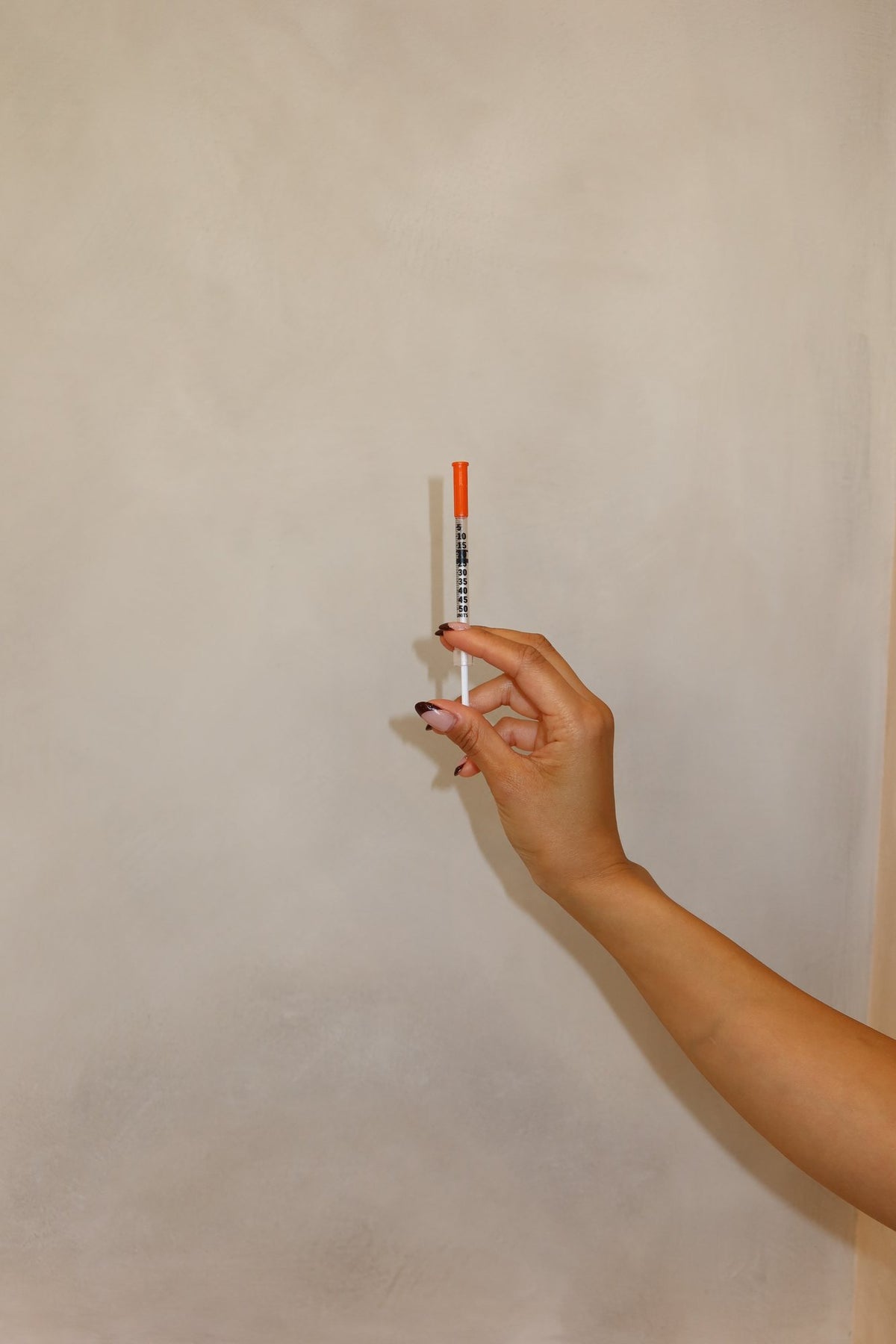
Weight Loss Starter Program in Atlanta, GA
The hardest part of medical weight management is not the middle. It is the beginning — the evaluation that decides whether treatment is safe for you, the first weeks of titration when side effects cluster, and the habits that either get built now or do not get built at all. A starter program is designed around that phase. It is a genuine on-ramp, and it is not a complete treatment, and the second half of that sentence matters as much as the first.
The Benefits
A Proper Starting Point
It provides a proper starting point — a full evaluation, supervised initiation, and close follow-up during the phase where things are most likely to go wrong.
Find Out If It Suits You
It is a structured way to find out whether a given medication suits you, which is genuinely unpredictable in advance and varies enormously between individuals.
Full Evaluation First
The initial evaluation is not abbreviated because the program is shorter; the same screening for contraindications applies, and for some people the answer is that treatment is not appropriate.
The Titration Phase
The titration phase — where side effects cluster and where most people who abandon treatment do so — is the part that receives the closest supervision.
Habits Built Early
Protein, resistance training, and hydration habits are established at the point they are easiest to establish, rather than introduced months later against set patterns.
Lower Initial Commitment
The commitment is defined and smaller than open-ended long-term management, which is a reasonable way to begin something you are uncertain about.
A Decision Point
It ends in a decision point with real information behind it — about tolerability, response, and sustainability — which is worth more than the weight change over the same period.
Not A Complete Course
It is not a complete treatment. Obesity is managed as a chronic condition, and a defined starting period treated as the whole of treatment is a route to regain.
Real Results
Before & After
 After
After Before
 After
After Before
What Weight Loss Starter Program Is
A starter program is the initial phase of medically supervised weight management: a full clinical evaluation, initiation of pharmacotherapy where appropriate, the early titration period during which the dose is increased stepwise, close follow-up while tolerance is established, and the foundational nutritional and training guidance that the rest of treatment rests on.
It exists because the beginning of treatment is genuinely different from the rest of it. Three things concentrate in the first weeks and months. The evaluation determines whether pharmacotherapy is appropriate at all, and for some people the answer is no. The titration phase is when side effects are most likely and most likely to be severe, and when the decision about whether a given medication is tolerable actually gets made. And the behavioral scaffolding — adequate protein, resistance training, hydration, a realistic eating pattern under reduced appetite — is established now or not at all, because it is much harder to introduce later.
What a starter program is not is a short course of weight loss. This is the point where honesty matters more than marketing. Obesity is managed as a chronic, relapsing condition. The appetite-regulating effect of incretin-based medication lasts only while the medication is present, and published follow-up consistently shows that appetite returns and substantial regain is common after discontinuation. A defined starting period is a sensible way to begin; treated as the whole of treatment, it is a route to losing weight and then getting it back, which is worse than not starting for most people's morale and no better for their health.
The reasonable framing is that a starter program ends in a decision rather than a result. At the end of it you will know whether the medication suits you, whether you tolerate it, whether it is working, whether the non-pharmacologic components are something you can sustain, and whether long-term management is what you want. That is genuine and useful information, and it is worth more than the weight change in the same period.
The medications used are the same as in longer-term management — GLP-1 receptor agonists such as semaglutide, or dual GIP and GLP-1 receptor agonists such as tirzepatide — and they have their own pages covering how they work, who they suit, and what warnings they carry.

How It Works
The phase begins with a full medical evaluation, which is identical to the one required for any medically supervised weight management and is not abbreviated because the program is shorter. A licensed provider takes a full history, reviews every medication and supplement, and screens specifically for the conditions that contraindicate incretin-based therapy — personal or family history of medullary thyroid carcinoma, Multiple Endocrine Neoplasia syndrome type 2, pancreatitis, gallbladder disease, severe gastrointestinal disease or gastroparesis, kidney disease, diabetic retinopathy, current or past eating disorders, and pregnancy or plans to conceive. Baseline measurements and laboratory work follow from that history.
Where treatment is appropriate, it begins at a low introductory dose that sits deliberately below the effective range. That first dose exists to let the gastrointestinal tract adapt rather than to produce weight change, and misunderstanding this is a common source of early disappointment. The dose is then increased stepwise at intervals set by the prescriber, and only if the current dose is being tolerated.
That titration is the core of what a starter program supervises. Side effects cluster around dose increases, and the practical decisions — whether to escalate, hold, extend the interval, or step back down — are made repeatedly during this phase. Getting them right is what determines whether someone continues treatment or abandons it, and it is much harder to get right without close contact. Titration is a tolerability strategy rather than a schedule to be completed.
Alongside, the behavioral components are established. Protein intake becomes both more important and harder as appetite falls, because weight lost in any deficit includes lean muscle and reduced total intake tends to cut protein first. Resistance training provides the signal to retain muscle. Hydration falls with appetite, and dehydration alongside vomiting or diarrhea is the mechanism by which this class of medication can cause acute kidney injury. Establishing all three as routine now is substantially easier than introducing them once patterns have set.
The phase ends in an assessment rather than a finish line. What is being evaluated is whether the medication is tolerable, whether it is producing an effect, whether the non-pharmacologic components are sustainable for you, and whether long-term management is the right course. That conversation should be scheduled from the outset rather than arising when a package runs out.

What Weight Loss Starter Program Treats
Establishing whether pharmacotherapy is appropriate at all
The evaluation is the first and most important function. For some people the honest answer is no, and finding that out properly is a good outcome rather than a wasted appointment.
The titration phase, where side effects cluster
The first weeks and each dose increase are when nausea and gastrointestinal effects are most likely and most likely to be severe. Close supervision during that period is where a starter program earns its keep.
Finding out whether you tolerate a given medication
Tolerability varies enormously between individuals and is not predictable in advance. A defined initial period is a reasonable way to find out with support rather than alone.
Building the non-pharmacologic habits early
Protein at every meal, resistance training, and deliberate hydration are much easier to establish at the start than to introduce months in. This is the window for it.
Learning to eat well while eating considerably less
Reduced appetite makes adequate protein and micronutrient intake harder rather than easier, and the practical skills for that are learned rather than intuited.
Injection technique, storage, and dosing routine
Practical competence with a weekly self-administered injection, including what to do about a missed dose, which is worth establishing under supervision.
A structured decision point about continuing
The intended endpoint. At the end of the phase you have real information about whether long-term management suits you — which is more useful than the weight change over the same period.
Not a complete treatment for a chronic condition
Listed deliberately. A defined starting period is a beginning. Treated as the whole of treatment it is a route to losing weight and regaining it, and any program presenting it otherwise is misleading you.
Is Weight Loss Starter Program Right For You?
You May Be A Good Candidate If
- Adults who meet the clinical criteria for pharmacologic weight management and want to begin under supervision rather than commit to open-ended treatment at the outset.
- People uncertain whether medication is right for them, who want a structured way to find out with support.
- People who want the evaluation itself — a proper assessment of whether pharmacotherapy is appropriate and safe for them.
- People who understand that this is a beginning, and who are open to continuing if it suits them.
- People willing to engage with the nutritional and training components from the start rather than treating them as optional.
- People who can attend close follow-up during the titration phase, which is when supervision matters most.
- People willing to titrate slowly and to report side effects rather than pushing through them.
- People without any contraindication, as determined at a medical evaluation.
This May Not Be Right For You If
- Anyone with a personal or family history of medullary thyroid carcinoma, or with Multiple Endocrine Neoplasia syndrome type 2 — an absolute contraindication carried in the boxed warning.
- Anyone who is pregnant, trying to conceive, or breastfeeding.
- Anyone with an active or recent eating disorder, or a history of one, where appetite-suppressing medication can be actively harmful and referral rather than prescription is appropriate.
- Anyone with a history of pancreatitis, active gallbladder disease, severe gastrointestinal disease, or gastroparesis.
- Anyone with significant kidney disease, diabetic retinopathy, or thyroid nodules, each requiring specific evaluation before any decision.
- Anyone taking insulin or a sulfonylurea without coordinated management, given the real risk of hypoglycemia.
- Anyone with known hypersensitivity to the medication proposed or any component of its formulation.
- Anyone under 18, for whom these medications are not established outside specific approved indications assessed by a physician.
- Anyone looking for rapid weight loss before a specific date. The starting dose is deliberately below the effective range and change is slow — this is the wrong tool for a deadline.
- Anyone intending to stop at the end of the phase and expecting the result to hold. That expectation is not supported by the evidence, and someone planning that should understand it before starting rather than afterward.
- Anyone unwilling to engage with protein intake and resistance training, since medication alone risks losing muscle along with fat.
- Anyone whose concern is body image distress rather than health, where the right referral is not a weight program.
There is one question worth asking directly at the outset: what happens at the end. A starter program that has no answer, or whose answer is simply that the package finishes, is selling a period of weight loss rather than the beginning of treatment for a chronic condition — and the predictable outcome of that is regain. A good program tells you at the start that the phase ends in a decision, describes what that decision will be based on, and is honest that continuing may well be the appropriate answer. Beyond that, expect the same full evaluation any medical weight-management program requires: complete history, direct screening questions, medication review, and laboratory work as indicated. Ask what is being prescribed — an FDA-approved product or a compounded preparation — and what monitoring is included.
How Weight Loss Starter Program Compares
The useful comparison is between ways of beginning, since that is what this is. The table sets out how a supervised starting phase differs from the alternatives.
| Feature | Supervised starter phase | Long-term program from the outset | Prescription-only telehealth | Lifestyle change alone |
|---|---|---|---|---|
| Initial evaluation | Full history, screening, and laboratory work as indicated | The same | Varies widely; sometimes a questionnaire | Not applicable |
| Supervision during titration | Close, and this is the main point of the phase | Close | Varies; often minimal | Not applicable |
| Commitment required | Defined and shorter | Open-ended from the start | Usually month to month | Ongoing |
| Habits established early | Yes — protein, training, hydration from the outset | Yes | Frequently not addressed | Central to the approach |
| Ends in | A decision about whether to continue | Ongoing management | Whenever you stop ordering | No endpoint |
| Suits | People uncertain whether medication is right for them | People already committed to long-term management | People prioritizing convenience and cost | People for whom medication is not indicated or not wanted |
| Main risk | Being treated as a complete course, which leads to regain | None specific to the structure | The scaffolding that makes medication work is often absent | Appetite and metabolic adaptation remain unaddressed |
| Cost profile | Lower initial outlay for a defined period | Higher commitment up front | Typically lowest | Lowest |
The risk row is the one that matters. A defined starting period is a sensible structure and a poor destination. If you begin one, begin it understanding that the likely and appropriate outcome is continuing — and that stopping at the end without a maintenance plan is the scenario the published evidence predicts will not hold.
What To Expect
Before The Treatment
- A full medical evaluation identical to that required for longer-term management: history, examination, weight history and prior attempts, and a complete medication and supplement review.
- Direct screening questions about thyroid cancer and MEN 2, pancreatitis, gallbladder disease, kidney disease, gastrointestinal disorders, diabetic retinopathy, eating disorders, oral contraception, and pregnancy or plans to conceive.
- Baseline measurements and any laboratory work your history indicates.
- An informed-consent discussion covering the boxed warning, contraindications, common and serious side effects, the adjunct nature of the medication, and the likelihood of regain after stopping.
- A clear answer about what is being prescribed — an FDA-approved product or a compounded preparation — and what that distinction means.
- An explicit statement of what happens at the end of the phase and what the decision will be based on. Ask if it is not volunteered.
- A titration plan, instruction in injection technique and storage, and guidance on a missed dose.
- Initial guidance on protein targets, resistance training, and hydration, with the reasoning behind each rather than a handout.
Results: Onset And How Long It Lasts
Expectations for a starting phase should be set carefully, because the structure invites a misreading. The initial dose sits deliberately below the effective range and exists mainly to let the gut adapt, so early weight change is typically modest — someone expecting rapid results in the first weeks is expecting something the medication is not doing yet. Appetite effects are frequently noticed sooner than weight change. Across the phase, as the dose is titrated upward, change accumulates gradually. What the phase reliably produces is information rather than a final outcome: whether you tolerate the medication, whether it is having an effect, whether the protein and training components are sustainable for you, and whether long-term management is what you want. That information is genuinely the deliverable, and it is worth more than the number on the scale at the end of the period. What a starting phase does not produce is a durable result on its own. The appetite-regulating effect lasts only while the medication is present, and published follow-up consistently shows appetite returns and substantial regain is common after discontinuation — so stopping at the end of a defined period without a maintenance plan is the scenario the evidence predicts will not hold. This page publishes no numeric efficacy figures, because trial averages say nothing reliable about any individual and would particularly misrepresent a short initial period.
During The Treatment
- Close follow-up, particularly around each dose increase, which is where side effects cluster and where the decisions that matter get made.
- Weight, measurements, and tolerability reviewed at each visit.
- Dose adjustment based on tolerance rather than on a fixed schedule. Holding, extending the interval, or stepping back down are all normal clinical responses.
- Practical support with the things that are genuinely difficult early: managing nausea, eating adequately under reduced appetite, and hitting protein targets when you do not feel like eating.
- Review of resistance training and activity, since this is the window in which those habits are most easily established.
- Attention to hydration, which falls with appetite and is the pathway by which this class of medication can cause acute kidney injury.
- Review of any other medication, particularly insulin or a sulfonylurea, which may need adjusting.
- A scheduled assessment toward the end of the phase, covering tolerability, response, sustainability, and whether to continue.
How Often, And Why
Contact during a starting phase is deliberately frequent, and more so around each dose increase. That cadence reflects where the risk and the decisions actually sit: escalation is when side effects cluster, when tolerability is established, and when the judgment about whether to proceed, hold, or step back is made repeatedly.
The medication is generally dosed weekly, beginning at a low introductory dose and increasing stepwise at intervals set by the prescriber, and only where the current dose is tolerated. Not everyone reaches a high dose, and settling at a lower maintenance dose is a legitimate outcome rather than an incomplete one.
The phase itself is defined rather than open-ended, and it should end with a scheduled assessment rather than by simply running out. What that assessment covers is whether the medication is tolerable, whether it is producing an effect, whether the nutritional and training components are sustainable for you, and what happens next. Booking that conversation at the beginning rather than at the end is worth doing.
Beyond the phase, the honest position is that obesity is managed as a chronic condition and that continuing is a common and appropriate outcome. Some people transition to longer-term management; some stop with a structured plan; some conclude that this approach is not for them, which is a legitimate result of a phase designed to answer that question. What should not happen is drifting off the end of a package with no conversation and no plan, since that is the scenario most likely to produce loss followed by regain.
Afterward
- Have the end-of-phase conversation properly rather than letting the program simply lapse. The decision is the deliverable.
- If continuing, move onto a longer-term plan with an explicit maintenance strategy rather than assuming continuity.
- If stopping, do so with a planned approach and understand that appetite returns and regain is common — and that this is the expected outcome rather than a personal failure.
- Continue the reduced-calorie diet and increased physical activity regardless of what you decide about medication.
- Prioritize protein at every meal and resistance training at least twice weekly, which matter more after stopping than during treatment.
- Hydrate deliberately, particularly if you experienced any gastrointestinal side effects.
- Report side effects rather than enduring them, both during the phase and afterward.
- Tell every clinician who treats you that you take or have recently taken an incretin-based medication, especially before surgery, endoscopy, or any procedure involving sedation.
- Report promptly: severe or persistent abdominal pain, persistent vomiting, gallbladder symptoms, a lump or swelling in the neck, hoarseness, or trouble swallowing.

How Much Does Weight Loss Starter Program Cost in Atlanta, GA?
- What it is priced by: Per month
- Typical cost: From $299 / month
The figure above is a starting point, not a quote. What you pay depends on how much product your anatomy actually needs, which is a clinical judgement made in person. Ask at your consultation.
Side Effects And Downtime
Common And Expected
- Nausea, most pronounced in the first weeks and around each dose increase, and often improving as the body adapts to a given level
- Vomiting
- Diarrhea or constipation
- Abdominal pain, cramping, or bloating
- Acid reflux, heartburn, or indigestion
- Reduced appetite to the point of inadequate eating or drinking
- Fatigue, which is common early and worth accounting for
- Headache and dizziness
- Injection-site reactions such as redness, itching, or a small bump
- Early disappointment at the pace of change, which reflects the starting dose being below the effective range rather than the treatment failing
When To Seek Care
- Severe, persistent abdominal pain, especially radiating to the back, with or without vomiting. This can be pancreatitis. Stop the medication and seek emergency care.
- Persistent vomiting or diarrhea, inability to keep fluids down, or signs of dehydration such as dark urine, markedly reduced urination, dizziness on standing, or confusion. This risk is highest during titration.
- Symptoms of a gallbladder attack: pain in the upper right abdomen, fever, jaundice, or clay-colored stools.
- A lump or swelling in the neck, persistent hoarseness, trouble swallowing, or shortness of breath.
- Signs of a serious allergic reaction: rash or hives, swelling of the face, lips, tongue, or throat, or difficulty breathing. Call 911.
- Symptoms of low blood sugar — shakiness, sweating, confusion, rapid heartbeat, blurred vision — particularly if you take insulin or a sulfonylurea.
- Any new or worsening vision change, especially if you have diabetes.
- Side effects severe enough that you are considering stopping on your own. Contact your provider first — the dose can usually be adjusted.
Less Common, But Important To Know
- Boxed warning — thyroid C-cell tumors: incretin-based medications caused thyroid C-cell tumors in rodent studies. Whether this occurs in humans has not been determined, and these medications are contraindicated with a personal or family history of MTC or MEN 2.
- Pancreatitis — uncommon but serious, presenting as severe persistent abdominal pain that may radiate to the back. Stop the medication and seek care immediately.
- Gallbladder disease, including gallstones and cholecystitis.
- Dehydration and acute kidney injury, typically driven by persistent vomiting or diarrhea, and among the more preventable serious complications during titration specifically.
- Aspiration under anesthesia, since delayed gastric emptying means food may remain in the stomach longer than expected during sedation.
- Hypoglycemia, a genuine risk combined with insulin or sulfonylureas.
- Reduced effectiveness of oral hormonal contraception, particularly after starting and after each dose increase — which makes this specifically relevant during a titration phase.
- Loss of lean muscle mass where protein intake and resistance training are neglected.
- Severe intolerance requiring discontinuation, which is a real outcome of an initial phase and is precisely the sort of thing it exists to establish.
- Serious hypersensitivity reactions including angioedema.
Downtime
No procedural downtime — a weekly injection takes seconds. The relevant burden is gastrointestinal and it is concentrated in exactly the period this phase covers. The first weeks and the week or two after each dose increase are when nausea, reflux, constipation, and fatigue are most likely and most pronounced, which is why the phase is supervised closely. For many people these are manageable and settle as the body adapts. For some they require titration to be slowed, held, or reversed, and for a minority they are a reason to stop — which is useful information rather than a failure. Plan dose increases for weeks with some flexibility rather than immediately before something demanding, and expect fatigue to be a real factor early. Report what you are experiencing rather than pushing through it; during a starting phase in particular, the whole point of the contact is that adjustments can be made.
Who Performs This Treatment

Helen Zhang
Master Injector · Neuromodulators, filler, biostimulators and facial balancingHelen is one of Alcove's master injectors. Your appointment starts with an assessment of your face and your goals, and your plan is built from that conversation rather than from a menu.

Xing Xing Li
Master Injector · Neuromodulators, filler, biostimulators and facial balancingXing Xing is Alcove's master injector. Your appointment starts with an assessment of your face and your goals, and your plan is built from that conversation rather than from a menu.
Weight Loss Starter Program FAQs
No, and framing it that way is the commonest misunderstanding. It is the beginning of treatment for a chronic condition, structured so that the evaluation, the titration, and the early habits get proper attention. Treated as a complete course it is a route to losing weight and getting it back, because the appetite effect lasts only while the medication is present.
A decision, which is the actual deliverable. At that point you will know whether you tolerate the medication, whether it is working, whether the protein and training components are sustainable for you, and whether long-term management is what you want. Ask at the outset what that conversation will be based on — a program with no answer is selling a period rather than a beginning.
Because the medication is the same and so are the risks. Screening for a personal or family history of medullary thyroid carcinoma, pancreatitis, gallbladder disease, eating disorders, and pregnancy is not abbreviated because the phase is shorter. An evaluation that feels perfunctory is a warning sign regardless of how the program is packaged.
Because the starting dose sits deliberately below the effective range — it exists to let your gut adapt rather than to produce weight change. Appetite effects are often noticed before weight change is. This is expected and worth knowing in advance, since early disappointment is a common reason people abandon treatment that would have worked.
You can, and you should understand what the evidence predicts. Appetite returns because the effect lasts only while the medication is present, and published follow-up consistently shows substantial regain is common after discontinuation. If stopping is your plan, it should be a planned taper with a maintenance strategy rather than simply ceasing — and it is worth deciding that before you start, not afterward.
That is a real outcome and it is one of the things this phase exists to establish. Titration can be slowed, held, or stepped back down, and those are normal clinical responses rather than failures. If a medication genuinely does not suit you, finding that out under supervision — rather than alone, or by abandoning treatment — is a useful result.
Yes, and beginning is precisely when it is easiest. Weight lost in any deficit includes lean muscle, and appetite suppression makes it easy to undereat protein badly without noticing. Establishing protein targets and resistance training now is far easier than introducing them months in against set patterns — and it determines whether the weight you lose is fat or muscle.
Frequently, and more so around each dose increase. That is deliberate: escalation is when side effects cluster and when the decisions that matter — escalate, hold, extend, or step back — are made. Close contact during titration is most of what distinguishes a supervised start from obtaining a prescription.
No. The medications used are the same — GLP-1 receptor agonists or dual GIP and GLP-1 receptor agonists — and they have their own pages covering mechanism, contraindications, and warnings. What differs is the structure around them and the length of the commitment, not the pharmacology.
No. Change during a starting phase is modest by design, since the initial dose sits below the effective range and titration takes months. Using a medical weight-management program as a deadline tool misunderstands both the pharmacology and the framing, and a provider should tell you so rather than take the booking.
Possibly, and that is a legitimate outcome of a proper evaluation. Certain histories are absolute contraindications, and a current or past eating disorder is a reason for referral rather than prescription. A program that never declines anyone is not screening properly, and the evaluation is arguably the most valuable part of what you are buying.
What the evaluation includes and whether laboratory work is part of it. Whether the medication is FDA-approved or compounded. How often you will be seen during titration and by whom. What the protein target is and whether training guidance is included. And — most importantly — what happens at the end of the phase. That last answer tells you what kind of program this actually is.
Pairs Well With


Book Your Consultation
A consultation is a conversation about your face, not a sales appointment. Bring your questions about Weight Loss Starter Program and your medical history, and leave with an honest answer about whether it is the right treatment for you.