



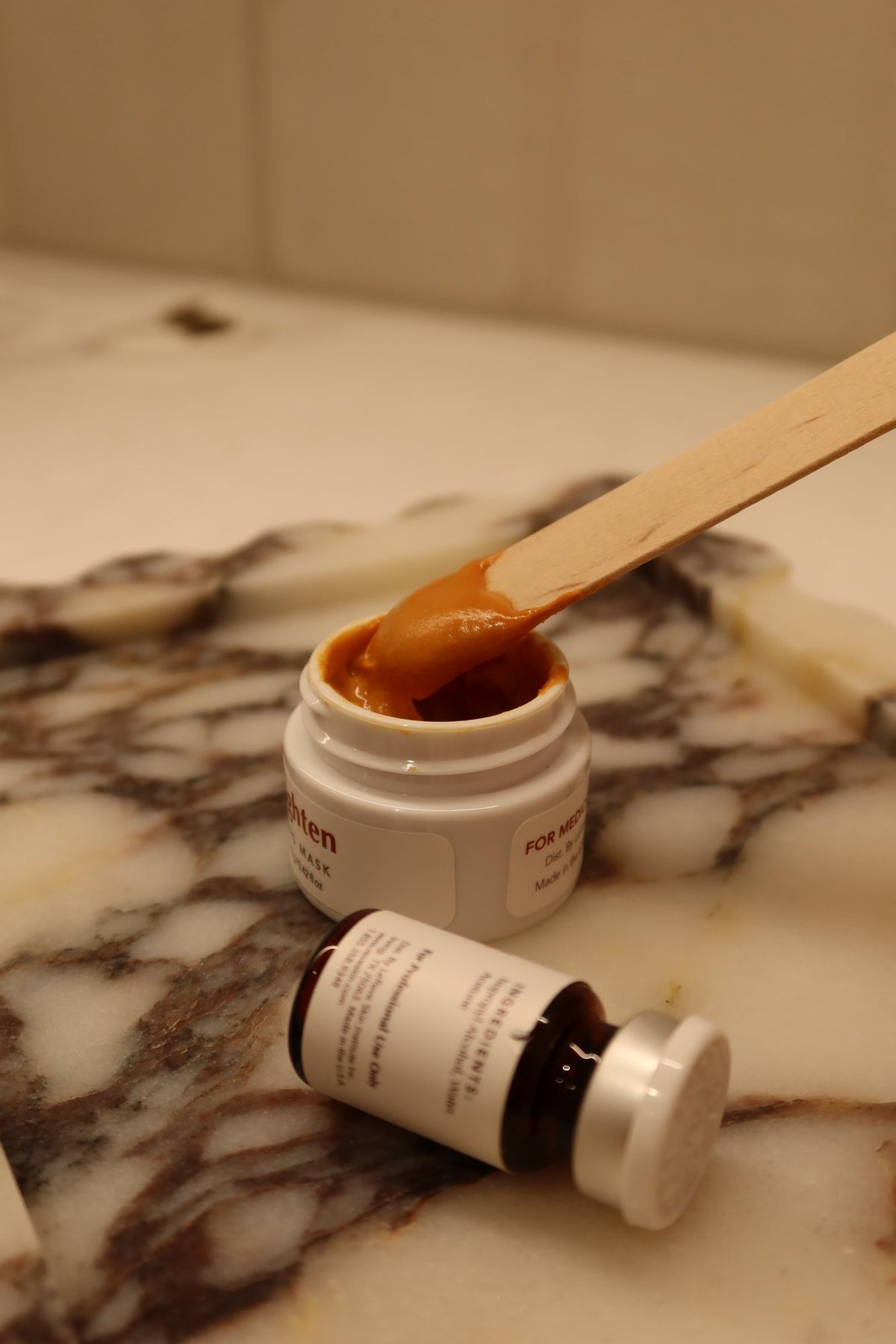
Re-Fresh Chemical Peel in Atlanta, GA
Not everything needs a laser. A great deal of what makes skin look tired is simply the outermost layer — dead cells sitting longer than they should, dulling the surface and roughening the texture. A superficial peel resets that layer with a controlled chemical exfoliation, and does it with little or no visible recovery. It is a small treatment used regularly rather than a large one used rarely, and it is honest about being exactly that.
The Benefits
Surface Level, On Purpose
It works within the epidermis by design, which is why recovery is short and why the risk profile is far smaller than deeper resurfacing treatments carry.
Little To No Downtime
Downtime is minimal — often nothing more than mild redness and a few days of light flaking, and sometimes not even that.
Turnover, Restarted
It restarts the skin's own turnover cycle, which slows with age and stalls with sun damage, dehydration, and inflammation.
Dullness And Congestion
Dullness, roughness, and congestion are its clearest targets, and improved light reflection is the change patients notice most reliably.
Works Across Skin Tones
With appropriate agent selection it is usable across a wide range of skin tones, which is not true of every resurfacing option.
Builds With Repetition
The effect compounds with repetition, so a course produces considerably more than any single treatment does.
Pairs With Everything
It combines readily with most other elements of a treatment plan and is often used as maintenance between more substantial procedures.
Honest About Depth
It is honest about its depth: it does not reach the dermis, so deep lines and scarring are outside its range and no series will change that.
Real Results
Before & After
 After
After Before
 After
After Before
 After
After Before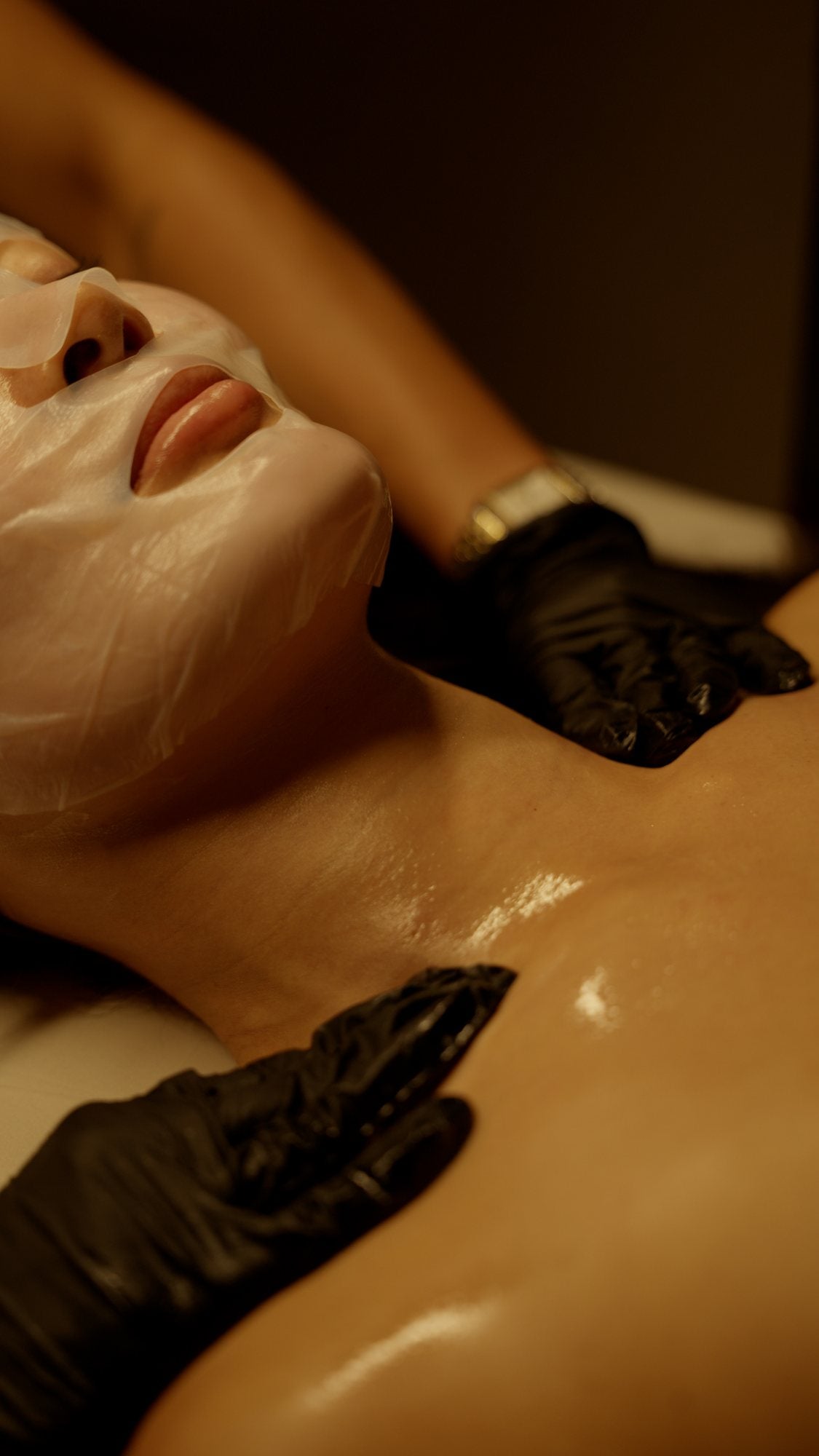
What Re-Fresh Chemical Peel Is
A chemical peel applies an acid solution to the skin to produce a controlled, predictable injury to a defined depth, prompting the treated layers to shed and be replaced. Peels are classified by how deep that injury goes — superficial, medium, and deep — and the depth determines everything else about them: what they can treat, how long recovery takes, and what can go wrong. A superficial peel works within the epidermis, the outermost compartment of skin, and does not reach the dermis beneath it.
The agents used at this depth are principally alpha hydroxy acids such as glycolic, lactic, and mandelic acid, and the beta hydroxy acid salicylic acid, used alone or in blends. Alpha hydroxy acids are water-soluble and act largely at the surface, loosening the bonds between the dead cells of the outermost layer so they release and shed. Salicylic acid is oil-soluble, which allows it to penetrate into the sebaceous follicle, and it is anti-inflammatory as well as exfoliating — which is why it features in peels aimed at congestion and breakouts. Lactic acid is comparatively gentle and hydrating; mandelic acid has a larger molecule that penetrates more slowly and is often selected where a more measured effect is wanted.
The specific formulation used in any given peel — which acids, at what concentration, at what pH, and left on for how long — is chosen for your skin and your goals at consultation. Those variables matter considerably more than the name on the bottle, and two peels described the same way can behave quite differently. It is entirely reasonable to ask what is being applied to your face and why.
What a superficial peel does not do is reach the dermis, and that boundary determines its limits honestly. Deep lines, atrophic scarring, and significant structural photodamage all live below the depth this treatment operates at, and no number of superficial peels will address them. What sits within its range is the surface: dullness, roughness, uneven tone, congestion, and the general quality of the outermost layer. Used repeatedly, that adds up to a real and visible difference. Used with expectations borrowed from a resurfacing laser, it will disappoint.
How It Works
The outermost layer of skin, the stratum corneum, is made of dead keratinocytes held together by protein bridges. Normally these cells shed continuously and imperceptibly as new cells arrive from below, with the whole epidermis turning over across a cycle of several weeks. That cycle slows with age, and it is disrupted by sun damage, dehydration, and inflammation. When shedding slows, dead cells accumulate at the surface — which is what makes skin look dull, feel rough, and reflect light unevenly.
A superficial peel intervenes chemically. Alpha hydroxy acids reduce the cohesion between those cells by acting on the bonds that hold them together, so the outer layers release and shed rather than remaining stacked. Salicylic acid does something related but is oil-soluble, which allows it to travel into the sebaceous follicle and act on the plug of cells and sebum that produces a blackhead or a comedone.
Beneath that mechanical effect there is a signaling one. Removing the outer layers and producing a mild controlled injury prompts the epidermis to accelerate its replacement cycle, and the healing response reaches the upper dermis even when the acid itself does not. Repeated across a series, that accelerated turnover is associated with improvements in surface smoothness and in the distribution of pigment, and with the skin behaving generally better than it did.
Depth is controlled by several variables at once, which is why formulation matters more than the category name. The acid used, its concentration, the pH of the solution, whether the skin was prepared beforehand, and how long the solution is left in contact all determine how far it reaches. Peels are also neutralized or removed at a chosen endpoint, so the practitioner is actively controlling depth during the treatment rather than applying something and hoping.
Because the injury stays within the epidermis, healing is quick and complications are relatively few. The main risk is not from the peel going too deep in the moment but from the inflammation it produces provoking pigment-producing cells afterward — which is why sun protection following a peel is not an afterthought, and why skin type is discussed before an agent is chosen.

What Re-Fresh Chemical Peel Treats
Dull, tired-looking skin
The core indication. Accumulated dead cells at the surface scatter light and flatten the skin's appearance; removing them restores reflection. This is the effect patients notice most reliably.
Rough or uneven surface texture
Superficial roughness responds well to controlled exfoliation. Textural problems rooted in the dermis — scarring, deep creasing — do not, and are a different conversation.
Congestion, blackheads, and mild breakouts
Oil-soluble agents reach into the follicle, which is why peels aimed at congestion are formulated differently from those aimed at tone. Persistent or cystic acne is a medical problem needing medical treatment rather than a peel series.
Uneven tone and superficial pigmentation
Pigment sitting in the outer layers can be improved by accelerating turnover. Deeper pigment and melasma sit lower and need a different approach, often at a different depth with additional caution.
Post-inflammatory marks after breakouts
The flat brown or red marks left behind after a spot heals are surface-level and often respond to a peel series, alongside sun protection. True indented scarring is a separate problem entirely.
Fine lines and early textural change
Very superficial lines can soften as turnover improves. Anything etched or set is beyond the depth of this treatment.
Skin that has stopped responding to a routine
Where a home routine has plateaued, a professionally applied peel at a higher concentration than over-the-counter products can restart turnover and often improves how the routine performs afterward.
Maintenance alongside other treatments
Frequently used at intervals between more substantial procedures to sustain surface quality, and it combines readily with most other elements of a plan.
Is Re-Fresh Chemical Peel Right For You?
You May Be A Good Candidate If
- Adults whose concerns are surface-level — dullness, roughness, congestion, uneven tone, or post-inflammatory marks — rather than deep lines or scarring.
- People who want visible improvement without downtime, and who can commit to a series rather than expecting one appointment to do the work.
- People whose home routine has plateaued and who want a professionally applied treatment at concentrations not available over the counter.
- People looking for maintenance between more substantial procedures, or a treatment that fits into an ordinary schedule.
- People across a wide range of skin tones, with the agent selected appropriately for skin type.
- People willing to use daily sun protection, which matters more after any peel than most people expect.
- People with realistic expectations. This is a small treatment used regularly, and it should be presented and priced as one.
- People in generally good health with no active skin condition in the treatment area.
This May Not Be Right For You If
- Anyone with an active skin infection, an open lesion, or an active herpes simplex outbreak in the treatment area, until it has resolved.
- Anyone with an active inflammatory skin condition in the area — eczema, psoriasis, or rosacea in flare — until it is controlled.
- Anyone with a known allergy to a component of the peel solution. Salicylic acid is related to aspirin, and an aspirin allergy is specifically relevant.
- Anyone currently taking isotretinoin, or who has recently completed a course, without a decision from the prescribing clinician about timing.
- Anyone with recently sunburned skin, or with a recent tan from sun or self-tanner, where pigmentary risk is raised and the appointment should be rescheduled.
- Anyone who has recently had waxing, laser hair removal, or another resurfacing treatment in the area, where the skin barrier is already disrupted.
- Anyone with a history of keloid or hypertrophic scarring, which requires caution and a conservative approach.
- Anyone who is pregnant or breastfeeding, where specific agents are avoided and the plan should be discussed rather than assumed. Some superficial agents are considered acceptable and others are not; this is a conversation, not a blanket no.
- Anyone with poorly controlled diabetes, immunosuppression, or another condition that materially impairs wound healing.
- Anyone with a history of vitiligo or another condition of pigment loss, where injury can trigger new patches.
- Anyone expecting a peel to address deep lines, atrophic scarring, laxity, or volume loss. None of those are within reach of this depth.
The consultation should establish which acid or blend suits your skin and what you are actually trying to change, because agent selection is most of what determines the result. Salicylic-based formulations suit congestion and oily skin; gentler agents suit sensitive or reactive skin; and agent choice matters specifically in deeper skin tones, where the risk of post-inflammatory pigmentation is higher and a more conservative approach is usually right. A licensed provider should take a medication history, ask about isotretinoin, cold sores, aspirin allergy, recent sun exposure, recent hair removal, and pregnancy, and be candid about what a superficial peel can and cannot reach. If your goals require the dermis, this is not the treatment, and being told so is useful information.
How Re-Fresh Chemical Peel Compares
Peels are defined by depth, and the differences between depths are more meaningful than the differences between brands. The table places a superficial peel among the treatments people usually weigh alongside it.
| Feature | Superficial peel | Medium-depth peel | Home acid routine | Microdermabrasion-style exfoliation |
|---|---|---|---|---|
| Depth reached | Within the epidermis | Epidermis into the papillary dermis | Very superficial, within the epidermis | Mechanical removal of the outermost layer |
| How it works | Acids loosen the bonds between dead surface cells | A stronger agent produces controlled injury to the upper dermis | The same chemistry at lower concentrations, applied frequently | Physical abrasion or suction removes surface cells |
| Typical downtime | Mild redness and a few days of light flaking, sometimes none | Several days of visible peeling and redness | None, beyond occasional irritation | None to minimal |
| Best-associated use | Dullness, roughness, congestion, superficial tone | Pigment, tone, and more substantial surface texture | Ongoing maintenance and gradual improvement | Immediate surface smoothing and glow |
| Effect on deep lines or scarring | None meaningfully | Limited | None | None |
| Sessions needed | A series, with the effect compounding | Fewer, spaced further apart | Ongoing, indefinitely | A series |
| Considerations in deeper skin tones | Generally suitable with appropriate agent selection | Requires expertise; pigmentary risk is higher | Generally suitable | Generally suitable |
| Main limitation | Confined to the surface by design | Real downtime and a higher risk profile | Lower concentrations mean slower results | Purely surface-level, with no chemical signaling effect |
These are complementary rather than competing — a home routine, periodic superficial peels, and occasional deeper treatment are frequently parts of one plan rather than alternatives to each other. What matters is matching depth to the problem. Reaching for a deeper treatment than the concern requires is how complications happen, and reaching for a shallower one than it requires is how time and money get wasted.
What To Expect
Before The Treatment
- A consultation establishing what you want to change and which agent or blend suits your skin, since agent selection is most of what determines the result.
- A medical and medication history with specific questions about isotretinoin, cold sores, aspirin or salicylate allergy, recent sun exposure, recent waxing or laser hair removal, active skin conditions, and pregnancy.
- A skin type assessment, with particular attention to pigmentary risk. Deeper skin tones generally warrant a more conservative agent and a more gradual approach.
- Instructions to stop retinoids and exfoliating acids for a specified period beforehand, and to avoid waxing, threading, and hair removal in the area.
- Instructions to avoid sun exposure and self-tanning products beforehand. Recently tanned or sunburned skin means rescheduling rather than proceeding.
- A prophylactic antiviral prescription if you have a history of cold sores and the peel covers the perioral area.
- For some skin types, a period of topical preparation before the peel intended to reduce the risk of post-inflammatory pigmentation.
- Instructions to arrive with clean skin, free of makeup and topical products.
Results: Onset And How Long It Lasts
Improvement from a superficial peel is real but modest per session and cumulative across a course — which is the defining characteristic of the treatment rather than a caveat about it. In the days after a peel, most people notice the surface feels smoother and looks brighter, with better light reflection, once any flaking has finished. Across a series spaced weeks apart, the reported changes are more even tone, a consistently smoother texture, fewer congested pores, and gradual fading of the flat marks left behind by past breakouts. What it does not do is reach the dermis, so deep lines, atrophic scarring, laxity, and structural photodamage are outside its range regardless of how many sessions are done. Some people flake visibly after a peel and others barely at all, and that difference does not predict how well the treatment worked — visible peeling is a side effect, not the mechanism. Response varies with skin type, the agent and concentration used, how prepared the skin was, and how consistently it is protected from sun afterward. This page publishes no numeric outcome figures, because formulations and protocols vary too widely for averages to say anything about your own skin. Skin continues to age and turnover continues to slow, so this is a maintenance treatment by nature rather than one with a finish line.
During The Treatment
- The skin is cleansed thoroughly and degreased, which matters because residual oil affects how evenly the solution penetrates.
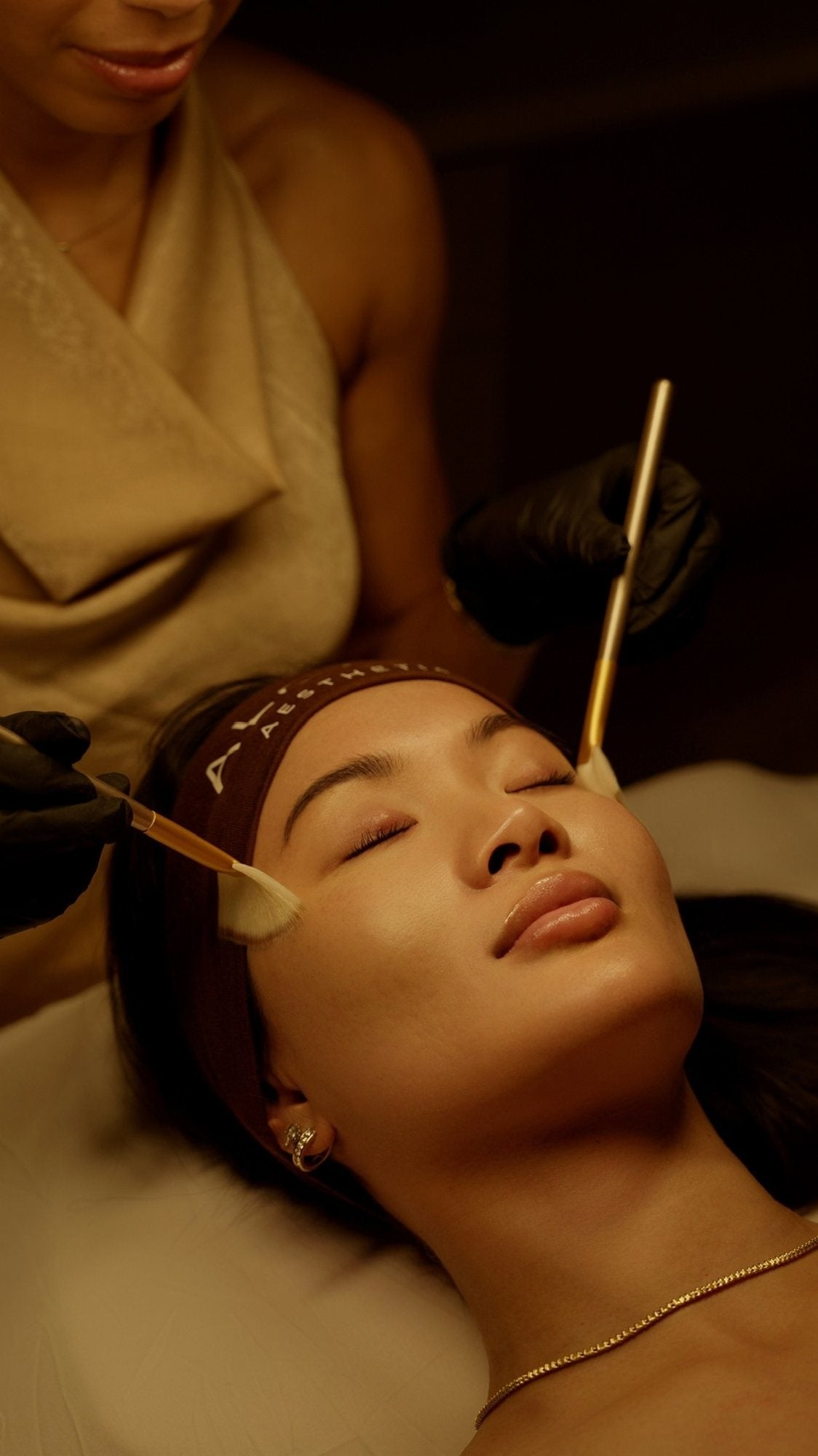
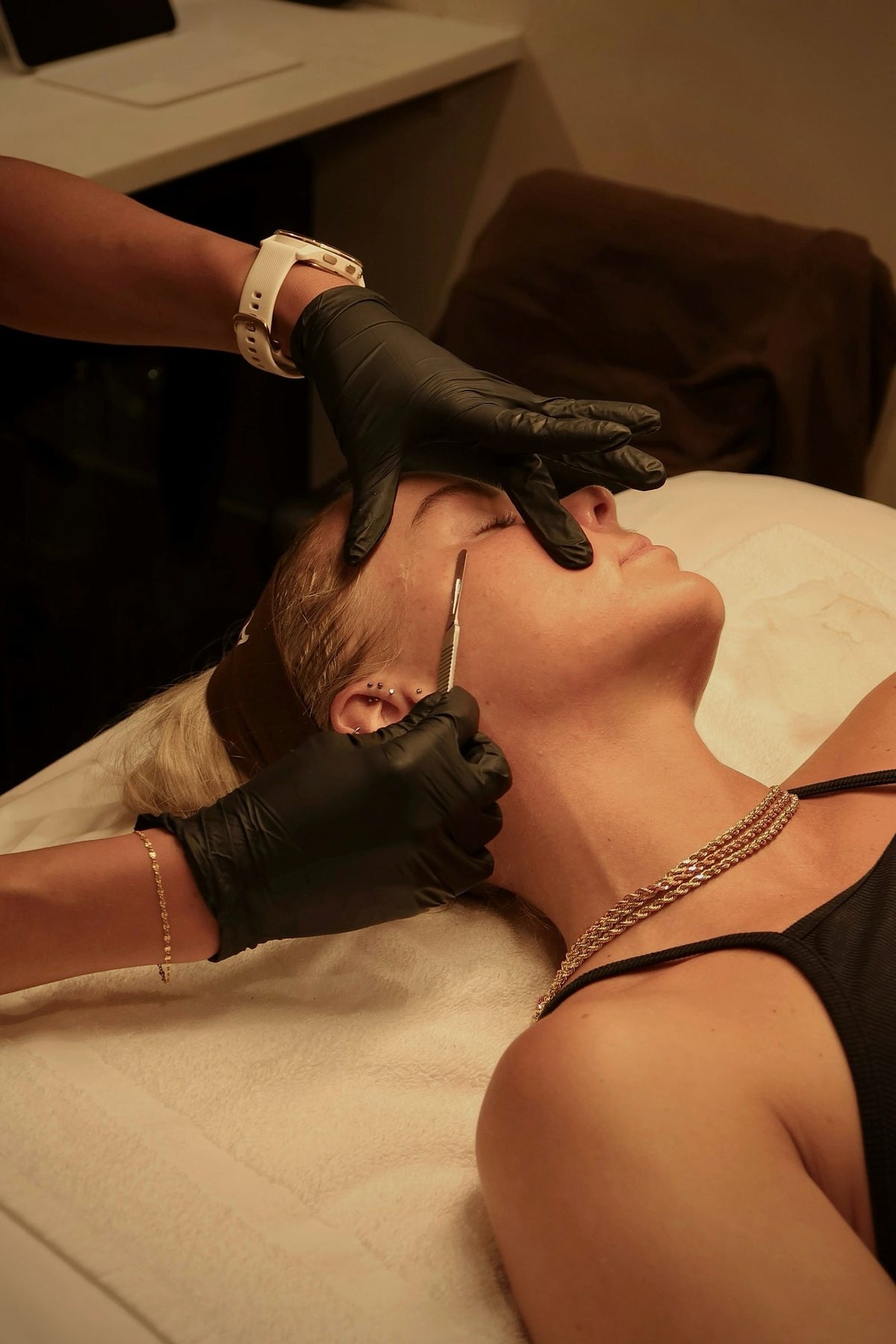
- The solution is applied evenly with a brush, gauze, or applicator, usually in one or more layers, and areas needing more or less are handled deliberately.
- You will feel warmth, tingling, or stinging that builds over the first minute or two. Most people describe it as very manageable at this depth, and a fan is often used for comfort.
- The practitioner watches the skin closely for the visible endpoint that indicates the peel has reached the intended depth, and controls timing accordingly.
- The solution is neutralized or removed at that endpoint. Some formulations are self-neutralizing and are left in place for a specified period instead.
- A soothing product and sunscreen are usually applied afterward.
- The whole appointment is short — the peel itself is generally a matter of minutes rather than a lengthy procedure.
- Immediately afterward the skin will look pink and feel tight, and it may not look dramatic at all, which is expected at this depth.
How Often, And Why
Superficial peels are designed to be repeated. A common approach is a course of sessions spaced several weeks apart, with the interval roughly matching the skin's natural turnover cycle so that each peel acts on a renewed surface rather than on skin still recovering from the last. The number of sessions in an initial course depends on what is being treated and how your skin responds.
After an initial course, most plans move to maintenance at longer intervals — commonly every several weeks to a few months, depending on the concern and on what else is in the routine. Because the treatment works on the outermost layer and that layer continually renews, this is genuinely a maintenance treatment rather than one with an endpoint. Stopping does not undo what was gained, but the surface will gradually return to behaving as it did.
Strength is often increased gradually across a course. Starting conservatively and building, particularly in deeper skin tones or in reactive skin, is how the risk of post-inflammatory pigmentation is managed. A provider who begins at the strongest available option rather than titrating is taking an unnecessary risk with a treatment whose main appeal is its safety margin.
Peels combine readily with most other elements of a plan and are frequently sequenced alongside injectables, needling, or periodic deeper resurfacing. Spacing relative to those treatments matters — peeling skin should not be treated with something else mid-recovery — and that sequencing is set at consultation.
Afterward
- Expect mild redness and a tight, dry feeling for the first day or two. Some superficial peels produce very little visible change at all in the first days, which does not mean nothing happened.
- Expect light flaking or fine peeling to begin a couple of days afterward and continue for several days. Some people flake noticeably; others barely at all, and neither predicts the result.
- Do not pick, pull, or exfoliate flaking skin. Letting it shed on its own is the single most important thing you can do, and pulling at it is a direct route to a mark that outlasts the peel.
- Use a bland moisturizer generously and a gentle cleanser. Skip anything active.
- Avoid all retinoids, exfoliating acids, vitamin C, benzoyl peroxide, and physical scrubs until your provider clears you to resume.
- Use broad-spectrum sunscreen daily and avoid direct sun. Freshly peeled skin is more vulnerable to ultraviolet damage and to post-inflammatory pigmentation, and this is where most avoidable problems come from.
- Avoid saunas, steam rooms, hot tubs, and heavy sweating for the period specified.
- Avoid waxing, threading, and other hair removal in the treated area until the skin has fully recovered.
- Makeup is generally acceptable sooner than after more substantial treatments, but follow the interval your provider gives you.
- Do not judge the result from one peel. The effect compounds across a series, and a single superficial peel is a beginning rather than a course.

How Much Does Re-Fresh Chemical Peel Cost in Atlanta, GA?
- What it is priced by: Per treatment
- Typical cost: $400
The figure above is a starting point, not a quote. What you pay depends on how much product your anatomy actually needs, which is a clinical judgement made in person. Ask at your consultation.
Side Effects And Downtime
Common And Expected
- Mild redness for a day or two, sometimes less
- A tight, dry feeling in the treated skin
- Light flaking or fine peeling beginning a couple of days afterward and lasting several days
- Temporary sensitivity to skincare products and to sun
- Mild stinging or warmth during the application itself
- Skin that looks slightly darker or more defined before it flakes, which is expected
- Occasional small blemishes or congestion surfacing in the days afterward
- Itching during the flaking phase, which should not be scratched
When To Seek Care
- Signs of infection: increasing rather than decreasing pain, spreading redness, warmth, swelling, pus or discharge, or fever.
- Blistering, oozing, or an area that turns white, grey, or dark, which suggests the peel went deeper than intended and needs prompt assessment.
- Severe or worsening pain out of proportion to what you were told to expect.
- A cold sore outbreak, which should be treated promptly to reduce the risk of scarring in freshly peeled skin.
- A spreading rash, marked itching, or swelling, which may indicate an allergic reaction to the solution or to a product used afterward.
- Signs of a serious allergic reaction — hives, swelling of the face, lips, tongue, or throat, or difficulty breathing. Call 911.
- Any area that fails to heal within the expected window, or that darkens noticeably as it heals.
- Redness persisting well beyond the timeline you were given.
Less Common, But Important To Know
- Post-inflammatory hyperpigmentation — darkening of treated skin — which is the most likely significant complication, more common in deeper skin tones, and largely preventable with appropriate agent selection and rigorous sun protection.
- Hypopigmentation, or lightening of treated skin, which is uncommon at this depth but possible.
- Prolonged redness lasting beyond the expected window.
- An unexpectedly deep peel from an agent left on too long, applied to compromised skin, or applied over recent hair removal or another treatment — producing more peeling, more redness, and a longer recovery than intended.
- Reactivation of herpes simplex producing a cold sore, in anyone with a history of it.
- Infection, uncommon at this depth but possible if the barrier is disrupted and the skin is not cared for.
- Allergic or irritant contact reaction to a component of the solution or to a product used afterward.
- Scarring, which is rare at this depth but possible where healing is disrupted by picking or infection.
- Acneiform eruption or congestion following treatment.
- Less improvement than hoped, which is a realistic outcome where the underlying problem sits deeper than this treatment reaches.
Downtime
Minimal, and often genuinely none in the sense of being unable to go about your day. Expect mild redness and a tight, dry feeling for a day or two — many people look no more than slightly flushed, and some barely change at all. A couple of days in, light flaking usually begins and continues for several days; how much you flake varies enormously between people and between formulations, and it does not predict how well the peel worked. The practical instructions are short: do not pick at anything, moisturize generously, skip all active skincare until cleared, and use sunscreen daily. Makeup is generally acceptable sooner than after a more substantial treatment, though follow the interval you are given. Saunas, steam, and heavy sweating wait for the period specified, and waxing or other hair removal in the area waits until the skin has fully recovered. This is a treatment that fits around a working week rather than one you plan a week around.
Who Performs This Treatment

Brianna Harris
Aesthetician · Facials, peels, microneedling and resurfacingBrianna is one of Alcove's aestheticians. Every treatment starts with a look at your skin and what you want from it, and your plan, including what you use at home, is built from there.

Shaina Paul
Aesthetician · Facials, peels, microneedling and resurfacingShaina is Alcove's aesthetician. Every treatment starts with a look at your skin and what you want from it, and your plan, including what you use at home, is built from there.
Re-Fresh Chemical Peel FAQs
Sometimes visibly, sometimes barely at all, and it varies enormously between people and between formulations. This trips a lot of people up: visible peeling is a side effect rather than the mechanism, and it does not predict how well the treatment worked. Someone who barely flakes can get the same benefit as someone who sheds noticeably.
Depth, and everything that follows from it. A superficial peel works within the epidermis, so recovery is short and the risk profile is small. A medium-depth peel reaches into the upper dermis, which lets it address more but brings several days of real peeling and a higher risk of pigmentary complications. Deeper is not better — it is appropriate for different problems.
No. True indented acne scarring sits in the dermis, below the depth this treatment reaches, and no number of superficial peels will change it. What often does respond is the flat brown or red marks left behind after a spot heals — those are surface-level pigment and a different problem despite looking similar. Getting that distinction right at consultation saves a lot of disappointment.
A course spaced several weeks apart, with the interval roughly matching the skin's turnover cycle. The effect compounds across the series, so a single peel is a beginning rather than a treatment. After an initial course most plans move to maintenance at longer intervals, since the surface continually renews and this is a maintenance treatment by nature.
Yes, with appropriate agent selection and a conservative approach — which is a genuine advantage over some resurfacing options. The relevant risk is post-inflammatory hyperpigmentation, which is higher in deeper skin tones. Starting at a lower strength and building gradually, along with rigorous sun protection, is how that is managed. A provider who starts at the strongest option is taking an unnecessary risk.
Very little at this depth. You will feel warmth, tingling, or stinging that builds over the first minute or two and then settles, and a fan is often used for comfort. Most people describe it as easily manageable. The peel itself takes minutes rather than a lengthy procedure, and no numbing is generally needed.
Generally sooner than after more substantial treatments, but follow the specific interval your provider gives you. The more important instructions are what to avoid: no retinoids, acids, vitamin C, benzoyl peroxide, or scrubs until you are cleared, and no picking at flaking skin under any circumstances.
The most avoidable bad outcome from this treatment. Pulling skin away before it is ready removes tissue that is not finished healing, and it can leave a mark, a patch of pigment change, or occasionally a scar that outlasts anything the peel was meant to fix. Moisturize generously and let it shed on its own.
It depends on the agent, and it is a conversation rather than a blanket no. Some superficial agents are generally considered acceptable in pregnancy and others are specifically avoided. Raise it at consultation so the formulation can be chosen accordingly, and expect a more conservative approach overall.
Because hair removal disrupts the skin barrier, and applying an acid to skin that is already compromised lets it penetrate deeper than intended. That is one of the commonest ways a superficial peel accidentally becomes a deeper one, with more peeling, more redness, and a longer recovery than anybody planned. The same applies to recent laser hair removal and to other resurfacing treatments.
Formulations built around oil-soluble agents reach into the sebaceous follicle and are specifically useful for that, which is why a peel aimed at congestion is formulated differently from one aimed at tone. Persistent or cystic acne is a medical problem that needs medical treatment, and a peel series is not a substitute for that.
Readily, and they are frequently sequenced alongside injectables, needling, and periodic deeper resurfacing. What matters is spacing — peeling skin should not have something else done to it mid-recovery. The order and intervals are set at consultation rather than assembled appointment by appointment.
Pairs Well With

Book Your Consultation
A consultation is a conversation about your face, not a sales appointment. Bring your questions about Re-Fresh Chemical Peel and your medical history, and leave with an honest answer about whether it is the right treatment for you.