



Botox in Atlanta, GA
The mirror reads rested, not tired, expression lines softened, your warmth left fully intact. Refined, never frozen, and still entirely your own face looking back.
The Benefits
Softens Without Surgery
Softens frown lines, forehead creases and crow's feet without surgery or incisions.
A Lunch-Break Appointment
Most appointments take about ten to twenty minutes.
Keeps Lines From Deepening
Can keep lightly etched lines from deepening into permanent creases.
Reshapes Without Volume
Reshapes subtly without adding volume, a lateral brow lift, a softer jawline.
Temporary By Design
Temporary by design: a result you dislike is one you grow out of.
Real Results
Before & After
 After
After Before
 After
After Before
 After
After Before
What Botox Is
Botox Cosmetic is the brand name for onabotulinumtoxinA, a purified protein in a class of drugs called neuromodulators. They interrupt the chemical signal that tells a muscle to contract.
It is not a filler. It adds no volume and removes nothing. It asks a specific muscle to relax for a while.
Botox, Daxxify and Xeomin are all botulinum toxin type A. They share a mechanism but differ in formulation, dosing units and onset, and none are interchangeable unit-for-unit.
The toxin has been used clinically since the 1980s. Alongside its cosmetic use it holds FDA approvals for chronic migraine, cervical dystonia and severe underarm sweating.
How It Works
Facial muscles contract because a nerve tells them to. Repeat that across decades and the skin folded by those contractions keeps the crease at rest, a dynamic line becomes a static one.
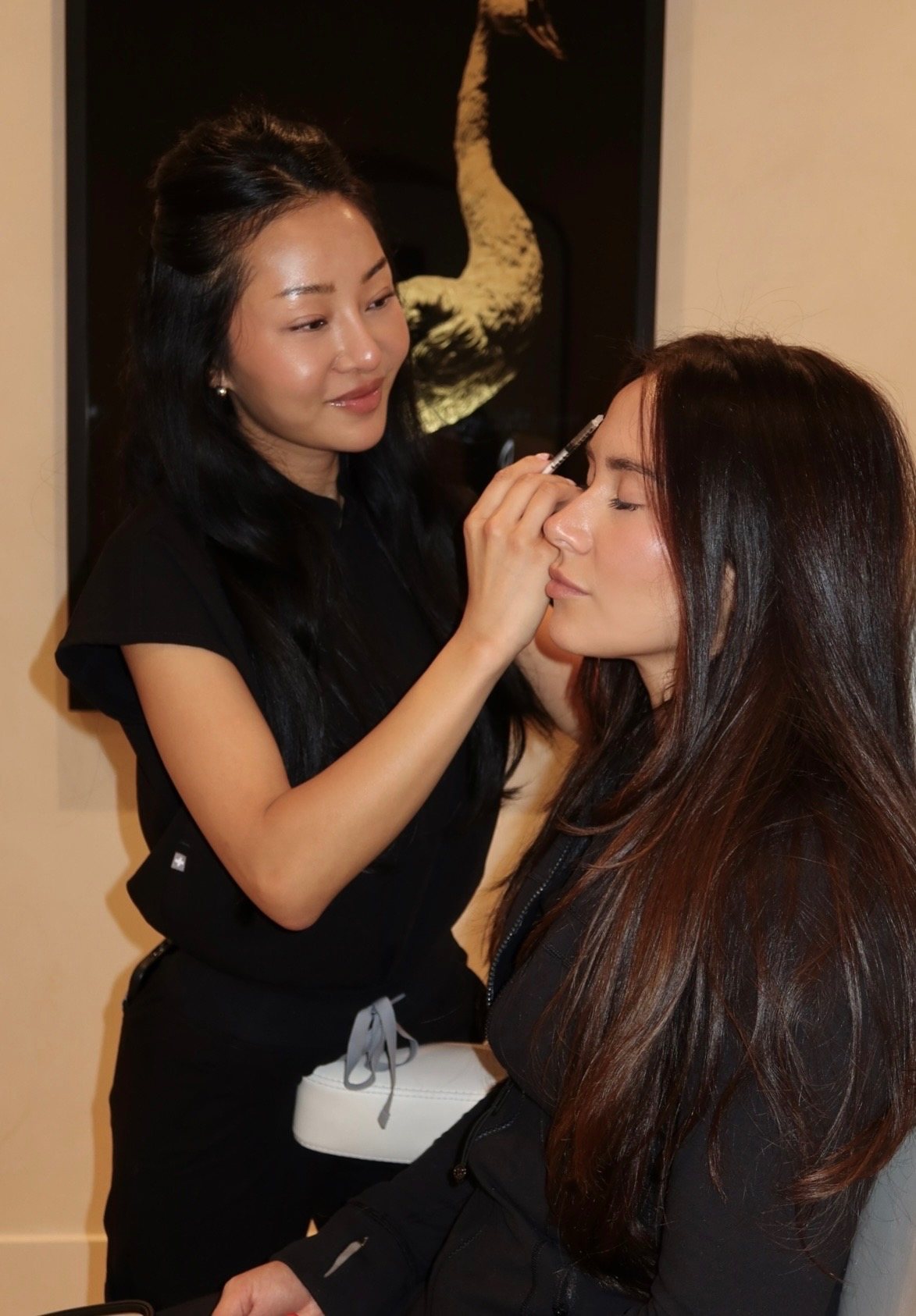
Botox interrupts the message at its source. Injected into the target muscle, it blocks the release of acetylcholine, the messenger that carries the instruction. The muscle is not damaged; it simply stops receiving the signal.
The skin above it is no longer being folded, so existing lines soften and new ones are not etched in. As the nerve endings regenerate over the following months, movement returns gradually.

What Botox Treats
1Frown Lines (Glabellar "11s")
The vertical creases between the brows, from the corrugator and procerus pulling inward. Botox's first FDA-approved cosmetic area, and still its most common use.
2Forehead Lines
The horizontal lines from raising your brows, driven by the frontalis, the muscle that also holds the brow up, which is why it is treated conservatively.
3Crow's Feet
The lines radiating from the outer corners of the eyes when you smile or squint, from the orbicularis oculi. An FDA-approved indication.
4Lip Flip and Perioral Lines
Very small doses relax the orbicularis oris so the upper lip rolls slightly outward and vertical lines soften. Subtle, not a substitute for lip filler.
5Neck Bands (Platysma)
The vertical cords on the front of the neck. Botox Cosmetic holds an FDA approval for the appearance of moderate to severe platysma bands.
6Masseter (Jaw) and Teeth Grinding
Injections into the masseter can soften a heavy, square jaw over time and reduce clenching. An off-label cosmetic use, though widely practiced for bruxism.
Is Botox Right For You?
You May Be A Good Candidate If
- You are a healthy adult with lines that appear or deepen when you frown, squint or smile.
- Your concern is movement-related rather than volume loss or laxity, which respond to other treatments.
- You want your expression softened rather than erased, and accept a result that needs maintenance.
- You have realistic expectations, a deeply etched line may soften rather than disappear.
This May Not Be Right For You If
- You are pregnant, trying to conceive, or breastfeeding. Botulinum toxin has not been studied in these groups.
- You have a neuromuscular disorder such as myasthenia gravis, Lambert-Eaton syndrome or ALS, which can make you far more sensitive to the toxin.
- You have a known allergy to any botulinum toxin product or its ingredients.
- There is an active skin infection or breakout at the injection site. Treatment should wait until it clears.
- You take medications that can potentiate neuromuscular blockade, such as aminoglycoside antibiotics, without clearing it with your prescriber.
Candidacy is a conversation, not a checklist. Bring a full medical history: every medication and supplement you take, any autoimmune or neurological diagnosis, and any previous neuromodulator treatment. If your real concern turns out to be volume loss or laxity rather than movement, an honest provider should tell you a neuromodulator is the wrong tool.
How Botox Compares
Botox and Daxxify are both botulinum toxin type A, working by the same mechanism. What separates them is formulation, how fast they take hold, and how long they last.
| Feature | Botox | Daxxify |
|---|---|---|
| Generic Name | onabotulinumtoxinA | daxibotulinumtoxinA |
| Onset | Typically 3–5 days; full effect at 10–14 days. | Within a few days, broadly comparable to the others. |
| Typical Duration | Around 3–4 months for most people. | Studied for a longer duration in frown lines, often around six months, with wide variation. |
| Formulation | Stabilized with human serum albumin; includes accessory proteins. | Stabilized with a proprietary peptide instead of albumin. |
| Dosing Units | Not interchangeable with other brands. | Its own unit scale again. |
Units are not a currency. A count for one product tells you nothing meaningful about another, and a lower per-unit price for a product needing two or three times as many units is no saving.
What To Expect
Before The Treatment
- Consultation and mapping. Your provider takes a medical history, then watches your face at rest and in motion. The plan is built around how your muscles actually move.
- Medication review. Where medically safe, blood thinners, NSAIDs, fish oil and vitamin E are often paused for a few days to reduce bruising. Never stop a prescribed medication without your prescriber's approval.
- Arrive with a clean face. Makeup is removed and the skin cleansed before anything is injected.
- If you have an event, allow at least two weeks for the result to settle.
Results: Onset And How Long It Lasts
Most people notice softening within three to five days, with the full effect settling around ten to fourteen days. Results typically last three to four months, after which movement gradually returns. Longevity varies with the area treated, the dose, muscle strength and your metabolism.
During The Treatment
- The treatment areas are cleansed and marked. Topical numbing or ice is available, though many people find they do not need it.
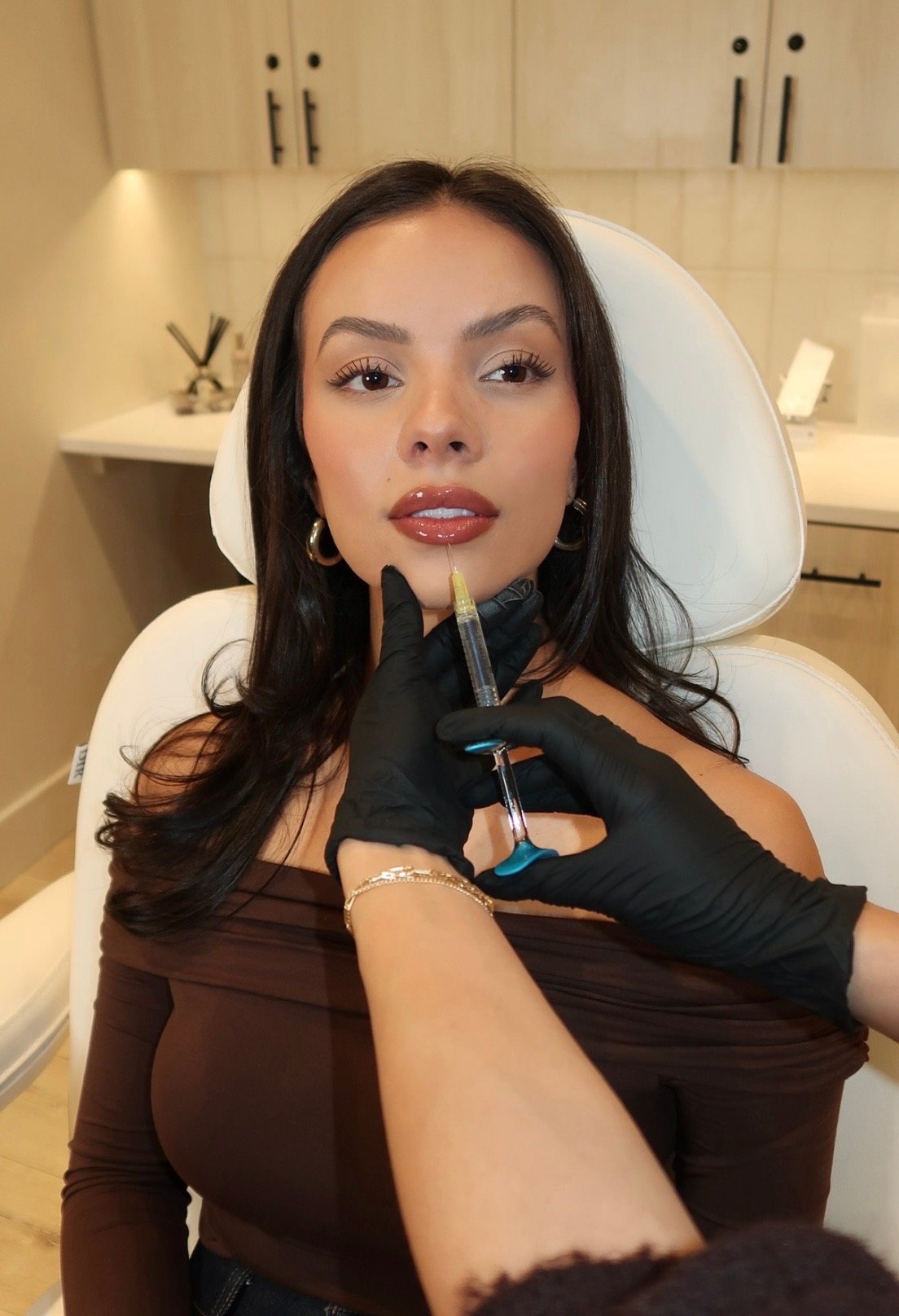
- The product is injected with a very fine needle into precisely chosen points. Each injection takes a second or two.
- You feel a quick pinch or sting at each point, most people find it easily tolerable.
- Start to finish, the injections take about ten to twenty minutes.
How Often, And Why
Most people return every three to four months, because that is roughly how long the effect lasts before movement returns to baseline. There is a good reason not to come more often: dosing too frequently is thought to raise the chance of developing neutralizing antibodies, which over time can make treatment less effective.
With consistent treatment, many people find they need slightly less product, or can stretch the interval further. That is a general observation, not a guarantee, some people metabolize the product quickly and stay on a strict three-month rhythm indefinitely.
Afterward
- Stay upright for about four hours. Avoid lying flat or keeping your head down for long stretches.
- Do not rub, massage or press the treated areas for at least 24 hours, including facials and sleeping face-down.
- Skip strenuous exercise, saunas, steam rooms and alcohol for the rest of the day. Heat and elevated blood flow worsen swelling and bruising.
- Expect small raised bumps that settle within half an hour, and possible pinpoint marks that fade over a few days.
- Book a follow-up around two weeks out, when the result is fully expressed.

How Much Does Botox Cost in Atlanta, GA?
- What it is priced by: Per unit
- Typical cost: From $12 / unit
The figure above is a starting point, not a quote. What you pay depends on how much product your anatomy actually needs, which is a clinical judgement made in person. Ask at your consultation.
Side Effects And Downtime
Common And Expected
- Pinpoint bleeding, redness or small raised bumps at the injection sites, usually settling within half an hour.
- Bruising, which can take a few days to a week to resolve.
- Mild swelling or tenderness for a day or so.
- Headache in the days after treatment, usually mild and self-limiting.
- A temporary sense of tightness or heaviness as the muscles relax.
When To Seek Care
- Any difficulty swallowing, speaking or breathing, including hoarseness or slurred speech. Seek emergency care immediately.
- Generalized muscle weakness, or weakness spreading beyond the treated area.
- Vision changes such as double or blurred vision, or a drooping eyelid that interferes with sight.
- Signs of an allergic reaction: rash or hives, wheezing, dizziness, or swelling of the face, lips, tongue or throat.
- Signs of infection at an injection site, spreading redness, warmth, increasing pain, pus or fever.
Less Common, But Important To Know
- Eyelid or brow drooping, caused by the product reaching a muscle it was not meant to. It is temporary and resolves as the effect wears off. Treatment near the eyes can also cause dry eye or blurred vision.
- Asymmetry, one brow higher than the other, or an unevenly peaked brow. Often correctable with a small adjustment at two weeks.
- Difficulty swallowing or neck weakness, a specific risk when the platysma is treated.
- Allergic reactions, including, rarely, anaphylaxis, rash, hives or wheezing.
- Distant spread of toxin effect. Every botulinum toxin product carries an FDA boxed warning that effects may spread from the injection site, causing generalized weakness, double vision, slurred speech, or difficulty swallowing or breathing. Reported mainly at the far higher doses used for medical conditions, but it is a real, formally warned-about risk, and any such symptom is a medical emergency.
Downtime
For most people there is no meaningful downtime. You can return to work immediately, provided you stay upright for around four hours and avoid touching the area for 24 hours. What takes patience is the result itself: up to two weeks to see where you have landed.
Who Performs This Treatment

Helen Zhang
Master Injector · Neuromodulators, filler, biostimulators and facial balancingHelen is one of Alcove's master injectors. Your appointment starts with an assessment of your face and your goals, and your plan is built from that conversation rather than from a menu.

Sharon Williams
Master Injector · Neuromodulators, filler, biostimulators and facial balancingSharon is one of Alcove's master injectors. Your appointment starts with an assessment of your face and your goals, and your plan is built from that conversation rather than from a menu.

Xing Xing Li
Master Injector · Neuromodulators, filler, biostimulators and facial balancingXing Xing is Alcove's master injector. Your appointment starts with an assessment of your face and your goals, and your plan is built from that conversation rather than from a menu.
Botox FAQs
Not much. The needle is very fine and each injection takes a second or two. Most people describe a quick pinch, with the frown-line area the most sensitive. Numbing cream or ice is available if you want it. The discomfort ends when the injections do.
Botulinum toxin type A has been used clinically since the 1980s and has one of the longest safety records in aesthetic medicine. It is not risk-free. Every product carries an FDA boxed warning about effects spreading beyond the injection site, and it should not be used in pregnancy, breastfeeding, or with neuromuscular disorders. Safety depends on correct dosing, correct placement, and a trained medical injector.
Typically three to four months, though it varies. Duration depends on the area, the dose, the strength of the muscle and your metabolism. First treatments sometimes wear off faster than later ones, and movement returns gradually rather than abruptly.
They solve different problems. Botox relaxes muscles, so it treats dynamic lines caused by movement. Filler is a gel that adds volume, so it treats hollowing and folds visible when your face is completely still. They are often used together, because most faces have both.
Not if it is dosed and placed correctly. A frozen look comes from too much product, or product in the wrong place, not from the drug itself. Tell your injector you want to keep movement, and start conservatively: you can add more, but you cannot take it away.
There is no correct age; it depends on your face, not your birthday. It is worth considering once lines start lingering after your expression relaxes. Starting earlier with small doses is popular, though long-term evidence for that specific claim is limited. Botox is FDA-approved for adults aged 18 to 65.
No. There is no reversal agent, unlike hyaluronic acid filler, which can be dissolved. Botox has to wear off on its own over roughly three to four months, the main reason a cautious first dose is wise.
Most people notice the first softening in three to five days, and the effect builds from there. The full result is usually visible around ten to fourteen days, which is why any touch-up should wait until the two-week mark. If you have an event, book at least two weeks ahead.
Wait about 24 hours before strenuous exercise. Elevated blood flow, heat and sweating can increase swelling and bruising. Avoid hot yoga, saunas and steam rooms for the same window. Gentle walking on the day is fine.
Your muscles gradually regain full movement and your lines slowly return to where they would otherwise have been. Nothing gets worse than before, there is no rebound effect and no dependency.
Pricing is usually structured one of two ways: per unit of product, or a flat fee per treatment area. What you pay depends on how many units your anatomy needs and how many areas you treat. Units are not equivalent across brands, so per-unit comparisons between products mislead. Ask for a quote at your consultation.
Pairs Well With


Book Your Consultation
A consultation is a conversation about your face, not a sales appointment. Bring your questions about Botox and your medical history, and leave with an honest answer about whether it is the right treatment for you.