



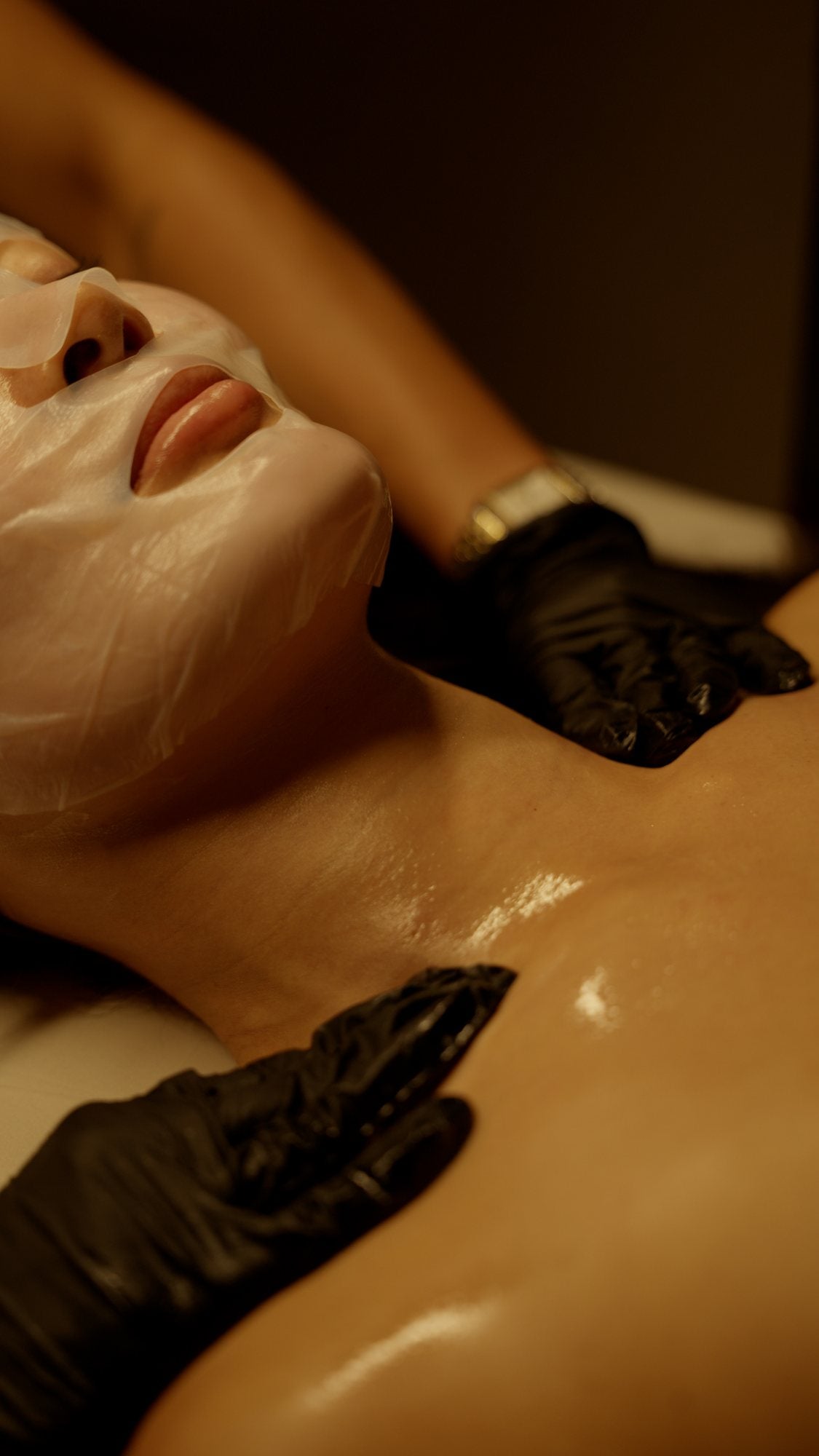
D.E.J. BioStim Boosting Treatment in Atlanta, GA
Almost every skin treatment aims at one of two places: the surface you can see, or the dermis underneath it. There is a third layer between them that gets far less attention and does more than its thinness suggests — the junction where epidermis and dermis meet and hold onto each other. It flattens with age, and when it does, skin gets thinner, more fragile, and less able to feed itself. This treatment is built around supporting that layer, and it is honest about being a supportive treatment rather than a corrective one.
The Benefits
A Layer Nobody Treats
It targets the dermal-epidermal junction, a layer most treatments work either above or below, and one whose decline explains a great deal of what people describe as fragile skin.
Where Skin Anchors
That junction is where the epidermis physically anchors to the dermis, so supporting it is aimed at structural integrity and resilience rather than at surface appearance alone.
Strength, Not Surface
The goal is strength and quality — skin that is less thin, less reactive, and better supplied — rather than a visible surface effect.
Professional Strength
Formulations used in office are at strengths not available for home use, applied to skin prepared so they penetrate further than they would over an untreated surface.
No Needles, No Downtime
There are no needles, no injury, and no downtime, which makes it one of the more comfortable professional treatments available.
Works With A Routine
It complements a home routine rather than replacing it, and works best alongside consistent daily care rather than instead of it.
Cumulative By Design
The effect accumulates across a series of treatments rather than arriving after one, which suits a maintenance-oriented plan.
Modest And Honest
It is honest about its category: a topical treatment produces modest, gradual change, not correction, and anything described as transformative from a topical protocol is overstated.
Real Results
Before & After
 After
After Before
 After
After Before
 After
After Before
 After
After Before
 After
After Before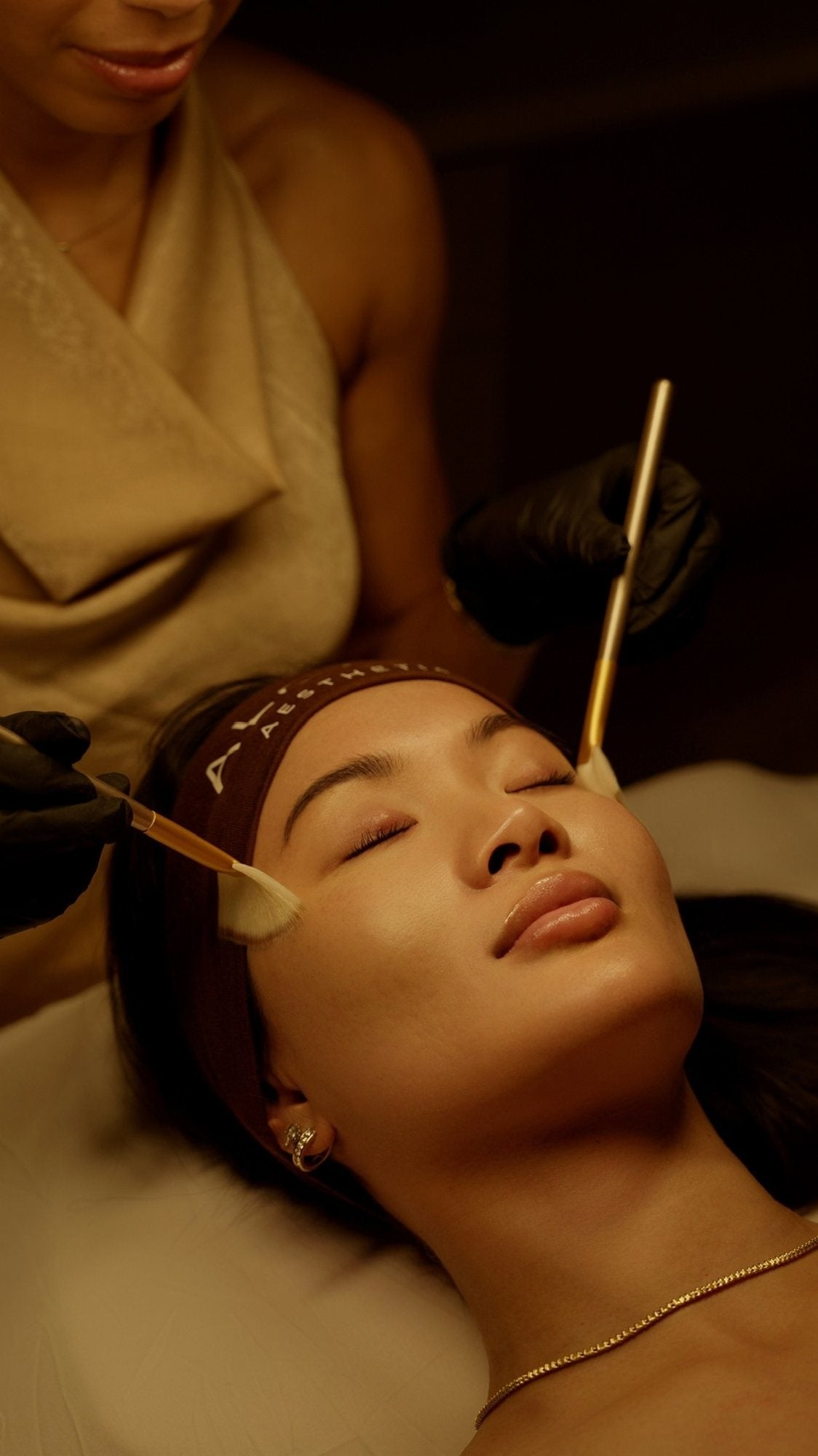
What D.E.J. BioStim Boosting Treatment Is
The dermal-epidermal junction is the specialized interface between the epidermis and the dermis. It is a thin, complex structure — a basement membrane built from collagens, laminins, and anchoring fibrils — and it does three jobs at once. It physically binds the two layers together so the epidermis does not shear away from the dermis. It acts as a selective filter through which nutrients, oxygen, and signals pass, since the epidermis has no blood supply of its own and depends entirely on what diffuses up from the dermis below. And it houses the stem cell populations from which the epidermis continuously renews itself.
In young skin this junction is not flat. It undulates in a series of interlocking projections — rete ridges reaching down from the epidermis, dermal papillae reaching up — which multiplies the surface area available for adhesion and for exchange, and which mechanically interlocks the two layers. With age, ultraviolet exposure, and chronic inflammation, that architecture progressively flattens. The interlocking is lost, the surface area for nutrient exchange falls, and the junction becomes thinner and less organized.
The consequences are the ones people describe without knowing the cause. Skin becomes thinner and more fragile, bruises and tears more easily, feels less resilient, and looks less firm. Nutrient delivery to the epidermis declines, so cell turnover slows and the barrier weakens. The stem cell niche is disrupted, which affects renewal. None of this is what most treatments target — surface treatments work above it and injectables work below it.
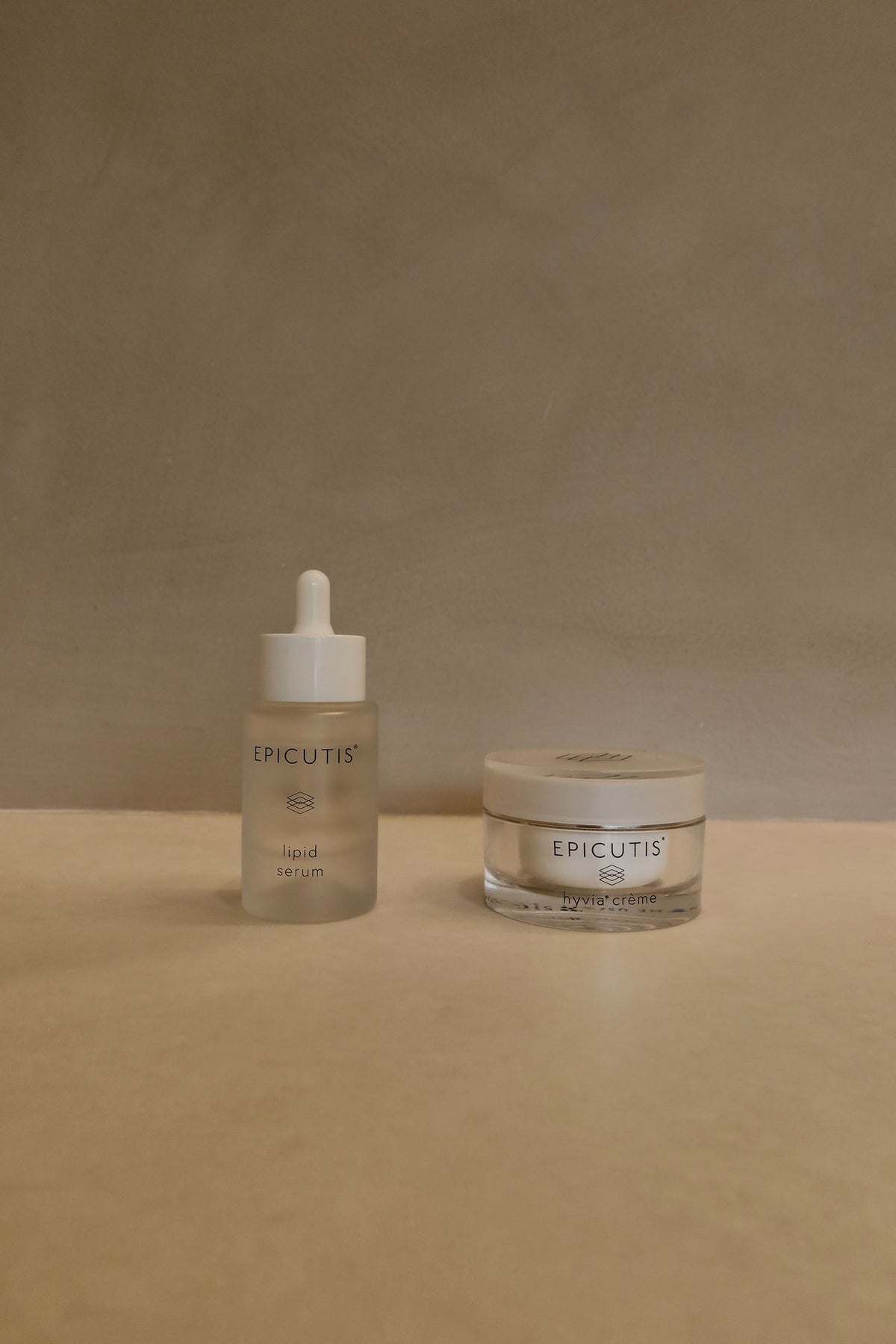
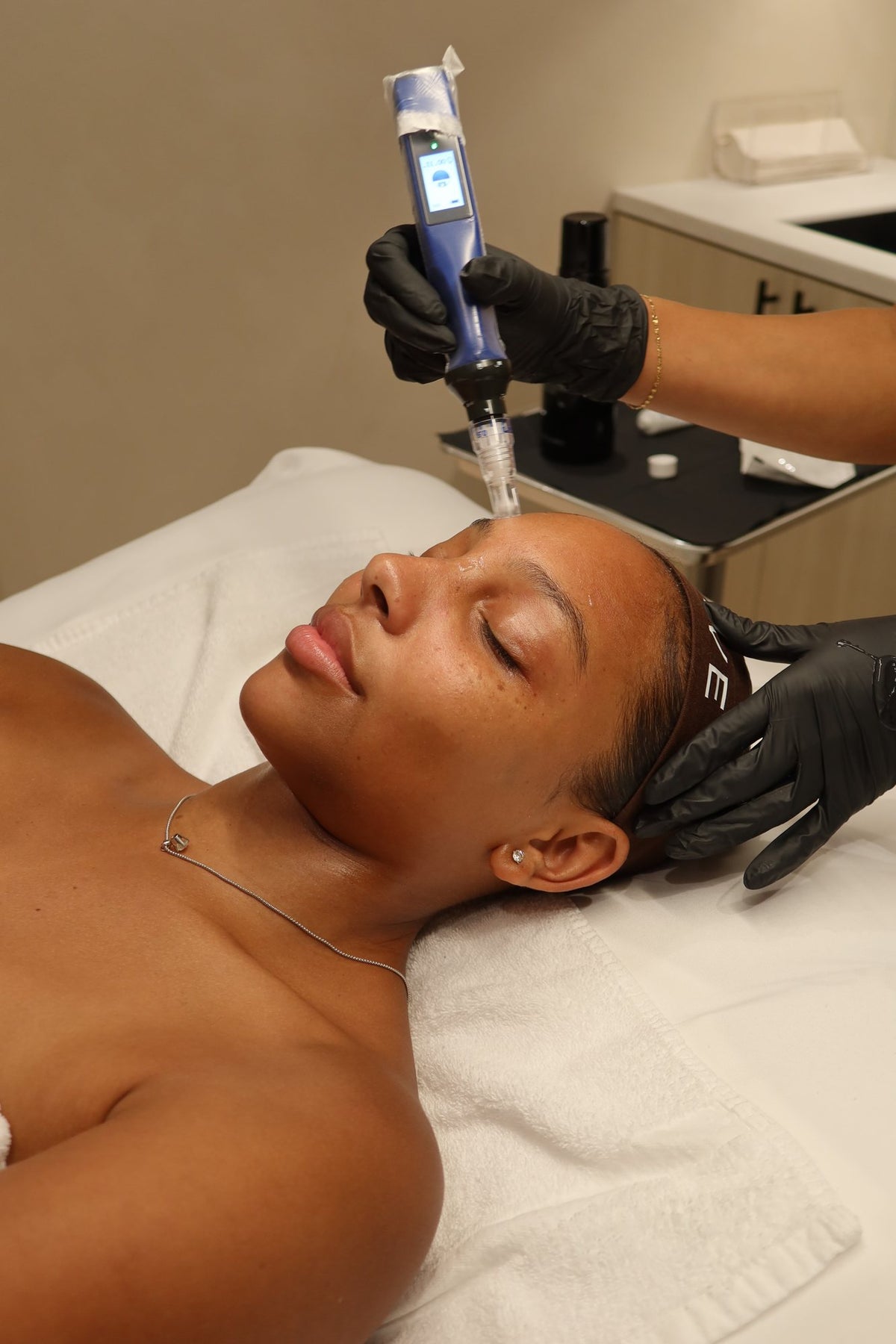
A treatment directed at this layer is a professional topical protocol performed in office, using formulations at strengths not available for home use and applied in a defined sequence, typically with preparation of the skin beforehand so that what is applied reaches further than it would through an untreated surface. The on-site description of this treatment is that it is designed to restore, strengthen, and visibly rejuvenate from within, which is a reasonable summary of the intent.
The specific formulations and protocol used in your appointment are determined by your provider, and it is entirely reasonable to ask what is being applied, what it contains, and what is expected of it. It is also worth being clear about the category: this is a topical treatment, not an injectable and not a device-based procedure. It carries the strengths of that category — no needles, no downtime, comfortable — and the limitations, which are that a topical treatment produces modest, gradual, cumulative change rather than correction.
How It Works
The basement membrane at the dermal-epidermal junction is built largely from type IV and type VII collagen, laminins, nidogen, and perlecan, assembled into a layered structure with anchoring fibrils that reach down into the dermis and hemidesmosomes that grip the basal keratinocytes above. Fibroblasts in the dermis and keratinocytes in the epidermis both contribute components, so maintaining the junction is a collaboration between the two layers it separates.
With chronological aging and cumulative ultraviolet exposure, several things happen together. The undulating rete ridge architecture flattens, reducing both the surface area for exchange and the mechanical interlocking. Components of the basement membrane are degraded — matrix metalloproteinases, upregulated by ultraviolet exposure and inflammation, break down collagen at this junction as they do in the dermis. Production of replacement components declines. The net result is a thinner, flatter, less organized interface.
Because the epidermis is avascular, everything it needs arrives by diffusion through this junction from capillaries in the dermal papillae below. Flattening the architecture reduces the area across which that diffusion occurs, and a degraded membrane filters differently. Less efficient supply means slower keratinocyte turnover, a less well-maintained barrier, and skin that recovers more slowly from any insult.
A topical protocol aimed at this layer works through the epidermis rather than around it, which means penetration is the practical constraint. This is why in-office treatment of this kind generally involves preparing the skin first — cleansing and some form of exfoliation to reduce the accumulated surface layer — so that what follows encounters less resistance than it would applied at home over an untreated surface. Professional-strength formulations applied to prepared skin under supervision is the meaningful difference between this and a home routine.
What is realistic to expect from that mechanism is worth stating plainly. Supporting a structure topically is a slower and more modest intervention than injuring skin to force a repair response, which is what needling and resurfacing do. This treatment does not create controlled injury and does not trigger a wound-healing cascade. The change is correspondingly gentler, more gradual, and cumulative across a series — and it comes without downtime, which is the trade being made rather than a shortcoming.

What D.E.J. BioStim Boosting Treatment Treats
Thin, fragile-feeling skin
The clearest concern this approach is aimed at. Skin that feels papery, marks easily, and seems less resilient than it used to reflects change in exactly the layer this treatment addresses.
Loss of firmness and resilience
The mechanical interlocking between epidermis and dermis contributes to how skin holds itself. Supporting that junction is aimed at resilience rather than at lifting, which is a different thing entirely.
A weakened or reactive barrier
The epidermis depends on nutrient diffusion through the junction. Skin that is chronically dry, reactive, and slow to settle after any provocation is often skin whose barrier is not being well supported.
Dullness and slow-looking skin
Reduced nutrient exchange slows turnover, and slow turnover shows as dullness. This is an indirect route to the same complaint most treatments address directly.
Fine lines and early textural change
Superficial lines associated with declining dermal support may soften as skin quality improves. Deeper static lines and folds are structural and outside this treatment's range.
Skin recovering from a course of stronger treatment
Sometimes sequenced after resurfacing or needling to support the barrier while it rebuilds. Any such sequencing is a clinical judgment about timing rather than something to arrange independently.
Maintenance between procedures
A comfortable, no-downtime treatment that fits between more substantial ones and keeps the skin in the condition that makes those safer and more effective.
Not volume, laxity, scarring, or deep lines
Listed deliberately. A topical treatment does not reach any of these, and no protocol changes that.
Is D.E.J. BioStim Boosting Treatment Right For You?
You May Be A Good Candidate If
- Adults whose skin has become thin, fragile, or easily irritated, and who want to support its resilience rather than resurface its appearance.
- People with a weakened barrier — chronically dry, reactive, slow to settle — who need something supportive rather than something aggressive.
- People who want a professional treatment with no downtime and no needles, which genuinely limits the options available.
- People maintaining skin between more substantial procedures, or supporting recovery after a course of stronger treatment where a provider has advised it.
- People who already have a consistent home routine and want to accelerate it, since this treatment works alongside daily care rather than in place of it.
- People able to commit to a series, since the effect is cumulative and a single appointment is not the plan.
- People with realistic expectations about magnitude. This is a supportive treatment producing gradual change, and it should be presented and priced as one.
- People who prefer a gentler approach for reasons of comfort, schedule, or skin tolerance.
This May Not Be Right For You If
- Anyone with a known allergy or sensitivity to a component of the formulations used. Ask for the ingredient list if you have reactive skin or a history of contact allergy.
- Anyone with an active skin infection, an open lesion, or an active herpes simplex outbreak in the treatment area, until it has resolved.
- Anyone with an active inflammatory skin condition in the area — eczema, psoriasis, or rosacea in flare — where treatment should be deferred or substantially modified.
- Anyone currently or recently taking isotretinoin, where the skin is fragile and any exfoliative preparation step needs to be discussed with the prescribing clinician.
- Anyone with severely sunburned or otherwise compromised skin, until it has recovered.
- Anyone who has recently had a peel, resurfacing, or injectable treatment in the area, where the appropriate interval should be confirmed with the provider who performed it.
- Anyone who is pregnant or breastfeeding, where specific ingredients may need to be avoided and the protocol should be reviewed rather than assumed.
- Anyone with an undiagnosed lesion in the treatment area, which needs medical assessment before any cosmetic treatment.
- Anyone expecting a topical treatment to address volume loss, laxity, atrophic scarring, or deep static lines. None of these are within reach of any topical protocol.
- Anyone looking for a single dramatic result rather than gradual cumulative change.
The most useful consultation here is a candid one about category. A professional topical treatment sits between a home routine and a procedure, and the honest question is whether that is where your concern belongs — because if you need collagen remodeling in the dermis, a topical is not going to get you there and being told so saves a course. Ask what formulations are being used, what they contain, what the protocol involves, and what is realistic to expect across a series. A licensed provider should also review your medical history, ask about allergies and sensitivities, isotretinoin, active skin conditions, pregnancy, and recent treatments, and be clear about how this fits alongside your home routine rather than presenting it as a replacement for one.
How D.E.J. BioStim Boosting Treatment Compares
Treatments differ mostly in where they act and how hard they push. The table places a professional topical protocol among the options people weigh alongside it.
| Feature | Professional topical protocol | Home skincare routine | Microneedling | Injectable skin boosters |
|---|---|---|---|---|
| Where it acts | Through the epidermis, aimed at the junction beneath it | Epidermis, with sustained daily action | Epidermis and dermis, by controlled injury | Dermis, by placing material directly |
| Mechanism | Supplies and supports; no injury created | The same, at lower strengths applied more often | Triggers a wound-healing and collagen response | Introduces hydrating or biostimulatory material |
| Needles involved | None | None | Yes | Yes |
| Downtime | None | None, beyond occasional irritation | Redness for a day or two, then flaking | Visible bumps for hours, then bruising |
| Pace of change | Gradual and cumulative across a series | Gradual, over months of consistency | Months, as collagen remodels | Weeks to months, across a series |
| Magnitude of change | Modest | Modest but compounding, and the largest total contributor over years | Meaningful for texture and scarring | Meaningful for hydration and skin quality |
| Effect on deep lines or laxity | None | None | Limited | None |
| Main limitation | Constrained by what can penetrate the barrier | Requires daily consistency indefinitely | Real recovery each session | Injections, bruising, and a series commitment |
The honest ordering here is that a consistent home routine contributes the most over years, professional topical treatment accelerates and supplements it, and procedures reach what neither can. A treatment in this category is a good addition to a plan and a poor substitute for one. If it is being offered as an alternative to a procedure your concern actually requires, that is worth questioning.
What To Expect
Before The Treatment
- A skin assessment and a conversation about whether a topical protocol is the right category for what you want to change, including being told plainly if it is not.
- A medical history and review of allergies, sensitivities, current medications and topical products, active skin conditions, isotretinoin use, pregnancy, and any recent procedures.
- Specific information about what formulations will be used and what they contain, particularly if you have reactive skin or a history of contact allergy.
- An explanation of how this fits with your home routine, since the two are meant to work together rather than one replacing the other.
- Instructions to stop retinoids and exfoliating acids for a few days beforehand, since arriving with an already-exfoliated barrier changes what can safely be applied.
- Advice to avoid waxing, threading, and other hair removal in the area beforehand, and to avoid sun exposure and self-tanner.
- Instructions to arrive with clean skin where possible, though makeup will be removed as part of the treatment.
Results: Onset And How Long It Lasts
Change from a professional topical protocol is modest, gradual, and cumulative, and the honest framing matters more here than with most treatments. In the days after an appointment most people describe skin that feels better hydrated, looks brighter, and feels more comfortable — a real effect, though largely a surface and barrier one. The change this treatment is actually aimed at develops across a series over weeks to months: skin that feels less thin and fragile, tolerates provocation better, recovers faster from irritation, and looks more resilient. That is a genuine and worthwhile category of improvement, and it is not the same category as correction. This treatment does not address volume loss, laxity, atrophic scarring, or deep static lines, and no topical protocol reaches any of them. It also does not create injury, so it does not drive the collagen remodeling that needling and resurfacing produce — the absence of downtime and the smaller magnitude of change are two sides of the same trade. Response varies between individuals and depends substantially on what you do at home, since a monthly appointment is a small fraction of the influences on your skin. This page publishes no numeric outcome figures: protocols and formulations vary, evidence in this category is largely manufacturer-led, and averages would say nothing reliable about your own skin.
During The Treatment
- A thorough cleanse, usually in two stages, and an assessment of the skin before anything active is applied.
- Preparation of the skin, typically including some form of gentle exfoliation, so that what follows encounters less resistance from the accumulated surface layer.
- Application of the professional-strength formulations in a defined sequence, with contact times determined by the protocol.
- The sensation is generally described as comfortable — some warmth or mild tingling during application of active steps, and nothing that requires numbing.
- Massage or lymphatic technique is often included, both for absorption and because it is a pleasant part of the treatment.
- Finishing products and broad-spectrum sun protection are applied.
- The appointment typically runs around an hour, and most people find it relaxing throughout.
- Afterward the skin will generally look bright and feel hydrated, with little or no visible sign that anything was done.
How Often, And Why
This is a series-based treatment. A common approach is a course of appointments spaced several weeks apart — roughly matching the epidermal turnover cycle so each treatment acts on renewed skin — followed by maintenance at longer intervals. The number of sessions in an initial course depends on the concern and on how your skin responds.
Because the mechanism is supportive rather than injurious, there is no recovery period dictating the spacing and the interval is chosen for biological rather than safety reasons. That also means the treatment can be scheduled flexibly and combined more readily with other elements of a plan than treatments involving downtime can.
The proportion point matters here more than for most treatments. A monthly appointment is a small fraction of the influences on your skin across a month; the rest is your daily routine, your sun exposure, and your general health. A professional topical protocol accelerates and supplements a consistent home routine and cannot substitute for the absence of one. Where a provider recommends specific home care alongside the course, that recommendation is doing more of the work than the appointments are.
Where this sits alongside other treatments, it is often used as the gentle, supportive element between more substantial ones — maintaining the barrier between peels or needling sessions, or supporting recovery after a course of stronger treatment where a provider has advised it. The timing of that sequencing is a clinical judgment rather than something to arrange independently.
Afterward
- Expect skin to feel hydrated and look bright, usually with no visible redness or any sign of treatment.
- Expect mild transient redness or tingling in some people, settling within a few hours.
- Follow the interval your provider gives you before resuming active skincare — retinoids, exfoliating acids, vitamin C, benzoyl peroxide, and scrubs.
- Use a bland moisturizer, a gentle cleanser, and broad-spectrum sunscreen daily.
- Continue your home routine as advised. This treatment is designed to work alongside consistent daily care, and the daily care contributes more of the total than the appointments do.
- Avoid saunas, steam rooms, and heavy sweating for the rest of the day where practical.
- Makeup can generally be applied sooner than after most treatments, though follow the interval you are given.
- Report any rash, marked itching, or spreading redness in the days afterward, which may indicate a reaction to a component of the formulations.
- Do not judge the result from a single appointment. The effect is cumulative and is assessed across a series.

How Much Does D.E.J. BioStim Boosting Treatment Cost in Atlanta, GA?
- What it is priced by: Per treatment
- Typical cost: $300, or 3 for $750
The figure above is a starting point, not a quote. What you pay depends on how much product your anatomy actually needs, which is a clinical judgement made in person. Ask at your consultation.
Side Effects And Downtime
Common And Expected
- Mild transient redness settling within a few hours, if any
- Warmth or mild tingling during application of active steps
- Temporary tightness or a slightly dry feeling afterward
- Increased sensitivity to skincare products for a day or two
- Occasional small blemishes surfacing in the days afterward
- Light flaking in the days afterward where the preparation step included exfoliation
- Increased sensitivity to sun in the days afterward
When To Seek Care
- A spreading rash, marked itching, or swelling in or beyond the treated area, which may indicate an allergic reaction to a component of the formulations.
- Signs of a serious allergic reaction — hives, swelling of the face, lips, tongue, or throat, or difficulty breathing. Call 911.
- Redness, burning, or irritation that worsens rather than settles after a day or two.
- Blistering, an area that turns white or grey, or any wound that fails to heal, which would suggest something reached further than intended.
- A cold sore outbreak, which should be treated promptly.
- A flare of an underlying skin condition that does not settle with your usual management.
- Any new or changing lesion noticed during or after the treatment, which needs assessment on its own merits.
Less Common, But Important To Know
- Allergic contact dermatitis or hypersensitivity to a component of the formulations — presenting as rash, spreading redness, marked itching, or swelling. This is the main risk of any treatment applying multiple active products, which is why disclosing sensitivities matters.
- Irritant contact dermatitis, particularly where the barrier was already compromised or where home actives were resumed too soon.
- A flare of an underlying inflammatory skin condition such as eczema, rosacea, or perioral dermatitis.
- Post-inflammatory hyperpigmentation, uncommon at this intensity but possible where irritation occurs, and more likely in deeper skin tones.
- Acneiform eruption or congestion following application of occlusive products.
- Reactivation of herpes simplex producing a cold sore, in anyone with a history of it, particularly where an exfoliative step was included.
- Prolonged redness or sensitivity beyond a day or two, generally indicating the protocol was more than the barrier could tolerate.
- No discernible benefit. Given the constraints on what any topical can achieve, this is a realistic outcome and an honest provider will have raised it.
Downtime
None in any practical sense. This is among the gentler professional treatments available: no needles, no controlled injury, and generally no visible sign afterward beyond skin that looks brighter and better hydrated. Some people have mild transient redness or tingling that settles within a few hours, and where the preparation step included exfoliation there may be some light flaking over the following days. Makeup can usually be applied sooner than after most treatments. The instructions that matter are about what you apply at home: hold off on retinoids, acids, vitamin C, and scrubs for the interval you are given, since freshly treated skin absorbs more than usual and resuming actives too early is the commonest cause of unnecessary irritation. Sunscreen daily, and skip saunas and heavy sweating for the rest of the day. This is a treatment that fits into an ordinary working day and can reasonably be had before an event.
Who Performs This Treatment

Brianna Harris
Aesthetician · Facials, peels, microneedling and resurfacingBrianna is one of Alcove's aestheticians. Every treatment starts with a look at your skin and what you want from it, and your plan, including what you use at home, is built from there.

Shaina Paul
Aesthetician · Facials, peels, microneedling and resurfacingShaina is Alcove's aesthetician. Every treatment starts with a look at your skin and what you want from it, and your plan, including what you use at home, is built from there.
D.E.J. BioStim Boosting Treatment FAQs
It is the specialized interface where the epidermis attaches to the dermis. It anchors the two layers together, filters everything the epidermis needs — which arrives entirely by diffusion, since the epidermis has no blood supply of its own — and houses the stem cells that renew the skin. With age and sun exposure its undulating architecture flattens, which is much of why skin becomes thinner, more fragile, and slower to recover.
No. This is a professional topical treatment applied to the skin in office, using formulations at strengths not available for home use and applied to skin prepared so they penetrate further than they otherwise would. There are no needles, no injury, and no downtime — which is much of the appeal, and also the reason the change is more modest than an injectable or a device-based treatment produces.
Strength, preparation, and supervision. In-office formulations reach concentrations not available for home use, the skin is prepared first so they penetrate further, and a trained provider assesses what your barrier will tolerate. The honest caveat is that your home routine still contributes more of the total across a year than a monthly appointment does — this accelerates it rather than replacing it.
You will usually leave with skin that looks brighter and feels better hydrated, which is real but largely a surface and barrier effect. The change this treatment is actually aimed at — skin that feels less thin and fragile and recovers better — develops across a series over weeks to months. Judging it after one appointment is judging the wrong thing.
A course spaced several weeks apart, roughly matching the skin's turnover cycle, followed by maintenance at longer intervals. The number depends on your concern and your response. Because there is no downtime, the spacing is chosen for biological reasons rather than recovery, which makes scheduling more flexible than with most treatments.
Fine lines associated with declining skin quality may soften as the skin is better supported. Deeper static lines and folds are structural and sit beyond the reach of any topical protocol. If deep lines are your main concern, this is not the treatment, and a provider should tell you that rather than sell you a course of it.
No. Most people describe it as comfortable and relaxing, with some warmth or mild tingling during the active steps and nothing requiring numbing. It is among the gentler professional treatments available, which is much of why people choose it.
Yes, and it is one of the treatments best suited to that. There is generally no visible sign afterward beyond skin that looks brighter and better hydrated, and makeup can usually be applied sooner than after most treatments. Some people have mild transient redness that settles within a few hours.
Not immediately. Hold off on retinoids, exfoliating acids, vitamin C, benzoyl peroxide, and scrubs for the interval your provider gives you. Freshly treated skin absorbs more than usual, and resuming actives too early is the commonest cause of unnecessary irritation after an otherwise gentle treatment.
It is often chosen precisely because it is gentler than the alternatives, but a treatment applying multiple active formulations carries a real risk of contact reaction. Disclose all sensitivities and ask for the ingredient list beforehand. A provider should also be willing to modify the protocol, and being told today is a reduced version of the treatment is good practice.
The protocol should be reviewed rather than assumed, since specific ingredients may need to be avoided. Raise it at consultation so the formulations can be chosen accordingly, and expect a more conservative approach overall. This is a conversation rather than an automatic no.
No, and it should not be presented as one. Those treatments work by creating controlled injury to drive collagen remodeling, which is a fundamentally different mechanism producing a larger change at the cost of real recovery. This is a supportive treatment that sits between a home routine and a procedure. It is a good addition to a plan and a poor substitute for a procedure your concern actually requires.
Pairs Well With

Book Your Consultation
A consultation is a conversation about your face, not a sales appointment. Bring your questions about D.E.J. BioStim Boosting Treatment and your medical history, and leave with an honest answer about whether it is the right treatment for you.