



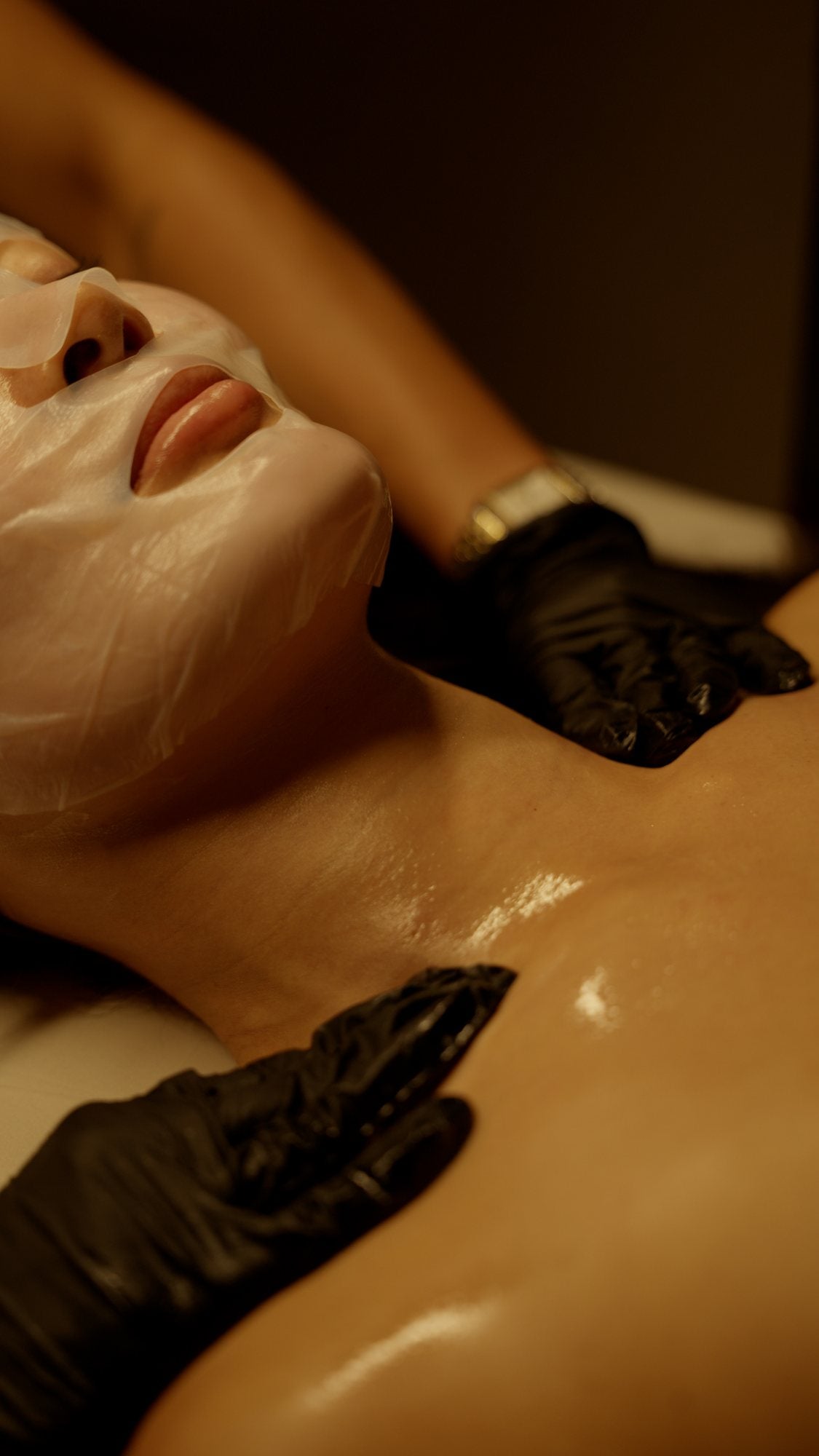
CO2 Lift Mask in Atlanta, GA
Carbon dioxide has a reputation as a waste gas, which undersells what it does. In tissue, a local rise in carbon dioxide is the signal that tells blood to release the oxygen it is carrying — a piece of physiology with a name and a century of study behind it. A carboxy mask uses that mechanism from the outside: a gel that generates carbon dioxide against the skin, prompting a local increase in oxygen delivery. It is comfortable, it has no downtime at all, and it is honest about being a finishing treatment rather than a corrective one.
The Benefits
Carboxytherapy, No Needles
It delivers carboxytherapy without needles — a topical route to a treatment whose original form is injected.
The Bohr Effect
The mechanism is a well-established piece of physiology: raising local carbon dioxide prompts hemoglobin to release oxygen more readily, and dilates local vessels.
Calming After Procedures
It is soothing rather than provoking, which makes it one of the few treatments appropriate on inflamed skin in the days after a procedure, where a provider advises it.
Genuinely No Downtime
There is no downtime whatsoever, because nothing is injured, removed, or heated — it can be done the same day as something you need to look well for.
Comfortable Throughout
It is comfortable throughout, involving no needles, no acids, no heat, and no discomfort beyond a cool or tingling sensation.
Immediate, Short-Lived
The effect is immediate and visible, with brighter, plumper, more hydrated-looking skin straight afterward — and it is short-lived, which is the honest other half of that.
An Add-On, Not A Course
It works best as an add-on within a facial or a longer plan rather than as a course in its own right.
Modest By Nature
Its effects are modest by nature: no injury means no collagen remodeling and no lasting structural change, and the evidence for topical delivery is thinner than for the injected form.
Real Results
Before & After
 After
After Before
 After
After Before
 After
After Before
 After
After Before
What CO2 Lift Mask Is
Carboxytherapy is the therapeutic use of carbon dioxide. In its original medical form it is delivered by injection — small volumes of medical-grade CO2 gas introduced under the skin, used for a range of indications and studied over several decades. A carboxy mask is the non-invasive version of the same idea: a preparation that generates carbon dioxide at the skin surface so the gas diffuses in without a needle.
The preparation typically comes as two components mixed immediately before use — a gel and an activator — which react to release carbon dioxide steadily while the mask sits on the skin. The mixed gel is applied thickly and left in place for a defined period, during which the reaction continues and the gas is generated against the surface. Carbon dioxide is small and highly diffusible, considerably more so than oxygen, which is why it passes through the skin barrier where larger molecules cannot.
The mechanism it exploits is the Bohr effect, described in 1904 and taught in every physiology course since. Hemoglobin's affinity for oxygen is not fixed — it falls as carbon dioxide concentration rises and as pH drops. This is how the body normally directs oxygen where it is needed: metabolically active tissue produces more carbon dioxide, the local environment becomes more acidic, and hemoglobin passing through releases its oxygen more readily there than elsewhere. Raising carbon dioxide locally in the skin is intended to produce that same release. There is a secondary effect too — carbon dioxide is a vasodilator, so local blood flow increases as well.
What this treatment does not involve is any injury, any exfoliation, any acid, or any device. Nothing is removed and nothing is damaged, which is why there is no recovery of any kind and why it can be performed on skin that would not tolerate anything more aggressive. That is genuinely useful — it is one of the few treatments appropriate immediately after a procedure, when the skin is inflamed and most other options are off the table.
It is also why the effect is modest and short-lived. A treatment that creates no injury triggers no wound-healing cascade, produces no collagen remodeling, and leaves no lasting structural change. The evidence base for topical carboxytherapy is considerably thinner than for injected carboxytherapy and thinner still than for the procedural treatments it sits alongside. It is a comfortable, pleasant, low-risk treatment with a real physiological rationale and a modest, temporary effect — and it is best chosen with that description in mind.

How It Works
Oxygen is carried in the blood bound to hemoglobin, and how tightly it binds depends on local conditions. The oxygen-hemoglobin dissociation curve shifts to the right — meaning oxygen is released more readily — when carbon dioxide concentration rises, when pH falls, and when temperature increases. This is the Bohr effect, and it is the body's mechanism for delivering oxygen preferentially to tissue that is working hard, since working tissue produces carbon dioxide and lowers local pH.
A carboxy mask raises carbon dioxide concentration in the skin from the outside. The gel and activator are mixed immediately before application, and the resulting reaction releases carbon dioxide steadily against the surface for the duration of the contact period. Carbon dioxide is a small, highly diffusible molecule — considerably more diffusible than oxygen — so it crosses the stratum corneum readily where larger molecules are excluded.
As local carbon dioxide rises in the tissue, two things are proposed to follow. Hemoglobin in the dermal capillaries releases oxygen more readily than it otherwise would, increasing oxygen availability to the surrounding tissue. And carbon dioxide acts as a vasodilator, widening those capillaries and increasing local blood flow, which brings more blood — and therefore more oxygen — through the area in the first place. The visible flush many people notice during or immediately after the treatment is consistent with that vasodilation.
Alongside the gas itself, the mask has a straightforward physical effect. It is applied thickly and left in place, which is occlusive, and occlusion under a hydrating gel improves the skin's water content over the contact period. Some of what people feel immediately afterward — plumper, more comfortable, better-hydrated skin — is attributable to that rather than to the carbon dioxide.
What does not happen is any injury. Nothing is ablated, exfoliated, punctured, or heated. No wound-healing cascade is initiated, no fibroblast proliferation is triggered, and no collagen is laid down as a result. This is the reason the treatment is entirely comfortable and has no recovery, and equally the reason its effects are temporary. It is also worth knowing that the evidence base for topically applied carboxytherapy is thinner than for the injected form, and considerably thinner than for the procedural treatments it is often listed alongside. The physiology is sound; the magnitude and durability of what it achieves through intact skin is less well established.

What CO2 Lift Mask Treats
Dull, tired-looking skin
The most commonly reported effect: skin looks brighter and more awake immediately afterward, which is consistent with increased local blood flow and oxygen release.
Redness and inflammation after a procedure
One of the better uses. It is soothing, involves no injury, and can be performed on skin that is too inflamed for anything else, which makes it useful in the days after a peel, needling, or laser treatment where a provider advises it.
Dehydrated, tight-feeling skin
The gel itself is hydrating and occlusive during the contact period, and most people describe skin feeling plumper and more comfortable immediately afterward.
Puffiness and a sluggish look
Increased local circulation is the rationale, and reduced puffiness is a common report. This is a temporary effect rather than a change in the tissue.
Skin preparation before an event
A genuinely good use, since there is no downtime at all and the effect is immediate. It can be done the same day as something you need to look well for.
Sensitive or reactive skin that tolerates little
For skin that flares at acids, needling, and heat, this is one of the few professional treatments that can be performed without provoking anything.
Comfort during a longer treatment plan
Frequently included as a finishing step within a facial or as a calming treatment between more substantial procedures.
Not lines, laxity, scarring, pigment, or volume
Listed deliberately. A treatment that creates no injury does not remodel tissue, and none of these are within its range regardless of how often it is repeated.
Is CO2 Lift Mask Right For You?
You May Be A Good Candidate If
- Adults who want an immediate, visible improvement in brightness and hydration with no recovery at all.
- People needing to look well the same day or the next, where most other professional treatments carry some visible aftermath.
- People with sensitive or reactive skin that does not tolerate acids, needling, or heat, for whom the options are otherwise limited.
- People recovering from a procedure, where a provider has advised a calming treatment and the skin is too inflamed for anything else.
- People wanting a comfortable finishing step within a facial or a longer treatment plan.
- People with realistic expectations about magnitude and duration. This is a temporary, modest effect, and it should be presented and priced as one.
- People who prefer to avoid needles entirely, whether by preference or necessity.
- People in generally good health with no active skin condition in the treatment area.
This May Not Be Right For You If
- Anyone with a known allergy or sensitivity to a component of the gel or activator. Ask for the ingredient list if you have reactive skin or a history of contact allergy.
- Anyone with an active skin infection, an open wound, or an active herpes simplex outbreak in the treatment area, until it has resolved.
- Anyone with broken or compromised skin where an occlusive product should not be applied, which is a judgment for the provider rather than an assumption.
- Anyone with an active inflammatory skin condition in flare that has not been assessed, where any occlusive treatment should be reviewed first.
- Anyone with significant respiratory disease should mention it, since the treatment involves a gas-generating preparation applied near the face — a conversation worth having rather than a fixed contraindication.
- Anyone who is pregnant or breastfeeding should raise it, so the specific preparation can be reviewed rather than assumed acceptable.
- Anyone with an undiagnosed lesion in the treatment area, which needs medical assessment before any cosmetic treatment.
- Anyone expecting it to address lines, laxity, scarring, pigment, or volume. A treatment that creates no injury does not remodel tissue, and no frequency of repetition changes that.
- Anyone looking for a lasting result from a treatment whose effects are temporary by mechanism.
This is a low-risk treatment, so the consultation is correspondingly short — but two things are worth covering. First, allergies and sensitivities, since the main risk here is a contact reaction to a component of the preparation, and it is applied thickly and left in place. Second, honest expectations: if what you want is a change in lines, texture at depth, pigment, or firmness, this treatment will not deliver it and a provider should say so rather than sell a course. Where it is being used after another procedure, the timing should come from whoever performed that procedure rather than being arranged independently.
How CO2 Lift Mask Compares
This treatment is easiest to place by what it does not do. The table sets it against the options people consider alongside it.
| Feature | Carboxy mask | Injected carboxytherapy | Hydrating facial | Microneedling |
|---|---|---|---|---|
| How it is delivered | A gel generating carbon dioxide against the skin | Medical-grade CO2 gas injected under the skin | Products applied topically, often with massage | Controlled micro-injury from fine needles |
| Needles involved | None | Yes | None | Yes |
| Mechanism | Raises local CO2, prompting oxygen release and vasodilation | The same mechanism, delivered directly into tissue | Hydration and barrier support | Triggers a wound-healing and collagen response |
| Creates injury | No | Yes, minimally at injection points | No | Yes, by design |
| Collagen remodeling | None | Proposed, with a modest evidence base | None | This is its purpose |
| Downtime | None at all | Bruising and swelling at injection sites | None | Redness for a day or two, then flaking |
| Duration of effect | Short-lived — days rather than weeks | Longer, across a series | Days | Months, as collagen remodels |
| Suitable immediately after a procedure | Often yes, where advised | No | Depends on the products used | No |
The useful way to think about this treatment is as a finishing or soothing step rather than as an alternative to anything in the other columns. It occupies a genuinely useful niche — no downtime, no injury, suitable on inflamed skin — and it does not compete with treatments that remodel tissue. A plan that relies on it to achieve what a procedure would has the wrong tool in the wrong place.
What To Expect
Before The Treatment
- A brief consultation covering your skin, your goals, and specifically any allergies or sensitivities, since the main risk is a contact reaction to a component of the preparation.
- A conversation about what the treatment realistically achieves, including being told plainly if your goals need something else.
- Confirmation of timing if this is being used after another procedure, which should come from whoever performed that procedure rather than being arranged separately.
- Disclosure of any significant respiratory condition, pregnancy, or breastfeeding, so the preparation and the plan can be reviewed.
- Instructions to arrive with clean skin where possible, though makeup will be removed before application.
- No special preparation is otherwise needed, and there is no requirement to stop active skincare beforehand unless your provider advises it.
Results: Onset And How Long It Lasts
The result is immediate and short-lived, and both halves of that matter. Most people leave with skin that looks brighter and more awake, feels plumper and better hydrated, and appears less puffy — an effect consistent with increased local blood flow, improved oxygen release, and the hydration that comes from a thick occlusive gel sitting on the skin for half an hour. It is a real effect and it is visible the same day, which is precisely why the treatment is popular before events. It is also temporary, lasting days rather than weeks, because nothing structural has changed. No injury was created, so no wound-healing response was triggered, no fibroblasts were prompted to proliferate, and no collagen was laid down. That means the treatment does not address lines, laxity, atrophic scarring, pigment, or volume — and repeating it more often does not change what the mechanism can do. Where it earns its place is in the niche it genuinely occupies: an immediate, comfortable, zero-downtime improvement, and one of very few treatments appropriate on skin that is inflamed after a procedure. It is also worth knowing that the evidence base for topical carboxytherapy is thinner than for the injected form and thinner still than for the procedural treatments it sits alongside — the underlying physiology is well established, while the magnitude of what it achieves through intact skin is less so. This page publishes no numeric outcome figures for that reason.
During The Treatment
- The skin is cleansed thoroughly. Where the mask is part of a longer facial, other steps precede it.
- The gel and activator are mixed immediately before application, since the carbon dioxide-generating reaction begins on mixing.
- The mixed gel is applied thickly across the treatment area and left in place for a defined contact period, typically on the order of half an hour.
- The sensation is generally described as cool, sometimes with a light tingling, fizzing, or prickling as the gas is generated. Most people find it pleasant, and no numbing is needed.
- You may notice a visible flush developing during or shortly after the contact period, which is consistent with the vasodilation the treatment is intended to produce.
- The mask is removed and finishing products with broad-spectrum sun protection are applied.
- The appointment is comfortable throughout and generally relaxing, and the treatment can be performed on skin that would not tolerate anything more aggressive.
- Afterward the skin will generally look brighter and feel hydrated, with no visible sign that anything was done beyond a temporary flush.
How Often, And Why
There is no fixed course here, and that is appropriate to what the treatment is. Because the effect is immediate and temporary and there is no recovery period, this is typically used on demand — before an event, as a finishing step within a facial, or as a calming treatment when the skin needs settling rather than provoking.
Where it is used regularly, intervals of a few weeks are common, though the treatment can be repeated more often than that without concern, since nothing is being injured and there is no healing to complete. That flexibility is unusual and is one of its practical advantages. It does not, however, mean that repeating it frequently produces a cumulative structural result — the mechanism does not support that, and a plan built on frequent repetition in the hope of a lasting change is misdirected.
After another procedure, timing is dictated by that procedure rather than by this one. A provider may recommend it in the days following a peel, needling, or laser treatment specifically because it is soothing and creates no additional injury, but whether and when that is appropriate is a judgment for whoever performed the original treatment.
The sensible way to place this in a longer plan is as the comfortable element among more substantial ones — the treatment you have when you need to look well imminently, when your skin needs calming, or when something else is contraindicated. Building a plan around it, rather than around treatments that remodel tissue, would be putting the finishing step where the main work should be.
Afterward
- Expect skin to look brighter and feel plumper and more hydrated immediately, and expect that to be the main event.
- Expect any flush to settle within a short period.
- There is no restriction on activity, exercise, heat, or swimming, since nothing was injured and no barrier was disrupted.
- Makeup can generally be applied straight away unless your provider advises otherwise.
- Resume your usual skincare routine as normal unless you were told otherwise, or unless the mask followed another treatment with its own aftercare.
- Use broad-spectrum sunscreen daily, as you should regardless.
- Where this followed a peel, needling, or laser treatment, follow that treatment's aftercare instructions — they govern, not this one's.
- Report any rash, marked itching, or spreading redness in the hours or days afterward, which may indicate a reaction to a component of the preparation.
- Do not expect the effect to last. It is temporary by mechanism, and repeating it is how it is used rather than a sign it did not work.
Side Effects And Downtime
Common And Expected
- A cool sensation, light tingling, fizzing, or prickling during the contact period
- A visible flush during or shortly after treatment, settling within a short period
- Mild transient redness
- A temporary feeling of tightness as the gel is removed
- Occasional mild itching during the contact period
- Skin feeling notably hydrated and slightly plumped immediately afterward
When To Seek Care
- A spreading rash, marked itching, or swelling during or after the treatment, which may indicate an allergic reaction to a component of the preparation.
- Signs of a serious allergic reaction — hives, swelling of the face, lips, tongue, or throat, wheezing, or difficulty breathing or swallowing. Call 911.
- Redness or burning that worsens rather than settles after the treatment.
- Any difficulty breathing during the treatment, which should be raised immediately with your provider rather than waited out.
- A flare of an underlying skin condition that does not settle with your usual management.
- Blistering or any area that fails to settle, which would be unexpected from this treatment and warrants assessment.
- A cold sore outbreak, which should be treated promptly.
Less Common, But Important To Know
- Allergic contact dermatitis or hypersensitivity to a component of the gel or activator — presenting as rash, spreading redness, marked itching, or swelling. This is the main risk of the treatment, and it is raised by the product being applied thickly and left in place.
- Irritant contact reaction, particularly on skin that was already compromised or freshly treated with something else.
- A flare of an underlying inflammatory skin condition such as eczema, rosacea, or perioral dermatitis, which occlusion can provoke.
- Acneiform eruption or congestion following application of an occlusive product to acne-prone skin.
- Prolonged redness beyond the expected short window.
- Discomfort or claustrophobia from having a thick mask left in place across the face for an extended period, which is worth mentioning beforehand if you are prone to it.
- Reactivation of herpes simplex producing a cold sore, in anyone with a history of it, though this is less associated with a treatment that creates no injury.
- No discernible benefit, which is a realistic outcome given the modest and temporary nature of the effect.
Downtime
None, in the fullest sense of the word. Nothing is injured, removed, exfoliated, or heated, so there is nothing to recover from and no restriction on what you do afterward — exercise, heat, swimming, and makeup are all unaffected unless the mask followed another treatment with its own aftercare, in which case that treatment's instructions govern. Most people leave looking better than they arrived, with any flush from the vasodilation settling within a short period. This is among the very few professional treatments that can sensibly be done the same day as an event, and it is one of the only ones appropriate on skin that is still inflamed after a procedure. The trade for all of that is magnitude and duration: the effect is modest and lasts days rather than weeks.
Who Performs This Treatment

Brianna Harris
Aesthetician · Facials, peels, microneedling and resurfacingBrianna is one of Alcove's aestheticians. Every treatment starts with a look at your skin and what you want from it, and your plan, including what you use at home, is built from there.

Shaina Paul
Aesthetician · Facials, peels, microneedling and resurfacingShaina is Alcove's aesthetician. Every treatment starts with a look at your skin and what you want from it, and your plan, including what you use at home, is built from there.
CO2 Lift Mask FAQs
Through the Bohr effect, which is standard physiology rather than a marketing idea. Hemoglobin releases oxygen more readily when local carbon dioxide is high and pH is lower — that is how the body directs oxygen to tissue that is working hard. Raising carbon dioxide locally in the skin is intended to prompt that same release, and carbon dioxide also dilates local vessels, increasing blood flow through the area.
No. Carboxytherapy in its original medical form is injected, but this is the topical version — a gel that generates carbon dioxide against the skin so the gas diffuses in on its own. Carbon dioxide is a small, highly diffusible molecule, which is why it crosses the barrier where larger molecules cannot.
Days rather than weeks. Nothing structural has changed — no injury was created, so no collagen remodeling was triggered. The brightness, hydration, and plumpness you leave with are real, and they are temporary by mechanism. Repeating the treatment is how it is used, not evidence that it failed the first time.
Yes, and it is one of the best treatments for that. There is no downtime at all, the effect is immediate and visible, and it can be done the same day. Very few professional treatments can honestly claim that, and it is much of why this one is booked.
No. Most people describe a cool sensation with a light tingling, fizzing, or prickling as the gas is generated, and find it pleasant. No numbing is needed. The one thing worth mentioning beforehand is if you find having a thick mask left across your face for half an hour uncomfortable, since a few people do.
No. Treatments that improve lines and firmness do so by remodeling tissue, which requires creating controlled injury and triggering a repair response. This treatment deliberately creates no injury — that is why there is no downtime — so it does not remodel anything. Skin will look better temporarily; the structure is unchanged.
Often yes, and this is one of its better uses — it is soothing, creates no additional injury, and can be performed on skin too inflamed for anything else. But the timing should come from whoever performed that procedure rather than being arranged separately, and that treatment's aftercare instructions govern rather than this one's.
It is often chosen precisely because it provokes nothing — no acids, no heat, no needles, no exfoliation. The one real risk is a contact reaction to a component of the gel or activator, which is raised somewhat by the product being applied thickly and left in place. Disclose any sensitivities and ask for the ingredient list.
As often as you find it useful. Because nothing is injured and there is no healing to complete, there is no recovery interval dictating spacing — which is unusual and genuinely convenient. What frequent repetition will not do is accumulate into a lasting structural change, since the mechanism does not support that.
The underlying physiology is well established and has been for over a century. The evidence specifically for topically applied carboxytherapy is thinner than for the injected form, and thinner still than for the procedural treatments this is often listed alongside. That is a fair thing to know: a sound mechanism does not by itself establish how much is achieved through intact skin.
Raise it at consultation so the specific preparation can be reviewed rather than assumed acceptable. This is a conversation rather than an automatic no — it is among the gentler treatments available — but the ingredient list should be checked rather than waved through.
Probably not, and an honest provider will say so. This occupies a genuinely useful niche — immediate, comfortable, zero downtime, safe on inflamed skin — and it is a finishing step rather than the main work. A plan built around it, rather than around treatments that remodel tissue, has the finishing step where the substance should be.
Pairs Well With


Book Your Consultation
A consultation is a conversation about your face, not a sales appointment. Bring your questions about CO2 Lift Mask and your medical history, and leave with an honest answer about whether it is the right treatment for you.