



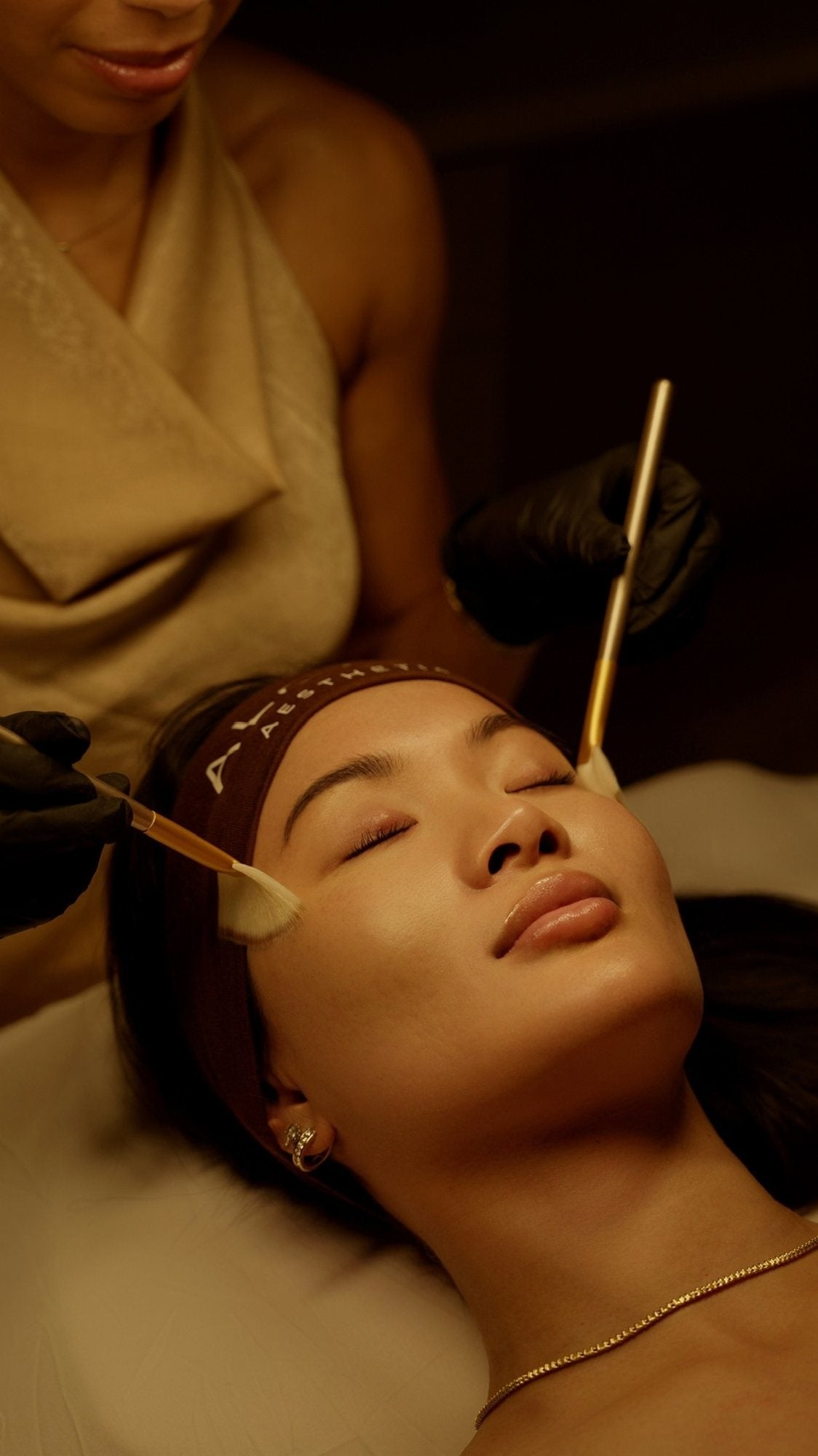
DiamondGlow Facial in Atlanta, GA
DiamondGlow is a medical-grade resurfacing facial that exfoliates, extracts, and infuses in a single pass. A diamond-tipped wand lifts away dull surface cells while a closed-loop vacuum clears debris from pores and simultaneously delivers a serum matched to your skin concern. It takes roughly half an hour and leaves essentially no downtime.
The Benefits
Same Day Difference
You see a difference the same day, because removing the dull surface layer immediately changes how light hits your skin.
No Down Time
There is essentially no downtime, which is why it has earned its lunchtime-facial reputation.
Customizable
It is customizable rather than a fixed protocol: grit, suction, passes, and serum are all chosen for your skin on the day.
3 in 1
It does three jobs in roughly thirty minutes, replacing exfoliation, extraction, and a serum treatment performed separately.
Ongoing Improvement
Results compound across a series, so texture, clarity, and tone keep improving in a way a single facial cannot.
Suits Most Skin Types
It suits most skin types and all Fitzpatrick tones, because mechanical exfoliation avoids the heat and light energy that drive most pigment-related risk.
Body & Face
It works on the body as well as the face, so congested backs and chests and rough hands are all fair game.
Results, Maintained
It layers into a larger plan, prepping skin for, or maintaining results between, more intensive treatments.
Real Results
Before & After
 After
After Before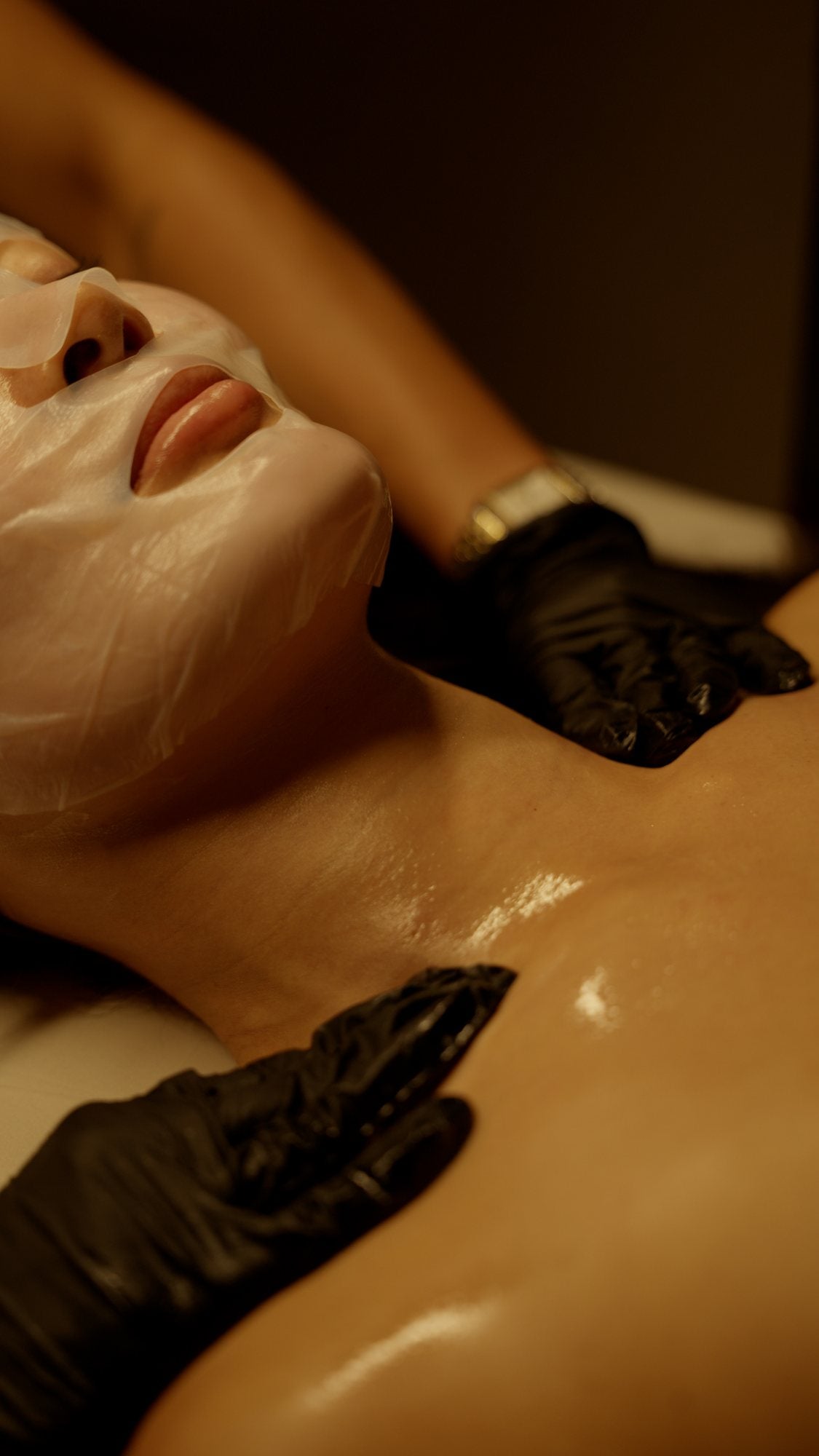
What DiamondGlow Facial Is
DiamondGlow is a branded device treatment from Allergan Aesthetics. Generically, it is diamond-tip microdermabrasion combined with pro-infusion, a category best described as a medical-grade resurfacing facial. The device does three jobs at once. A recessed diamond tip mechanically exfoliates the outermost layer of dead cells. A closed-loop vacuum draws debris, oil, and congestion up and out. And in the same motion, that vacuum delivers a condition-specific serum into skin that has just been resurfaced and is far more receptive to it. Exfoliate, extract, infuse, one pass.
The concept has a lineage. DiamondGlow is the successor to Dermalinfusion, the device that pioneered the same simultaneous abrade-extract-infuse principle; Allergan refined the handpiece, tip design, and serum system and relaunched it. Your provider selects a pro-infusion serum to match what your skin is doing that day, whether that is congestion, dryness, dullness, or uneven tone. Those serums are cosmetic formulations rather than prescription drugs, and the device itself is FDA-cleared for dermabrasion and topical serum delivery.
Be precise about what DiamondGlow is not. It is not a laser or microneedling, and it does not reach the dermis or meaningfully remodel collagen. It works at the surface. That is why it carries so little risk and no real recovery, and equally why it is not a wrinkle eraser: it makes your skin look its best now and, across a series, genuinely better over time.
How It Works
The first step is mechanical. The DiamondGlow wand carries a recessed diamond-abrasive tip, available in several grit levels, which your provider passes across the skin under gentle tension. That abrasion removes the stratum corneum's outermost layer of dead, loosely bound cells, the layer that makes skin look dull and rough and that blocks products from penetrating. Because the tip is recessed and the grit is selectable, intensity is controlled precisely: lighter on thin or sensitive areas, firmer on congested zones.
The second step happens simultaneously. The tip sits inside a closed-loop vacuum that applies steady negative pressure, pulling loosened cells, excess oil, and pore debris away into a sealed waste canister. Nothing is smeared back across your face, a real difference from manual extraction, and the provider can dwell longer on stubbornly congested areas.
The third step earns the pro-infusion label. Freshly resurfaced skin has less barrier resistance: the dead-cell layer that normally repels most of what you apply topically is temporarily thinned, and the same negative pressure drawing debris out holds a serum against that receptive surface. The serum is therefore delivered more effectively than the identical formula patted on at home. What none of this does is reach the dermis, where collagen lives. DiamondGlow is a surface treatment, and treating the surface exceptionally well is the entire point.

What DiamondGlow Facial Treats
Dull, uneven skin tone and texture
Clearing built-up dead surface cells is the fastest way to restore light reflection. The concern DiamondGlow addresses most immediately.
Congestion, blackheads, and clogged pores
The closed-loop vacuum lifts oxidized sebum out of follicles while the diamond tip loosens the plug, which is why the nose and chin look clearer the same day.
Mild, non-inflamed acne and breakout-prone skin
Regular decongesting reduces how often pores clog. A maintenance tool for mild acne, not a treatment for active cystic or inflamed lesions.
Oily skin and pores that look enlarged
Emptying a pore makes it look smaller, since a pore stretched around debris reads as larger. Pore size itself is genetic and does not change.
Dry, dehydrated, or flaky skin
Removing the flaking surface layer and infusing a hydrating serum into resurfaced skin does more than layering moisturizer over the flakes.
Early fine lines and rough surface texture
Smoothing the surface softens how fine lines read and helps makeup sit better. Deeper, dynamic lines need injectables or a collagen-stimulating treatment.
Hyperpigmentation, sun spots, and post-acne marks
Cumulative exfoliation gradually lifts pigmented surface cells, and a brightening serum can target uneven tone. A series-based improvement, not a one-visit fix.
Rough or congested skin on the chest, back, and hands
DiamondGlow is not limited to the face. Back and chest congestion and rough, sun-textured hands respond to the same approach.
The pre-event glow
Weddings, photos, reunions. The classic reason people book, because the payoff is same-day and nothing announces that you had something done.
Is DiamondGlow Facial Right For You?
You May Be A Good Candidate If
- You want a visible, photograph-ready glow with zero downtime and nothing that looks like you had work done.
- You have an event coming up and want your skin looking its best for it.
- Your leading complaints are dullness, rough texture, blackheads, or congestion rather than deep lines or laxity.
- You have any Fitzpatrick skin type. Mechanical exfoliation carries less risk of post-inflammatory hyperpigmentation than aggressive light-based options for deeper skin tones, though your provider will still assess your skin and adjust intensity.
- You want to start taking your skin seriously without committing to a procedure that involves recovery time, and your expectations are calibrated to a surface treatment.
This May Not Be Right For You If
- You have active cystic or inflamed acne, pustules, or open lesions in the treatment area. Abrading and suctioning inflamed skin can worsen it and spread bacteria.
- You have an active skin infection, an active cold sore or HSV outbreak, or skin that is sunburned, broken, or otherwise not intact.
- You are in a rosacea flare, or your skin is highly reactive and sensitized right now.
- You have had a chemical peel, laser, waxing, or laser hair removal in the area recently, or you currently use prescription retinoids there. This is a question of timing rather than a permanent no, and your provider will space treatments appropriately.
- You are taking isotretinoin (Accutane), or finished a course recently. Most providers wait some months before mechanical resurfacing; the evidence on that interval is evolving, and your provider's judgment governs.
- You have a known allergy or sensitivity to an ingredient in one of the infusion serums. Flag it before, not after.
- You are pregnant or breastfeeding. This is defer-to-your-provider rather than a flat no: the mechanical portion is not the concern, but some serum ingredients, retinol being the obvious one, are typically avoided in pregnancy.
The honest version: DiamondGlow is among the lowest-risk treatments in aesthetics, and it delivers what it promises, which is clearer, smoother, brighter skin with no recovery. It will not erase an established wrinkle, tighten laxity, or resolve significant acne scarring, and anyone telling you otherwise is overselling. Is it worth it? If you want a reliable glow, ongoing decongestion, and steady gains in texture and tone across a series, it is strong value. If you are trying to solve deeper structural concerns, a good consultation should point you toward microneedling, resurfacing lasers, or injectables instead. Often it is part of a plan rather than the whole plan.
How DiamondGlow Facial Compares
DiamondGlow gets compared to HydraFacial constantly, and fairly, since they lead the same category and their outcomes overlap. The core difference is how they exfoliate: DiamondGlow uses a diamond-tip abrasive, while HydraFacial uses a spiral tip and a water-and-serum vortex, an approach called hydradermabrasion. Both are good treatments. The better choice comes down to your skin and your provider's assessment, not to which brand markets harder.
| Feature | DiamondGlow | HydraFacial | Classic microdermabrasion | Dermaplaning |
|---|---|---|---|---|
| Exfoliation method | Diamond-tip (mechanical abrasion) | Water/serum vortex with a spiral tip (hydradermabrasion) | Diamond tip or aluminum-oxide crystals (mechanical abrasion) | Surgical blade drawn across the skin (manual) |
| Extraction | Yes; closed-loop vacuum extracts as it exfoliates, debris sealed into a waste canister | Yes; vortex suction extracts as it cleanses | Yes; vacuum suction, typically less thorough on stubborn congestion | No; dermaplaning does not extract |
| Serum infusion | Yes; the defining feature. A condition-specific serum is infused in the same pass, under vacuum | Yes; serums are delivered in the vortex fluid during treatment | Generally no; products are applied topically afterward, not infused | No; though products applied afterward absorb better on freshly exfoliated skin |
| Removes vellus hair ("peach fuzz") | No | No | No | Yes; its signature benefit |
| Typical sensation | Gentle scratchy suction, often likened to a cat's tongue. Not painful | Wet, cool, gently tugging. Very comfortable | Sandy and scratchy with suction; can feel more abrasive | Light scraping; painless when done correctly |
| Downtime | Essentially none; possible pinkness for an hour or two | Essentially none | Usually none, though redness can linger if done aggressively | None |
| What it reaches | Epidermis (surface); does not remodel collagen | Epidermis (surface); does not remodel collagen | Epidermis (surface) | Epidermis (surface only) |
| Best suited to | Congestion, dullness, uneven texture, and anyone wanting targeted serum delivery | Dullness and dehydration, and skin that prefers a wetter, gentler approach | Thicker, oilier, more resilient skin wanting basic resurfacing | Peach fuzz, flawless makeup application, very smooth surface texture |
In practice, DiamondGlow suits skin where congestion and texture lead, because the mechanical tip and closed-loop extraction are decisive about clearing pores. HydraFacial suits skin wanting a wetter, gentler, hydration-forward experience, and many people alternate between them. Dermaplaning belongs here because people shop these interchangeably, but it does a different job and is more often combined with a resurfacing facial than chosen instead of one.
What To Expect
Before The Treatment
- Stop retinoids, retinol, and exfoliating acids (AHAs, BHAs) in the treatment area three to five days beforehand. Stacking exfoliation is the most common cause of an irritated result.
- Avoid waxing, depilatory creams, and laser hair removal in the area for about a week, and skip scrubs and at-home exfoliating devices.
- Tell your provider about any recent peel, laser, or microneedling, current or recent isotretinoin (Accutane) use, any history of cold sores, and any ingredient allergies. These change the plan.
- Do not arrive with a fresh sunburn, and be diligent with sunscreen in the days before.
- Come with a clean face if you can. Arriving without makeup gives your provider a truer read when selecting your serum.
Results: Onset And How Long It Lasts
You will see a glow the same day, usually before you leave: brighter, smoother, more even skin that photographs well and takes makeup beautifully. That immediate result typically holds for one to two weeks. Deeper improvements in texture, clarity, and tone are cumulative, building gradually across a series rather than arriving all at once.
During The Treatment
- Your provider cleanses thoroughly, removing makeup, sunscreen, and surface oil so the tip makes proper contact.
- They analyze your skin and select the infusion serum, matched to whether it is congested, dry, dull, or uneven in tone.
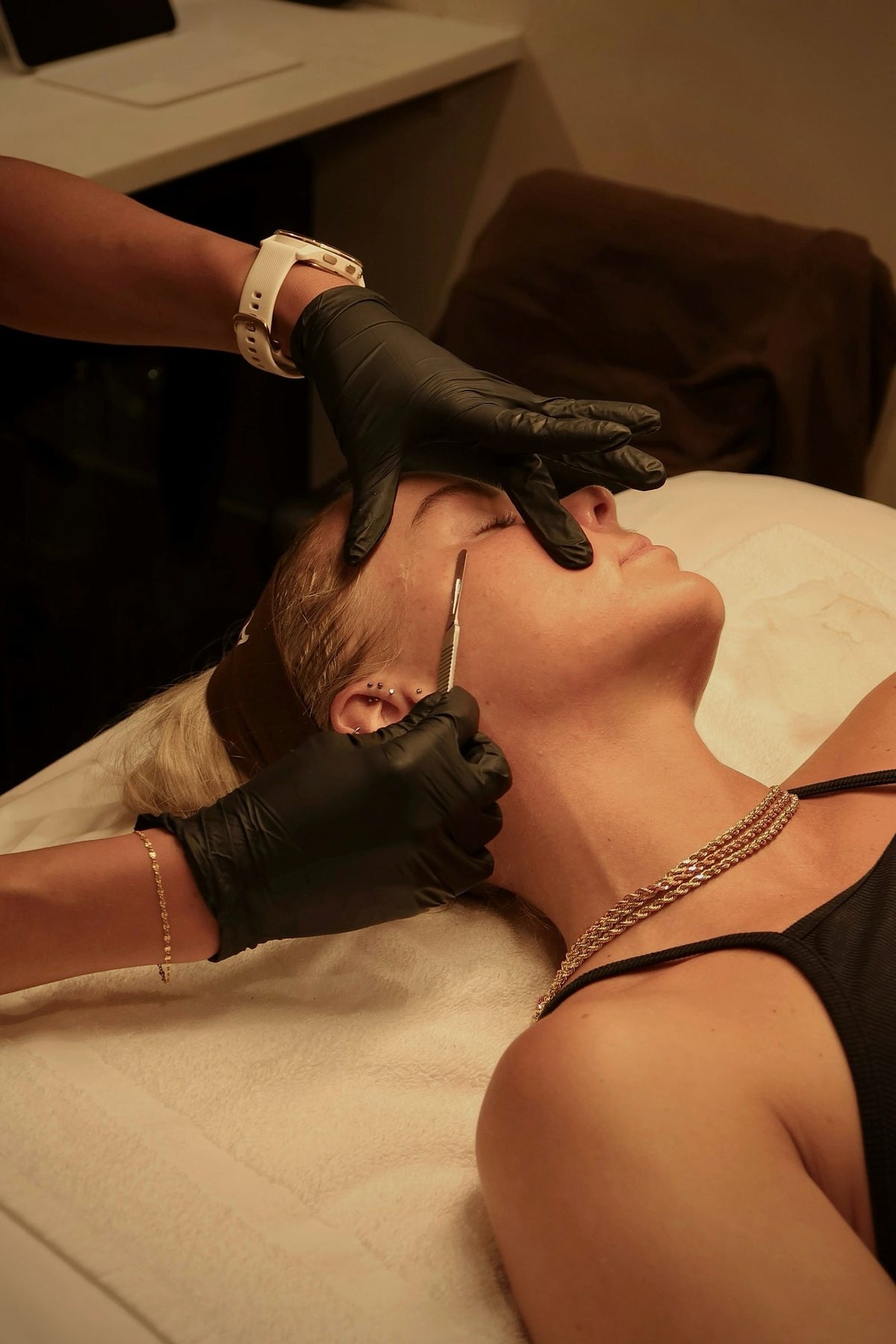
- The diamond-tip wand passes across the skin in overlapping strokes, section by section. This is the resurfacing step, and it feels like a scratchy, ticklish suction most people find oddly satisfying.
- Extraction happens simultaneously, with the provider dwelling longer on congested zones such as the nose, chin, and forehead.
- The pro-infusion pass delivers the selected serum into freshly resurfaced skin under gentle vacuum. Skin usually looks visibly brighter by the end of this step.
- A finishing step, typically something soothing plus broad-spectrum SPF, closes the appointment. Start to finish, expect around thirty minutes.
How Often, And Why
Skin renews on a cycle of roughly a month, and treatment timing is built around it. Because DiamondGlow works by removing the surface layer of dead cells, retreating in step with that natural turnover is what produces compounding improvement rather than a single good week. Providers commonly start with a series spaced about four weeks apart, then move to maintenance every four to six weeks. If your goal is a one-time glow before an event, a single treatment delivers that. If you want a real change in texture, congestion, and tone, a series is what gets you there.
How many and how often are individualized. Oily, congested skin often does well on a tighter schedule, while dry or reactive skin wants more space between visits. Your provider will also sequence around everything else you are doing, since peels, microneedling, lasers, and even a strong at-home retinoid need spacing around resurfacing rather than piling on top of it. Cost varies by provider, region, and add-ons, and many practices price a series differently from a single visit, so raise budget openly at your consultation.
Afterward
- Wear broad-spectrum SPF 30 or higher every morning, and reapply. Non-negotiable: you have just removed the dead-cell layer that gave a little physical sun protection, so resurfaced skin is more photosensitive. Skipping sunscreen undoes the treatment and invites pigmentation.
- Leave retinoids, acids, and physical scrubs alone for about forty-eight hours. Your skin has been exfoliated already.
- Skip heavy sweating, hot yoga, saunas, steam rooms, hot tubs, and pools for around twenty-four hours. Heat, salt, and chlorine on resurfaced skin are avoidable irritants.
- Keep the routine simple for a couple of days: gentle cleanser, good moisturizer, plenty of water.
- Makeup is usually fine the same day. If your skin feels sensitive, a few makeup-free hours is a kindness rather than a requirement.
- Do not pick or scrub. If you were congested, a few small blemishes may surface over the following days as debris works its way out. That is expected, and it settles.
- Use any take-home serum as directed, and book your next session if you are working through a series.

How Much Does DiamondGlow Facial Cost in Atlanta, GA?
- What it is priced by: Per 60 min
- Typical cost: $250 / 60 min
The figure above is a starting point, not a quote. What you pay depends on how much product your anatomy actually needs, which is a clinical judgement made in person. Ask at your consultation.
Side Effects And Downtime
Common And Expected
- Transient pinkness or mild redness, usually settling within an hour or two and easily covered with makeup.
- Tightness or slight dryness for a day or so, which a good moisturizer resolves.
- Temporary sensitivity, particularly to active ingredients and to sun, for the first couple of days.
- Light flaking as the last of the loosened surface cells shed. Normal and short-lived.
- A brief purge if your skin was congested, where a few blemishes surface as debris is drawn out before things settle.
When To Seek Care
- A rash, hives, or swelling spreading beyond the treated area, or any difficulty breathing, which warrants urgent care.
- Blistering, weeping, crusting, or any open area on the treated skin.
- A cold-sore outbreak in the days after treatment, since early antiviral treatment works far better than late treatment.
- Redness, pain, heat, or swelling that worsens rather than settles beyond twenty-four to forty-eight hours, which can signal irritation or infection.
Less Common, But Important To Know
- Irritation or an allergic reaction to an ingredient in the infusion serum, which is why flagging known sensitivities beforehand matters.
- Reactivation of a cold sore (HSV) in people prone to them, since facial trauma can be a trigger. Tell your provider; prophylactic antivirals may be discussed.
- Over-exfoliation, which happens when DiamondGlow is stacked too close to peels, lasers, waxing, or retinoid use, and shows up as a stinging, over-sensitized barrier.
- Post-inflammatory hyperpigmentation in very reactive skin if the treatment is performed too aggressively. Uncommon with mechanical exfoliation, and a key reason your provider tailors grit and pressure to your skin.
Downtime
For practical purposes there is none, and that is the treatment's defining advantage. DiamondGlow is the archetypal lunchtime facial. Most people leave with nothing more than a slight flush that fades within an hour or two, apply sunscreen, and go straight back to work or on to an event. There is no peeling phase and no recovery to manage; the only real constraints are the aftercare rules above.
Who Performs This Treatment

Brianna Harris
Aesthetician · Facials, peels, microneedling and resurfacingBrianna is one of Alcove's aestheticians. Every treatment starts with a look at your skin and what you want from it, and your plan, including what you use at home, is built from there.
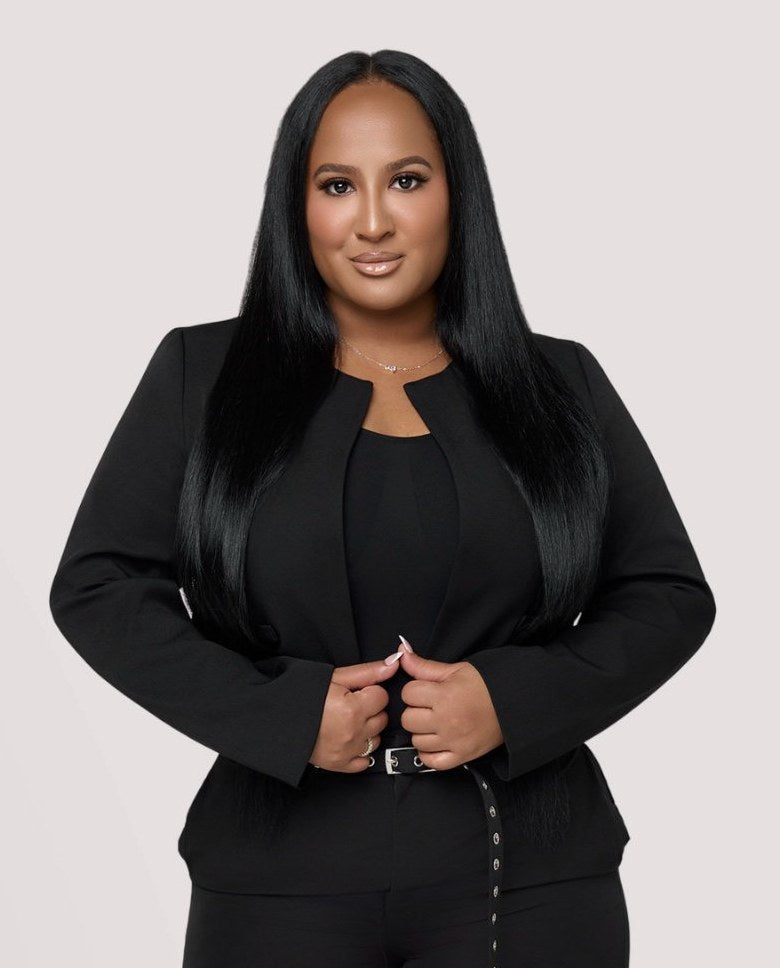
Shaina Paul
Aesthetician · Facials, peels, microneedling and resurfacingShaina is Alcove's aesthetician. Every treatment starts with a look at your skin and what you want from it, and your plan, including what you use at home, is built from there.
DiamondGlow Facial FAQs
Both exfoliate, extract, and infuse serums, and both are good treatments. The difference is mechanism: DiamondGlow uses a diamond-tip abrasive for mechanical exfoliation, then infuses serum under closed-loop vacuum. HydraFacial uses a spiral tip and a water-and-serum vortex, called hydradermabrasion. DiamondGlow is more decisive on congestion; HydraFacial is wetter and gentler.
No. Most people describe a scratchy, ticklish suction, often compared to a cat's tongue. No needles, no numbing. The nose can feel more intense and congested zones mildly tender during extraction, but discomfort is minimal and stops when the treatment does.
Essentially none. Some people have mild pinkness that fades within an hour or two, and skin can feel slightly tight for a day. There is no peeling phase, so most people return to work immediately. The only real rules are diligent sunscreen and briefly pausing retinoids and heavy sweating.
Skin turns over on a roughly monthly cycle, so treatments are typically spaced about four weeks apart. Providers commonly recommend a series to address texture, congestion, or tone, then maintenance every four to six weeks. A single pre-event treatment is perfectly reasonable. Your provider individualizes this.
Usually yes, the same day, and many people go straight back to the office wearing a full face. Makeup also sits better on freshly resurfaced skin. If your skin feels sensitive, a few makeup-free hours is a kindness rather than a rule. Sunscreen, though, is not optional.
It helps with congestion, blackheads, clogged pores, and mild non-inflamed breakouts, because clearing pores regularly reduces how often they clog. It is not appropriate over active cystic or inflamed acne, pustules, or open lesions, where abrading and suctioning can worsen inflammation. Severe acne needs a medical plan first.
It can, gradually. Repeated exfoliation lifts pigmented surface cells, and a brightening serum can target uneven tone. This is cumulative, not a one-visit correction, and it works best on surface pigment such as post-acne marks and superficial sun damage. Melasma needs a dedicated plan and rigorous sun protection.
Generally yes. Because exfoliation is purely mechanical, DiamondGlow avoids the heat and light energy carrying most of the pigment-related risk in deeper skin tones, so it suits all Fitzpatrick types. The risk is lower, not zero: overly aggressive treatment on reactive skin can still trigger hyperpigmentation, so your provider adjusts grit and pressure.
The immediate glow typically holds about one to two weeks, tracking your skin's natural turnover cycle. Improvements in texture, clarity, and tone build across a series and hold longer with maintenance. Because DiamondGlow works at the surface, results are not permanent. Consistency and daily sunscreen make them stick.
Yes, and it is one of the most common reasons people book, precisely because there is no downtime. Ideally schedule it five to seven days beforehand, letting any pinkness or small surfacing blemishes settle while the glow still peaks. If it is your first, book a trial run several weeks earlier.
You do not have to choose alone. Your provider assesses your skin and selects a pro-infusion serum matched to your leading concern, whether congestion, dehydration, dullness, or uneven tone. Skin shifts with season, stress, and hormones, so the right serum changes between visits. Flag ingredient allergies beforehand.
Ask your provider, and tell them you are pregnant or breastfeeding. The mechanical exfoliation and extraction are not typically the concern; the serum is, since some ingredients, retinol being the clearest example, are usually avoided in pregnancy. Many providers offer a modified treatment with a pregnancy-appropriate serum.
Pairs Well With

Book Your Consultation
A consultation is a conversation about your face, not a sales appointment. Bring your questions about DiamondGlow Facial and your medical history, and leave with an honest answer about whether it is the right treatment for you.