



Dermaplaning in Atlanta, GA
This is the treatment with the most immediate payoff and the most persistent myth attached to it. A sterile blade held at an angle lifts away the dead outer layer of skin and the fine hair sitting on top of it — you feel the difference on the drive home. And no, the hair does not grow back thicker or darker. That belief is extremely common, it is not what happens, and the biology behind why is worth two minutes of reading before you decide.
The Benefits
Immediate Smoothness
The result is immediate and tactile — skin looks brighter and feels noticeably smoother the same day, with no waiting period.
Peach Fuzz, Gone
It removes fine vellus hair along with the dead surface layer, which is a substantial part of why the result looks the way it does.
It Does Not Grow Back Thicker
The hair does not grow back thicker or darker. Follicles determine the type of hair they produce, and cutting a shaft does not change the follicle.
Makeup Sits Better
Makeup sits flat and applies evenly on freshly planed skin, which is why the treatment is popular before events and photography.
Products Reach Further
Topical products penetrate substantially better once the accumulated surface layer is removed, so anything applied afterward works harder.
No Downtime
There is essentially no downtime, because nothing living is injured and there is no wound to heal.
No Chemicals Involved
It involves no acids and no chemical agents, which makes it an option for people who react to those or are avoiding them.
Not For Every Skin
It is not suitable for every skin — active acne, rosacea in flare, and several other situations are genuine reasons not to have it, and a provider should say so.
Real Results
Before & After
 After
After Before
What Dermaplaning Is
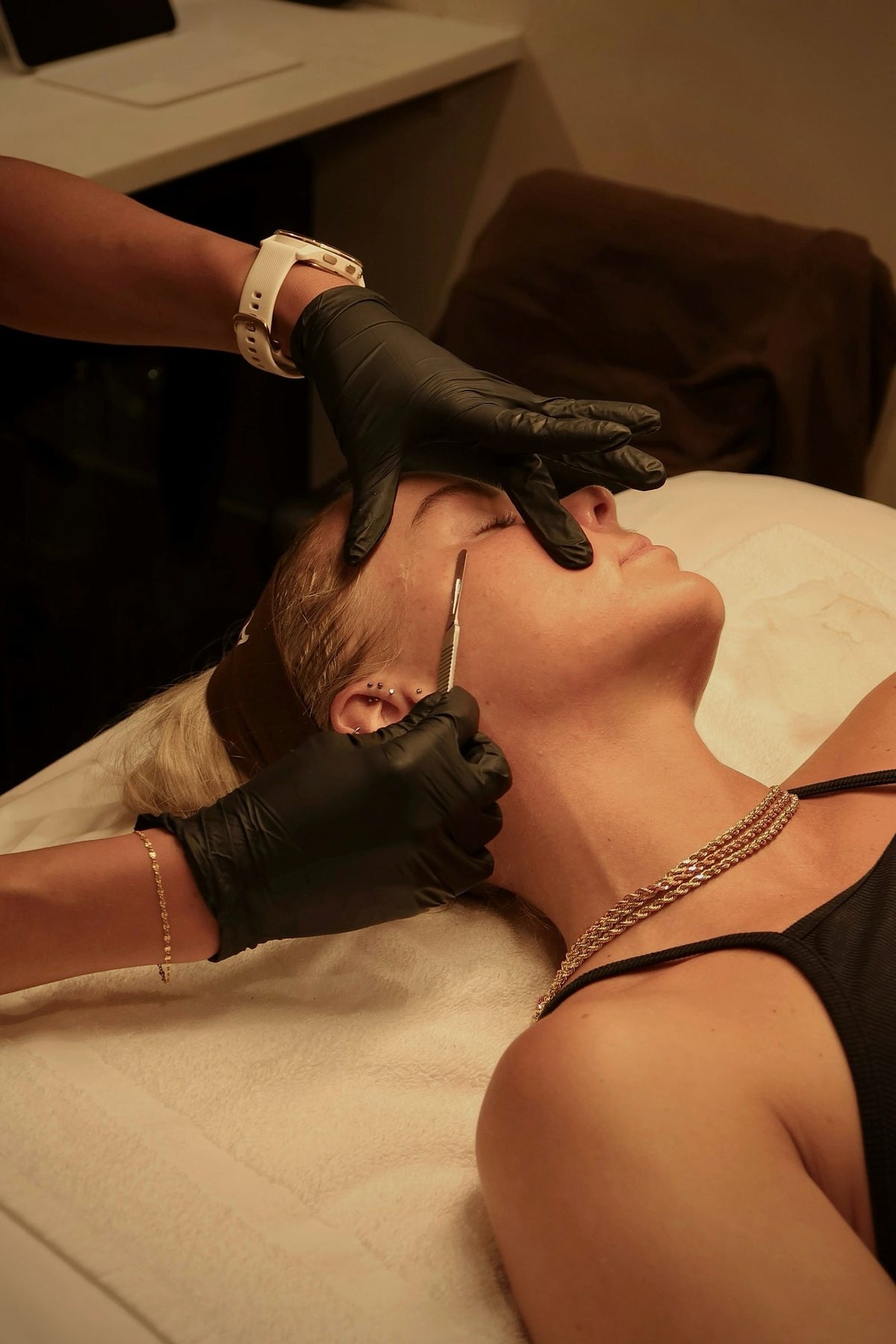
Dermaplaning is a physical exfoliation performed by hand. A sterile surgical blade is held against taut skin at a shallow angle and drawn across the surface in short, controlled strokes. It removes two things at once: the stratum corneum, the layer of dead keratinocytes sitting at the outermost surface, and the fine vellus hair growing through it.
The blade never cuts into living tissue. It is held at an angle that shaves across the surface rather than into it, and the material removed is dead cells and hair shaft. This is why the treatment has essentially no recovery — nothing living has been injured, and there is no wound to heal. It is exfoliation by mechanical removal rather than by chemical dissolution or by controlled injury.
The hair removed is vellus hair, and this is where the persistent myth comes in. Human body hair comes in two forms. Vellus hair is the fine, short, usually unpigmented hair covering most of the body, including the face. Terminal hair is the thicker, longer, pigmented hair of the scalp, eyebrows, and beard. Which type a follicle produces is determined by the follicle itself, under hormonal and genetic control — not by whether the hair has been cut. Shaving removes the shaft above the surface and does nothing to the follicle, so a vellus follicle continues producing vellus hair afterward. What creates the impression of coarser regrowth is that a cut shaft has a blunt tip rather than a naturally tapered one, so it feels different for a short while as it grows back out. The hair is unchanged.
What dermaplaning does not do is reach beyond the surface. It removes the outermost dead layer, which genuinely changes how skin looks, feels, and takes product — but it does not stimulate collagen, address pigment at depth, treat scarring, or affect anything structural. It is the most immediate treatment on a menu and one of the most limited, and both of those are true at once.
How It Works
The stratum corneum is the outermost layer of the epidermis, made of dead keratinocytes bound together and shed continuously as new cells arrive from beneath. Turnover slows with age and is disrupted by sun damage, dehydration, and inflammation. When shedding slows, those cells accumulate, and an accumulated layer does three things: it scatters light rather than reflecting it evenly, it feels rough, and it acts as a barrier to anything applied topically.
Dermaplaning removes that layer mechanically. The blade, held at a shallow angle against skin held taut, shears across the surface and lifts away dead cells and vellus hair together. Because the angle keeps the edge moving across the surface rather than into it, living tissue is not cut, and there is no wound and no healing response — which is precisely why there is no downtime and also why there is no collagen stimulation. Treatments that build collagen do so by injuring the skin; this one deliberately does not.
The immediate improvements follow directly from what has been removed. Light reflects more evenly off a smooth surface than off an irregular one, which is the brightness people notice. Foundation applied over fine hair and dead cells clings unevenly; applied to a freshly planed surface it sits flat. And topical products encounter substantially less resistance, which is why serums applied immediately afterward penetrate better than the same products would have that morning.
That last effect has a consequence worth understanding. If an acid, an active, or a peel is applied immediately after dermaplaning, it will also reach further than it otherwise would. That can be used deliberately — it is one reason the two are combined — but it means the strength of what follows should be adjusted, and it is why applying your usual home actives on the evening of a treatment often causes more irritation than expected.
The effect is temporary by nature. The stratum corneum regenerates continuously, and within a few weeks the surface has rebuilt. Vellus hair regrows over a similar period, unchanged in thickness or colour. This is a maintenance treatment in the most literal sense: it removes something that keeps coming back.

What Dermaplaning Treats
Rough surface texture and dullness
The core indication and the most immediately noticeable effect. Removing accumulated dead cells changes how skin reflects light and how it feels to the touch, and the difference is apparent the same day.
Fine facial hair
Vellus hair catches light and can make skin look less smooth, and it collects foundation. Removing it is a substantial part of why the result looks as it does, and it is often the reason people book.
Makeup sitting poorly on the skin
Foundation applied over fine hair and accumulated dead cells clings unevenly. On freshly dermaplaned skin it sits flat, which is why this treatment is popular before events and photography.
Products not penetrating well
An accumulated surface layer is a genuine barrier to topical actives. Removing it is why serums and treatments applied immediately afterward work better than they would have.
Preparation before another treatment
Frequently performed immediately before a peel or a mask, since removing the surface layer allows what follows to penetrate more evenly. That sequencing also means the subsequent agent reaches further, which is a reason for the provider to adjust its strength.
Skin that cannot tolerate chemical exfoliation
For people who react to acids or are avoiding them for a reason, a physical method offers an alternative route to the same surface goal.
Milia and superficial congestion
Removing the surface layer can help with fine congestion. Established milia and deeper blockages generally need extraction or another approach.
Not scarring, deep lines, pigment at depth, or laxity
Listed deliberately. Nothing about surface exfoliation reaches any of these, and no frequency of treatment changes that.
Is Dermaplaning Right For You?
You May Be A Good Candidate If
- Adults who want immediate smoothness and brightness, particularly before an event, photography, or anything where makeup needs to sit well.
- People bothered by fine facial hair that catches light or collects foundation.
- People whose home skincare feels like it is not penetrating, where removing the accumulated surface layer often makes a noticeable difference.
- People who react to acids or are avoiding chemical exfoliation for a reason, and want a physical route to the same surface goal.
- People with dull, rough, or flaky-looking skin without active inflammation.
- People wanting a treatment with genuinely no recovery, which very few professional treatments offer.
- People who understand this is maintenance — the surface rebuilds within weeks and the treatment is repeated rather than completed.
- People with realistic expectations about depth. This is a surface treatment and does not reach anything structural.
This May Not Be Right For You If
- Anyone with active inflammatory or cystic acne in the treatment area. Drawing a blade across inflamed lesions spreads bacteria, worsens the acne, and risks scarring — this is the single most important contraindication.
- Anyone with an active herpes simplex outbreak, an open lesion, or any skin infection in the area, until it has resolved.
- Anyone with rosacea in flare, where the mechanical action commonly aggravates it.
- Anyone with an active inflammatory skin condition affecting the area — eczema or psoriasis in particular — where a blade across compromised skin is a poor idea.
- Anyone currently taking isotretinoin, or who has recently completed a course, where the skin is fragile and blade exfoliation carries a real risk of injury. Timing must come from the prescribing clinician.
- Anyone with sunburned, windburned, or otherwise compromised skin, until it has recovered.
- Anyone with a raised mole, skin tag, or other raised lesion in the treatment path, which should be worked around and, if undiagnosed, assessed medically first.
- Anyone with an undiagnosed pigmented or changing lesion, which needs assessment before any cosmetic treatment goes near it.
- Anyone with a bleeding disorder, or on anticoagulant therapy, where even minor nicks warrant more caution — worth disclosing rather than assuming.
- Anyone who has recently had a peel, resurfacing, or waxing in the area, where the barrier is already disrupted.
- Anyone with excessive terminal hair on the face, where dermaplaning is not the appropriate treatment and a hair removal method should be discussed instead.
- Anyone expecting it to address scarring, deep lines, pigment at depth, or laxity. It reaches none of them.
The most important thing a consultation establishes here is whether there is active inflammation in the treatment area, because that is where dermaplaning goes from harmless to harmful. A provider should examine the skin, ask about acne, rosacea, eczema, cold sores, isotretinoin, recent treatments and hair removal, and any bleeding disorder or anticoagulant use, and should map any raised lesions to be worked around. It is also worth saying plainly what you are hoping for — if the answer is scarring or deep lines, this is the wrong treatment and you should be told so rather than sold a course of it.
How Dermaplaning Compares
Exfoliation comes in physical and chemical forms and at various depths. The table sets out where dermaplaning sits and what it uniquely offers.
| Feature | Dermaplaning | Superficial chemical peel | Home physical scrub | Facial waxing or threading |
|---|---|---|---|---|
| Method | A sterile blade shearing across taut skin | An acid solution dissolving bonds between surface cells | Abrasive particles rubbed across the skin | Hair removed from the follicle by pulling |
| Removes vellus hair | Yes | No | No | Yes, from the root |
| Depth reached | The outermost dead layer only | Within the epidermis | Uneven and uncontrolled | Not exfoliation; removes hair and some surface cells |
| Onset of result | Immediate | Over the following days as skin sheds | Immediate but superficial | Immediate |
| Downtime | None | Mild redness and light flaking, sometimes none | None, though irritation is common | Redness for hours; risk of irritation and ingrowns |
| Collagen stimulation | None — no injury is created | Minimal at superficial depth | None | None |
| Suits reactive skin | Often yes, if there is no active inflammation | Depends on agent selection | Frequently aggravates it | Frequently aggravates it |
| How long it lasts | Weeks, as the surface rebuilds and hair regrows | Weeks, with the effect compounding over a course | Days | Weeks, depending on the growth cycle |
These are not competitors — dermaplaning and a chemical peel are frequently performed in the same appointment precisely because they do different things, and the combination is more effective than either alone. What matters is sequence and strength: exfoliating physically first means whatever follows penetrates further, so the agent that follows should be chosen with that in mind.
What To Expect
Before The Treatment
- A skin assessment focused specifically on whether there is active inflammation, acne, or any condition that makes blade exfoliation inappropriate today.
- A history covering acne, rosacea, eczema, cold sores, isotretinoin use, bleeding disorders or anticoagulant use, and any recent treatments or hair removal.
- Identification of any raised moles, skin tags, or lesions in the treatment path, which will be worked around — and which need medical assessment first if undiagnosed.
- Instructions to stop retinoids and exfoliating acids for a few days beforehand, since a barrier that is already exfoliated tolerates blade work poorly.
- Advice to avoid waxing, threading, and other hair removal in the area beforehand, and to avoid sun exposure and self-tanner.
- A conversation about what else is planned for the appointment, since a peel or active applied afterward will penetrate further than usual and should be adjusted accordingly.
- Instructions to arrive with clean skin where possible, though makeup will be removed as part of the treatment.
Results: Onset And How Long It Lasts
The result is immediate and is the main appeal: skin looks brighter and feels distinctly smoother the same day, fine hair is gone, makeup sits flat, and topical products penetrate better than they did that morning. That effect is real rather than perceptual — an even surface reflects light differently from an irregular one, and removing a physical barrier genuinely improves absorption. It is also temporary by nature. The stratum corneum regenerates continuously and rebuilds within a few weeks; vellus hair regrows over a similar period, unchanged in thickness, colour, or rate. This is a maintenance treatment in the most literal sense, and framed that way it is a very good one. What it does not do is reach beyond the surface. It creates no injury, so it stimulates no collagen; it does not address atrophic scarring, deep lines, pigment at depth, laxity, or anything structural, and repeating it more often does not change that. Where it earns a place in a longer plan is as preparation — performed immediately before a peel or a mask, it allows what follows to penetrate more evenly — and as the treatment people book when they need to look well next week rather than next season. This page publishes no numeric outcome figures, since the result is immediate, visible, and self-evident rather than something averages would describe.
During The Treatment
- The skin is cleansed thoroughly and dried completely, since the blade requires a dry surface to work correctly.
- The provider holds an area of skin taut with one hand and draws a sterile blade across it at a shallow angle in short, controlled strokes.
- The sensation is generally described as a light scraping or a brushing feeling, similar to being shaved, and most people find it entirely painless. No numbing is needed.
- You will hear the blade against the skin, which surprises some people. It is a normal part of the treatment.
- The provider works systematically across the face, working around raised lesions and adjusting near delicate areas.
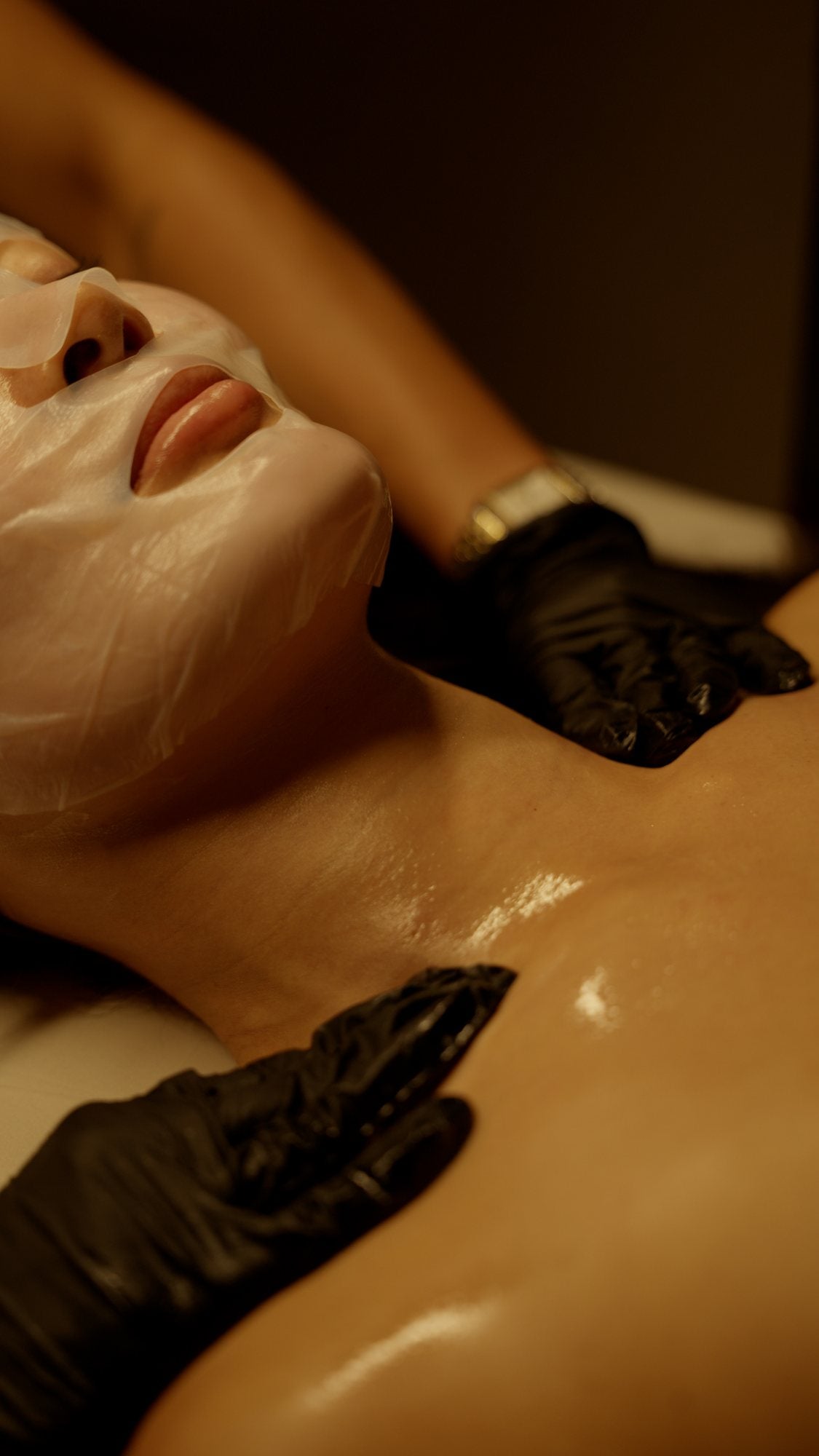
- A serum, mask, or peel is often applied immediately afterward, taking advantage of the improved penetration — with the strength adjusted for that.
- Finishing products and broad-spectrum sunscreen are applied.
- The treatment itself takes a matter of minutes, and the appointment is short unless it is combined with something else.
How Often, And Why
Dermaplaning is repeated at roughly monthly intervals for most people, which corresponds broadly to the epidermal turnover cycle and to the regrowth of vellus hair. Treating much more often than that removes a surface layer that has not fully rebuilt, which offers no additional benefit and increases the chance of irritation and sensitivity.
The treatment is frequently timed rather than merely scheduled. Because the result is immediate and lasts a few weeks, many people book it deliberately ahead of an event, photography, or anything where makeup needs to sit well — and it is one of the few professional treatments that can sensibly be had the day before. Others simply fold it into a regular facial appointment, where it is commonly one element among several.
It is also frequently sequenced immediately before a peel or a mask, since removing the surface layer allows the agent that follows to penetrate more evenly. That combination is deliberate and effective, and it comes with a corresponding adjustment: whatever follows should be chosen at a strength that accounts for reaching further than it otherwise would.
One point that applies at any frequency. Whatever the interval, the vellus hair regrows exactly as it was. It is not becoming thicker, darker, or more plentiful with repeated treatment, and it will not do so at any frequency — the follicle determines what it produces, and a blade across the surface has no influence on it.
Afterward
- Expect skin to feel immediately smoother and look brighter. Most people notice the difference before they leave.
- Expect mild redness or slight sensitivity for a few hours, and occasionally a temporary tight feeling.
- Avoid active skincare — retinoids, exfoliating acids, vitamin C, benzoyl peroxide, and scrubs — for the interval your provider specifies. This matters more than usual, because the removed surface layer means products reach further than they normally would.
- Use a bland moisturizer and a gentle cleanser, and broad-spectrum sunscreen daily. Freshly exfoliated skin is more vulnerable to sun.
- Avoid direct sun exposure for a few days where practical.
- Avoid saunas, steam rooms, hot tubs, and heavy sweating for the rest of the day.
- Makeup can generally be worn sooner than after most treatments, and applies particularly well — but follow the interval your provider gives you.
- Avoid waxing, threading, or other hair removal in the area for the period specified.
- Do not attempt this at home with a razor or a purchased blade tool. The angle, the pressure, and the sterility all matter, and home attempts commonly cause nicks, irritation, and spread of infection.
- Report any nick that does not settle, or any spreading redness, irritation, or breakout in the days afterward.
Side Effects And Downtime
Common And Expected
- Mild redness for a few hours
- Temporary sensitivity or a tight feeling in the treated skin
- Slight dryness in the day or two afterward
- Increased sensitivity to skincare products and to sun
- Occasional small nicks, which are minor and heal quickly
- A different tactile sensation as vellus hair regrows, since a cut shaft has a blunt rather than tapered tip
- Small blemishes surfacing in the days afterward in some people
When To Seek Care
- Signs of infection: increasing pain, spreading redness, warmth, swelling, pus, or fever.
- A cold sore outbreak or a spreading cluster of blisters, which should be treated promptly and which can be carried across the face by a blade.
- A nick that continues bleeding, gapes, or fails to heal.
- Spreading redness, marked itching, or swelling, which may indicate a reaction to a product applied afterward.
- Signs of a serious allergic reaction — hives, swelling of the face, lips, tongue, or throat, or difficulty breathing. Call 911.
- Worsening acne or new inflammatory lesions appearing across the treated area in the days afterward.
- Bleeding, change, or irritation in a mole or lesion that was caught during treatment, which should be assessed medically.
Less Common, But Important To Know
- Breakout or worsening of acne where the treatment was performed over active inflammatory lesions — which is why active acne is a contraindication rather than a caution.
- Spread of a skin infection across the treated area, including bacterial infection or a herpes simplex outbreak carried by the blade across the face.
- Irritation or a persistent flare in rosacea-prone or reactive skin.
- Cuts deeper than a minor nick, from incorrect angle or pressure, or from attempting it at home.
- Post-inflammatory hyperpigmentation, uncommon at this depth but possible where irritation occurs, and more likely in deeper skin tones.
- Excessive irritation from an active or a peel applied afterward at a strength that did not account for improved penetration — a common and avoidable error.
- Injury to a raised mole or skin tag caught by the blade, which is why they are identified and worked around beforehand.
- Scarring, which is rare and generally associated with treatment over active inflammatory lesions or with a cut that becomes infected.
- Allergic or irritant reaction to a product applied after the treatment rather than to the dermaplaning itself.
Downtime
None, genuinely. This is one of very few professional treatments with no recovery at all, because nothing living has been injured and there is no wound to heal. Expect mild redness for a few hours and perhaps some temporary tightness or sensitivity, and that is the extent of it. Makeup can generally be worn sooner than after most treatments and applies particularly well, which is much of the appeal. The instructions that matter are about what you put on afterward rather than what you look like: skip active skincare for the interval you are given, because the removed surface layer means products reach considerably further than they normally would, and applying your usual retinoid or acid that evening is a common way to cause unnecessary irritation. Sunscreen daily, avoid direct sun for a few days, and skip saunas and heavy sweating for the rest of the day. This is the treatment you can have the day before something.
Who Performs This Treatment

Brianna Harris
Aesthetician · Facials, peels, microneedling and resurfacingBrianna is one of Alcove's aestheticians. Every treatment starts with a look at your skin and what you want from it, and your plan, including what you use at home, is built from there.

Shaina Paul
Aesthetician · Facials, peels, microneedling and resurfacingShaina is Alcove's aesthetician. Every treatment starts with a look at your skin and what you want from it, and your plan, including what you use at home, is built from there.
Dermaplaning FAQs
No. This is the most persistent myth about the treatment and it is not what happens. The type of hair a follicle produces is determined by the follicle under hormonal and genetic control, not by whether the shaft has been cut. A vellus follicle continues producing vellus hair. What creates the impression is that a cut shaft has a blunt tip rather than a naturally tapered one, so it feels different for a short while as it grows out. The hair itself is unchanged.
No. Most people describe it as a light scraping or brushing sensation, similar to being shaved, and no numbing is required. The sound of the blade against the skin surprises some people more than the feeling does. It is one of the most comfortable treatments on a menu.
None, genuinely. Nothing living is injured, so there is no wound and no healing. Expect mild redness for a few hours and possibly some temporary tightness, and that is the extent of it. Makeup can generally be worn sooner than after most treatments and applies particularly well.
It is a poor idea. The angle, the pressure, the tautness of the skin, and the sterility of the blade all matter, and home attempts commonly result in nicks, irritation, uneven results, and — where there is any active lesion — spread of infection across the face. It also removes considerably less of the surface layer than a properly performed treatment does.
Not over active inflammatory or cystic lesions. Drawing a blade across inflamed acne spreads bacteria, worsens the condition, and risks scarring — this is the single most important reason not to have the treatment. Skin with occasional congestion or blackheads and no active inflammation may be fine, but that is an assessment for your provider to make on the day.
No, and this is worth being clear about because it is sometimes implied. Treatments that build collagen do so by injuring the skin and triggering a repair response. Dermaplaning deliberately does not injure anything — the blade shears across the surface rather than into it, which is exactly why there is no downtime. No injury means no collagen stimulation.
Roughly monthly for most people, which corresponds to the skin's turnover cycle and to vellus hair regrowth. Treating much more often removes a surface layer that has not fully rebuilt, which offers no extra benefit and increases the chance of irritation. Many people simply fold it into a regular facial appointment.
Yes, and it is one of the few treatments you can sensibly have the day before. The result is immediate, there is no recovery, makeup sits particularly well on freshly planed skin, and photography is where the difference tends to show most. This is much of why it is booked.
Because the surface layer that normally slows absorption has just been removed, so anything you apply reaches considerably further than it usually would. Applying your usual retinoid or acid that evening is a common cause of unnecessary irritation. Follow the interval you are given — it is short, and it exists for a real reason.
Frequently, and the combination is deliberate — removing the surface layer first lets the peel penetrate more evenly. The corresponding point is that the peel will also reach further than it otherwise would, so its strength should be chosen accounting for that. This is a reason to have the combination done by someone who understands the interaction rather than assembling it yourself.
No. Atrophic scarring sits in the dermis and dermaplaning removes only the outermost dead layer of the epidermis. It will make the skin around a scar look smoother and brighter, which can very slightly soften how a scar reads, but it does not treat the scar. Scarring needs a treatment that reaches depth.
They are identified before the treatment starts and worked around deliberately. If you have one that is undiagnosed, new, or changing, it needs medical assessment before any cosmetic treatment goes near it. Point out anything you are aware of at the start rather than assuming it has been noticed.
Pairs Well With


Book Your Consultation
A consultation is a conversation about your face, not a sales appointment. Bring your questions about Dermaplaning and your medical history, and leave with an honest answer about whether it is the right treatment for you.