



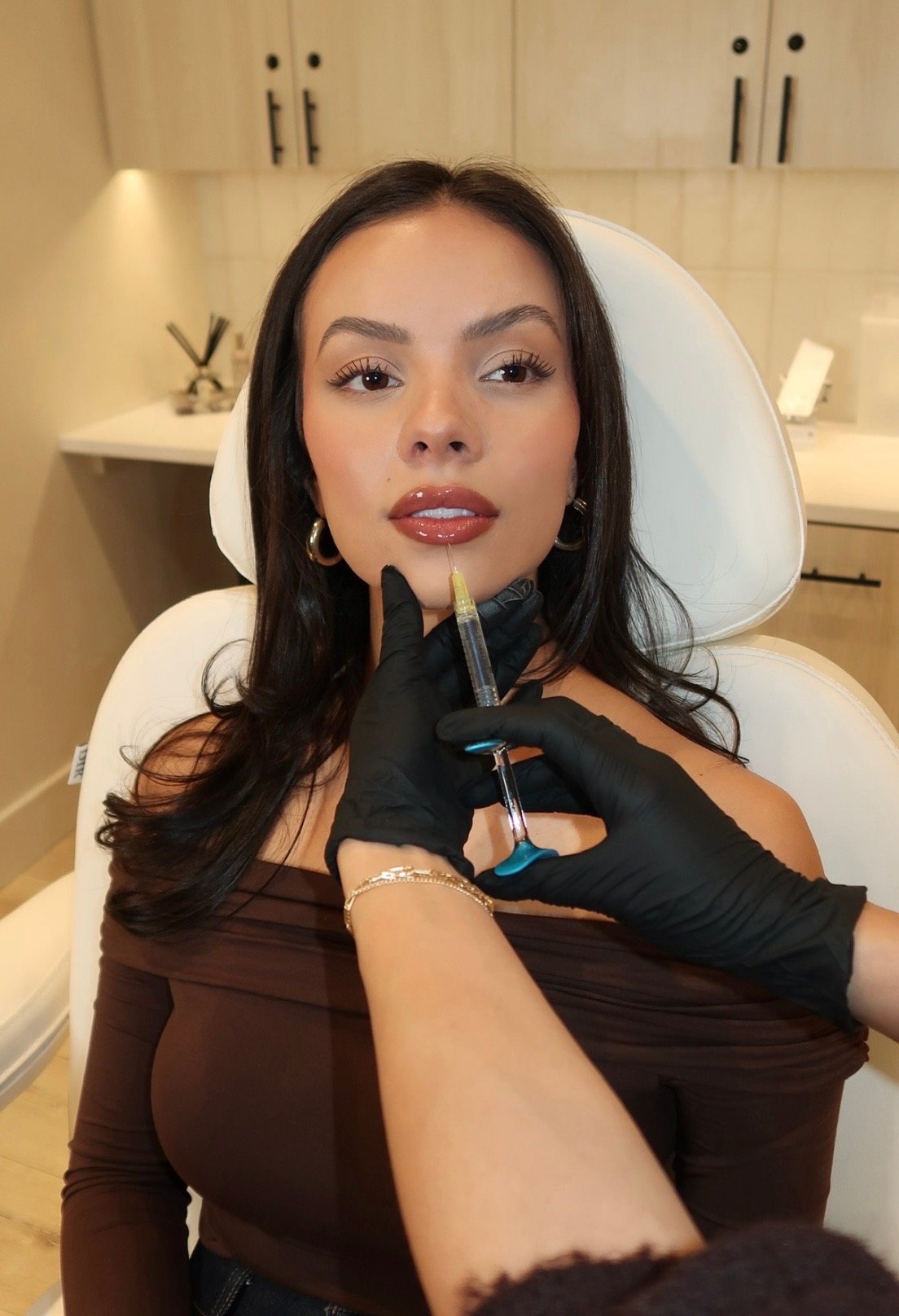
Lip Filler in Atlanta, GA
Lip filler is a non-surgical injectable treatment that uses hyaluronic acid (HA) dermal filler to add volume, definition, and hydration to the lips. A provider places small amounts of gel into the lip body and border with a fine needle or blunt cannula. Results are visible immediately, soften over about two weeks, and typically last several months.
The Benefits
Visible Immediately
Results are visible immediately, though swelling means the true result is not readable for about two weeks.
Built Gradually
The treatment is highly controllable, because filler can be placed a little at a time and built up across appointments.
Fully Reversible
Hyaluronic acid filler is reversible, so if you dislike the result or develop a lump, an injector can dissolve it with hyaluronidase.
Shape, Not Just Size
It treats shape as well as size, so you can sharpen a border or restore a cupid's bow without adding much volume.
Texture, Not Only Fullness
Because HA binds water, lips often look and feel more hydrated and less crepey, an improvement in texture rather than fullness alone.
No Surgical Recovery
There is no general anesthesia, no incision, and no surgical recovery; most people return to work or errands the same day.
Comfortable In Practice
Most modern lip fillers contain lidocaine and providers typically numb the area first, so treatment is generally well tolerated.
Real Results
Before & After
 After
After Before
 After
After Before
 After
After Before
 After
After Before
 After
After Before
 After
After Before
 After
After Before
 After
After Before
 After
After Before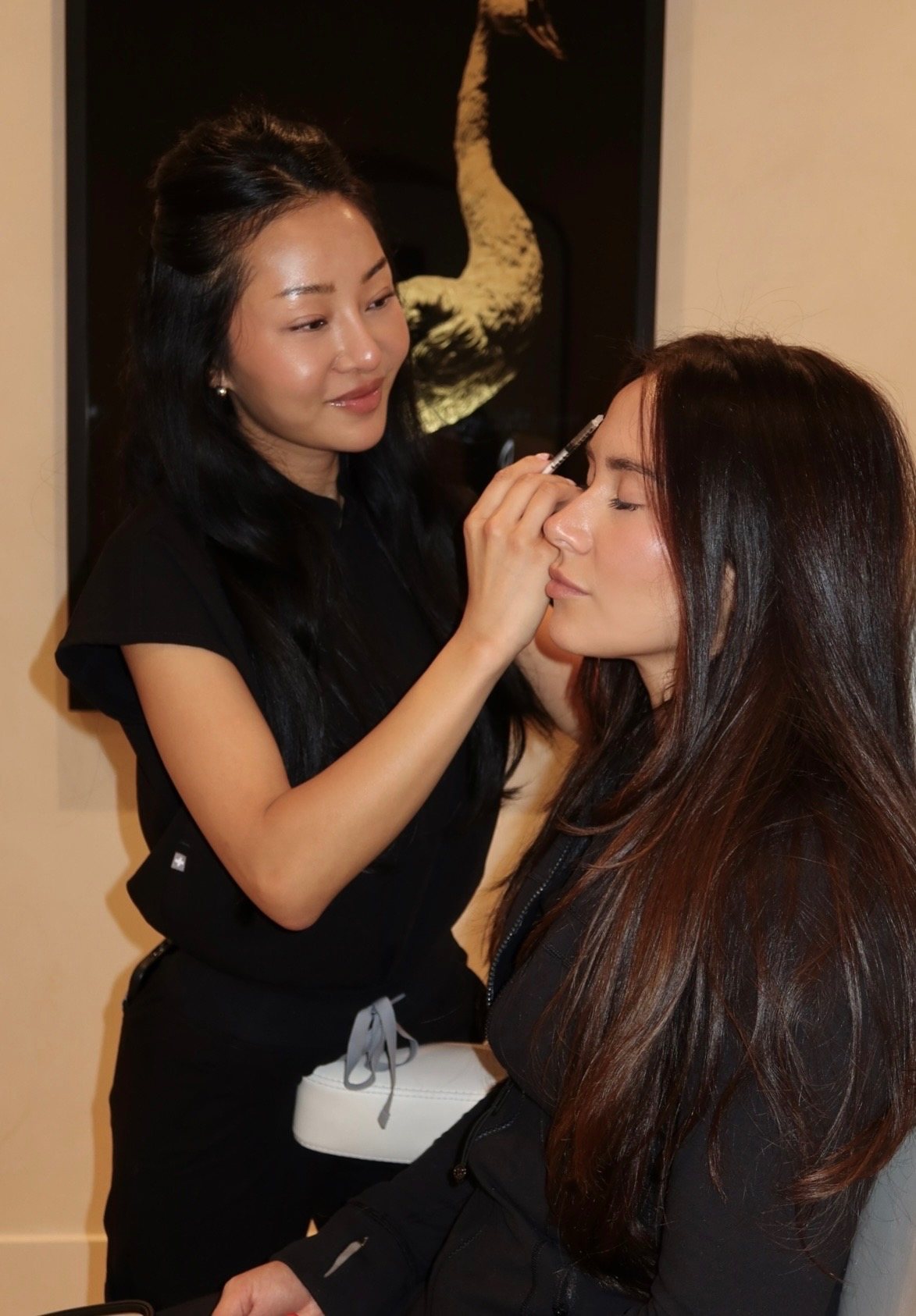
What Lip Filler Is
Lip filler is the everyday name for a hyaluronic acid dermal filler treatment performed on the lips. Hyaluronic acid is a sugar molecule your body already produces, found in skin and connective tissue, where its job is to hold water. Injectable HA is manufactured as a clear, cross-linked gel and placed into the lip with a very fine needle or a blunt-tipped cannula. Because the gel is soft and water-binding, it behaves less like an implant and more like a scaffold the lip tissue drapes over.
The treatment is precise rather than dramatic. Filler may go into the body of the lip to build volume, along the vermilion border to sharpen the outline, at the philtral columns to define the cupid's bow, or at the corners of the mouth to lift a downturned smile. Many people are treated in several of those zones in one visit, using a small amount in each. The most familiar HA lip products belong to the Juvederm, Restylane, and RHA families, and gels within them are built for different jobs: some soft and diffuse for hydration, others firmer for structure. No single filler is right for every lip.
HA lip filler is temporary and, importantly, reversible. The body breaks the gel down gradually through normal enzymatic turnover, and if a result is unwanted, overfilled, or lumpy, an injector can dissolve it with hyaluronidase, an enzyme that degrades hyaluronic acid within hours to days. That reversibility is a genuine safety feature, and one reason HA is preferred for lips over permanent materials, which cannot be undone.

How It Works
Hyaluronic acid is hydrophilic: it attracts and holds water, and that water-binding is what creates volume in a lip. Injected HA does not simply sit there as inert bulk. It draws in surrounding fluid and swells slightly, which is why lips look fuller than the volume of product alone would suggest, and why the result keeps evolving for a couple of weeks.
Raw hyaluronic acid would be broken down within a day or two, so injectable fillers are cross-linked. Chemical bridges are built between HA chains, turning a free-flowing liquid into a stable, cohesive gel that resists enzymatic breakdown. The degree of cross-linking, the HA concentration, and the manufacturing technology determine how a gel behaves in tissue, including how flexible it stays in a lip that talks and smiles all day.
Injectors also talk about G-prime, a measure of a gel's elasticity, or how much it resists being deformed by surrounding tissue. A high G-prime gel is firmer and holds its shape under pressure, which suits structure, projection, and a crisp border. A low G-prime gel is softer and spreads more, which suits hydration and fine lines. Lips are among the most mobile areas of the face, so product choice matters: too firm a gel in the wrong plane can look stiff, while too soft a gel may not give the definition you asked for. Over the following months, your own hyaluronidase and normal metabolic turnover degrade the gel and the lip returns toward baseline.

What Lip Filler Treats
1Thin or naturally small lips
Adds volume in a controlled way, usually built over one or more sessions rather than all at once.
2Age-related volume loss
Lips thin and roll inward over time; filler restores fullness and upper-lip show when you smile.
Asymmetry between the upper and lower lip
Small amounts placed unevenly on purpose rebalance a lip that is heavier on one side.
4An undefined vermilion border
Filler along the outline sharpens the edge and can reduce lipstick bleeding into fine lines.
5A flat or blurred cupid's bow
Precise placement at the philtral columns re-creates the M-shape of the upper lip.
6Perioral lines and downturned mouth corners
Soft gel softens vertical lipstick lines; support at the commissures lifts a resting expression that reads as tired.
7Dehydrated, crepey lip texture
Because HA binds water, softer gels improve the lip's surface quality, not just its size.
Lips that do not match a fuller lower face
Balancing lips against the chin, cheeks, and jawline is often what makes a result look natural.
Is Lip Filler Right For You?
You May Be A Good Candidate If
- You are in generally good health, past adolescent facial growth, and not pregnant or breastfeeding.
- You want more volume, a crisper border, better symmetry, or a defined cupid's bow.
- Your expectations are realistic: filler enhances your own lip anatomy rather than replacing it with a different shape.
- You accept swelling and possible bruising, and have not booked days before a wedding or photo shoot.
- You understand results are temporary, and you will follow aftercare and call your provider if anything looks or feels wrong.
This May Not Be Right For You If
- You are pregnant, breastfeeding, or trying to conceive; fillers have not been studied in these groups and treatment is deferred.
- You have an active cold sore, herpes (HSV) outbreak, or any active infection, inflammation, or open wound near the area; treatment waits until it fully resolves.
- You have a known hypersensitivity to hyaluronic acid, to lidocaine or other amide anesthetics, or to any component of the gel.
- You have a history of severe allergy or anaphylaxis, which changes the risk profile and requires careful assessment before any injectable.
- You have an active or poorly controlled autoimmune or connective-tissue disease, or take immunosuppressive therapy; these need clearance and individual judgment.
- You have a bleeding disorder, or take anticoagulant or antiplatelet medication that cannot be safely paused, which markedly raises bruising risk.
- You are seeking treatment under pressure from someone else, or chasing a result your anatomy cannot safely deliver.
Candidacy is a medical decision, not a formality. A proper consultation covers your health history, medications and supplements, any previous filler (where, when, and what, since old product can persist longer than people expect), any history of cold sores, and what your anatomy can and cannot do. A good injector will sometimes say that filler is not the right answer.
How Lip Filler Compares
Lip filler is not the only way to change how lips look, and the alternatives do genuinely different things. HA filler adds volume. A lip flip uses a neuromodulator to relax the muscle around the mouth so the upper lip rolls outward, adding show without volume. Fat transfer surgically moves your own fat into the lips.
| Feature | HA lip filler | Lip flip (neuromodulator) | Fat transfer |
|---|---|---|---|
| What it does | Adds gel volume and shape to the lip body, border, and cupid's bow | Relaxes the muscle around the mouth so the upper lip everts and shows more pink | Transplants your own harvested fat into the lips |
| Volume added | Real, measurable volume; you control how much | None; it changes lip position, not size | Volume, but an unpredictable amount survives |
| Onset | Immediate; final look readable at about two weeks | Gradual, over several days to two weeks | Immediate but heavily swollen; months to settle |
| Duration | Typically 6 to 12 months, depending on product and metabolism | Usually a few months; often shorter than filler | Potentially years for the fat that survives, though results can be uneven |
| Downtime | Swelling for a few days; bruising possible up to two weeks | Minimal; small injection marks | Real surgical recovery, significant swelling and bruising |
| Reversibility | Reversible with hyaluronidase, usually within days | Not reversible, but wears off on its own | Not reversible without further surgery |
These options are not mutually exclusive. A small dose of neuromodulator is sometimes combined with filler to soften a gummy smile or improve upper-lip show while the filler supplies volume.
What To Expect
Before The Treatment
- Consultation and medical history: your provider reviews your health, allergies, medications, previous filler, and cold sore history, then examines your lips at rest and in motion before agreeing on a plan.
- Pause what you safely can, with your prescriber's permission: aspirin, NSAIDs, fish oil, vitamin E, and other blood-thinning supplements are commonly stopped for several days to reduce bruising. Never stop a prescribed anticoagulant on your own.
- Skip alcohol for about 24 hours beforehand, since it dilates blood vessels and makes bruising more likely.
- Tell your provider if you get cold sores. A history of oral herpes is not a barrier, but injections can reactivate the virus, and an antiviral may be prescribed to start before your visit.
- Time it sensibly: do not book lip filler in the week before a wedding, vacation, or photo shoot. Two to four weeks of margin is a reasonable buffer.
Results: Onset And How Long It Lasts
You will see fuller, more defined lips immediately, but that first look includes swelling. Lips typically look their biggest and least even for the first few days, settle noticeably within a week, and read as the true result at about two weeks. Longevity varies: most people find lip filler lasts roughly 6 to 12 months, depending on the product, placement, and their metabolism.
During The Treatment
- Your lips are cleansed and prepped, and photographs are usually taken so you can compare before and after honestly.
- Topical numbing cream is applied for roughly 15 to 30 minutes. Some providers add a dental block, and most HA lip fillers contain lidocaine that keeps numbing as the product goes in.
- Your provider maps the injection points and confirms the plan, including how much product will be used and where.
- The filler is injected with a fine needle or a blunt-tipped cannula. Some providers prefer a cannula because its blunt tip is less likely to pierce a vessel; needles allow very precise, small deposits.
- Product is placed in small increments, with pauses to sit you up, view the lips in motion, and check symmetry rather than injecting everything at once.
- Your provider gently massages and shapes the lips, then applies ice. The visit usually runs 30 to 60 minutes, most of it numbing and planning rather than injecting.
How Often, And Why
Most people return for lip filler every 6 to 12 months, and that range is wide for a reason. Longevity depends on the product used, how much was placed and how deeply, how metabolically active your tissue is, your age, and even how much you exercise. The lips are among the most dynamic areas of the face, which is part of why lip filler generally does not last as long as filler in a static area like the cheeks or chin.
A sensible cadence is to reassess about two weeks after your first treatment, decide then whether a small amount would refine the result, and afterward return when you notice the shape softening rather than on a rigid schedule. Resist topping up early or adding a little more each visit; repeated over years, that is the pattern that produces lips which look heavy or overdone. Some HA products can also persist longer than the visible result suggests, so a provider who is conservative about repeat volume is protecting the long-term look of your lips.
Afterward
- Apply ice or a cold compress in short intervals for the first day, using gentle pressure only, to limit swelling and bruising.
- Expect swelling to peak in the first 24 to 72 hours, and expect the upper and lower lip to swell at different rates.
- Avoid strenuous exercise, hot yoga, saunas, steam rooms, and hot tubs for 24 to 48 hours; heat and raised blood pressure worsen swelling and bruising.
- Skip alcohol for about 24 hours, and avoid straws, smoking, vaping, and strong repetitive pursing for the first day or two, as these compress freshly placed product.
- Sleep on your back with your head elevated on an extra pillow for the first two or three nights so swelling drains rather than pools.
- Keep the area clean and skip lipstick, liner, and balm for about 24 hours to reduce infection risk. Avoid facials, laser, and microneedling over the area for roughly two weeks, and schedule around dental work.

How Much Does Lip Filler Cost in Atlanta, GA?
- What it is priced by: Per treatment
- Typical cost: From $800
The figure above is a starting point, not a quote. What you pay depends on how much product your anatomy actually needs, which is a clinical judgement made in person. Ask at your consultation.
Side Effects And Downtime
Common And Expected
- Swelling, which is expected, peaks at 24 to 72 hours, and can be pronounced because lip tissue is thin and vascular.
- Bruising, from a pinpoint dot to a larger purple patch, which can take up to about two weeks to clear.
- Tenderness, soreness, or a tight, heavy sensation in the lips for several days.
- Small lumps or unevenness, often easier to feel than see, most of which settle within two to four weeks as the gel integrates.
- Temporary asymmetry, since the two sides of a lip rarely swell at the same rate.
- Redness, pinpoint injection marks, and mild itching or dryness while everything settles.
When To Seek Care
- Severe, escalating, or disproportionate pain, especially pain that worsens rather than improves after the first several hours.
- Blanching: skin that turns white, pale, or grey during or after injection, or a white patch that does not refill with color when pressed.
- Dusky, mottled, blotchy, purple, or net-like discoloration of the lip or surrounding skin, or skin that feels cold to the touch.
- Any vision change at all, including blurred or double vision, vision loss, or eye pain, with or without headache. This is an emergency: go to an emergency department and call your injector on the way.
- Signs of infection such as spreading redness, warmth, pus, or fever, or a firm painful lump appearing days to weeks later.
Less Common, But Important To Know
- Vascular occlusion: filler entering or compressing a blood vessel and blocking blood flow to the tissue it supplies. This is the most serious risk of lip filler. Untreated, it can cause tissue death (necrosis) and scarring, and in rare cases filler reaching a vessel that supplies the eye has caused vision loss or blindness. It is uncommon, but it is a medical emergency requiring immediate treatment with hyaluronidase.
- Infection at the injection site, which may need antibiotics and, rarely, an abscess or biofilm requiring more involved treatment.
- Herpes simplex (HSV) reactivation, meaning a cold sore triggered by the trauma of injection, which is why a history of cold sores may warrant preventive antivirals.
- Delayed-onset nodules or granulomas: firm lumps appearing weeks to months later, sometimes triggered by illness, dental work, or vaccination, and typically managed with hyaluronidase, steroids, or other medication.
- Allergic or hypersensitivity reaction to the gel or the lidocaine within it, from persistent swelling to, very rarely, a severe systemic reaction.
Downtime
There is no downtime in the surgical sense; most people resume normal activity the same day. There is social downtime, and it is worth planning for honestly. Lips typically look overfilled, firm, and uneven for the first two to three days, and most of that resolves within a week. Bruising can linger longer, though it is usually coverable with makeup after the first day. The lips keep softening for a full two weeks, which is why providers do not assess or touch up a result before then.
Who Performs This Treatment

Helen Zhang
Master Injector · Neuromodulators, filler, biostimulators and facial balancingHelen is one of Alcove's master injectors. Your appointment starts with an assessment of your face and your goals, and your plan is built from that conversation rather than from a menu.

Sharon Williams
Master Injector · Neuromodulators, filler, biostimulators and facial balancingSharon is one of Alcove's master injectors. Your appointment starts with an assessment of your face and your goals, and your plan is built from that conversation rather than from a menu.

Xing Xing Li
Master Injector · Neuromodulators, filler, biostimulators and facial balancingXing Xing is Alcove's master injector. Your appointment starts with an assessment of your face and your goals, and your plan is built from that conversation rather than from a menu.
Lip Filler FAQs
Uncomfortable rather than severely painful for most people. Providers apply topical numbing cream for 15 to 30 minutes beforehand, sometimes add a dental block, and most HA lip fillers contain lidocaine that numbs as it goes in. Expect pinching and pressure, then soreness for a few days.
Most people get roughly 6 to 12 months from lip filler, though it genuinely varies. Softer, hydrating gels break down faster; firmer, structural products last longer. The lips move constantly, which speeds up how quickly the gel is metabolized, so lip filler often does not last as long as cheek or jawline filler.
Significantly, and more than most people expect. Swelling usually peaks 24 to 72 hours after treatment, and in that window lips often look overfilled, firm, and uneven. Most resolves within a week, and the lips keep softening for about two weeks, which is when you should judge the result.
Not if the treatment is conservative and matched to your anatomy. The overfilled look usually comes from too much product, placement in the wrong plane, or years of topping up before previous filler has resolved. Starting small and building gradually across sessions is how natural results happen.
Yes. Hyaluronic acid filler can be broken down with hyaluronidase, an enzyme injected into the area, which typically degrades the gel within hours to days. It corrects overfilling, lumps, asymmetry, and migration, and is used urgently to treat a vascular occlusion. It is a correction tool, not a casual reset button.
That is decided in person, based on your anatomy and the look you want. Many providers build lips gradually over two visits, since swelling makes the true result impossible to judge on day one.
Lip filler is generally priced per syringe rather than per appointment, so the total depends on how much product your plan needs, which product it is, and whether you are treating the lip body, the border, or both. Because the amount is a clinical decision made in person, an accurate figure comes from a consultation.
Lip filler adds volume with hyaluronic acid gel. A lip flip uses a tiny dose of neuromodulator to relax the muscle around the mouth so the upper lip rolls slightly outward, showing more pink without adding volume. A flip is subtler, takes several days to appear, and lasts a few months.
Wait about 24 hours before applying lipstick, liner, gloss, or balm. The injection points are tiny open channels for the first day, and putting product over them raises the risk of infection. Afterward you can resume normally, but avoid exfoliating lip scrubs for the first week.
Wait at least 24 to 48 hours. Fresh filler is still settling, and pressure, compression, and repetitive pursing can shift product before it integrates. Your lips will also be swollen and tender. The same logic applies to straws, smoking, vaping, and wind instruments.
Hyaluronic acid lip filler has a good safety record and is reversible, but it is a medical procedure with real risks, not a beauty service. Swelling and bruising are expected. Rare but serious complications include vascular occlusion, infection, and delayed nodules. Choose an injector who knows facial vascular anatomy and keeps hyaluronidase on hand.
Migration is filler moving beyond where it was placed. In lips it most often shows as a subtle shelf or shadow just above the vermilion border. It is associated with overfilling, placement that is too superficial, injecting too soon after a previous treatment, and repeated stacking over years. It is treated by dissolving.
Pairs Well With



Book Your Consultation
A consultation is a conversation about your face, not a sales appointment. Bring your questions about Lip Filler and your medical history, and leave with an honest answer about whether it is the right treatment for you.