




Under-Eye / Tear Trough Filler in Atlanta, GA
Done well, nobody can point to what changed under your eyes — you simply stop looking tired in photographs and in the mirror at the end of a long day. It is also the most conservative decision in injectable aesthetics, because for a meaningful number of people the honest answer is that filler does not belong under their eyes at all.
The Benefits
Rested, Not Different
When it suits you, the change reads as rested rather than treated — the shadow softens and nothing about your face looks altered.
Visible Right Away
Results are visible as soon as the product is placed, though swelling means the honest result is not readable for about four weeks in this area.
The Smallest Doses
It uses very small amounts placed with care, which keeps a first treatment genuinely conservative.
Fully Reversible
Hyaluronic acid is reversible, so an unwanted result, a lump, or persistent puffiness can be dissolved with hyaluronidase rather than waited out.
Built In Stages
The approach is staged by design: a small amount, a four-week reassessment, and more only if the area actually needs it.
Light Instead Of Shadow
Because it works by reducing a shadow, very little volume can make a disproportionate difference to how open the eye looks.
No Surgical Recovery
There is no incision, no general anesthesia, and no surgical recovery; most people return to ordinary activity the same day.
Comfortable In Practice
Most HA gels contain lidocaine and the area is numbed first, so treatment is generally well tolerated despite how sensitive it feels.
Real Results
Before & After
 After
After Before
 After
After Before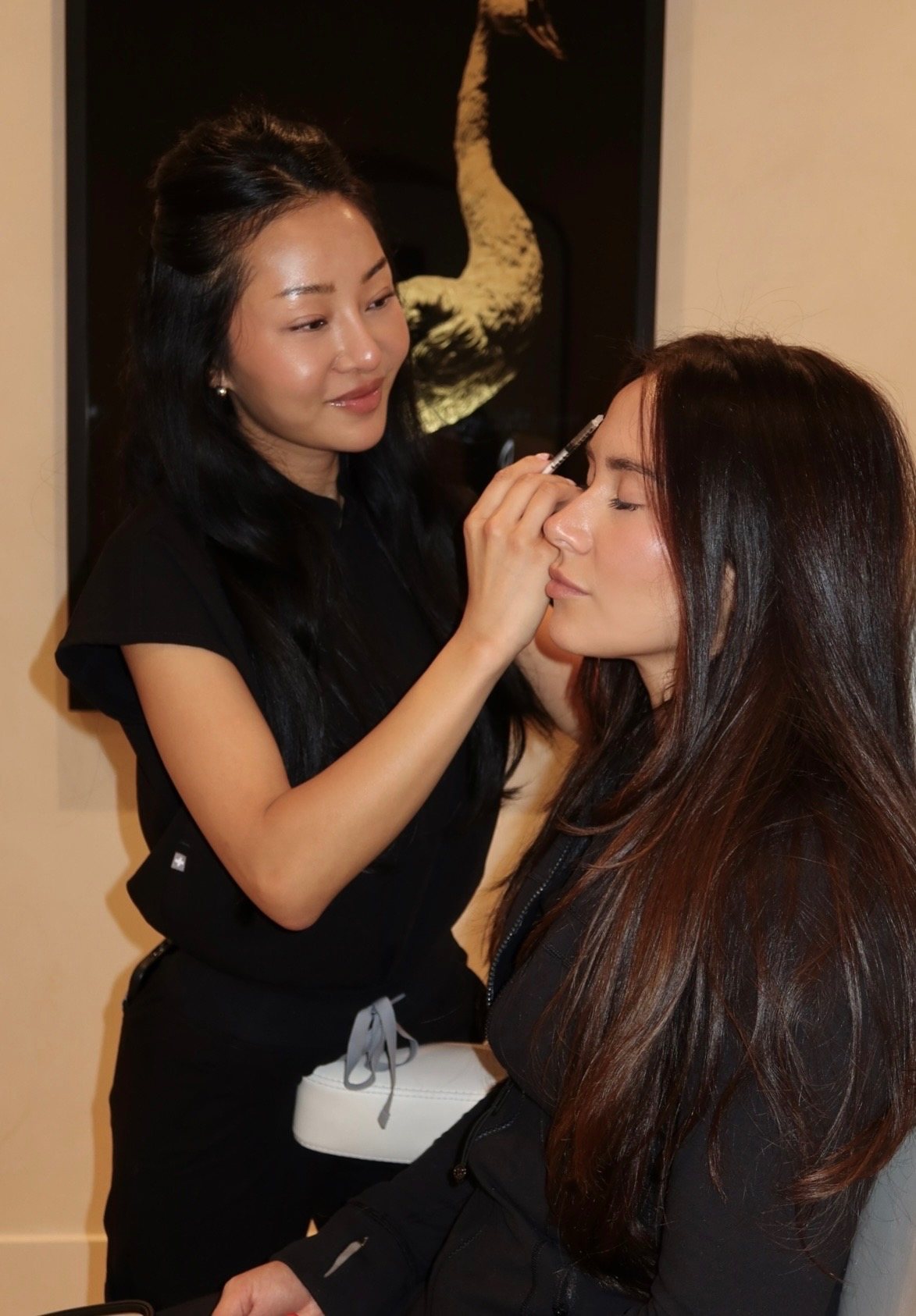
What Under-Eye / Tear Trough Filler Is
Under-eye filler, often called tear trough filler, is a hyaluronic acid dermal filler treatment performed in the infraorbital hollow — the groove that runs from the inner corner of the eye diagonally out across the top of the cheek. Hyaluronic acid is a water-binding sugar molecule the body already produces, manufactured for injection as a clear, cross-linked gel. Here, a very small amount is placed deep, directly on the bone of the orbital rim, to soften the shadow the hollow casts.
One thing belongs up front: in the United States, no hyaluronic acid filler carries FDA approval specifically for the infraorbital hollow. Treating this area is an off-label use. Off-label prescribing is legal, common throughout medicine, and not improper in itself — but it means the manufacturers have not put this indication through approval, the published evidence is thinner than for lips or cheeks, and technique and clinical judgment carry more of the load.
The anatomy explains why. Skin under the eye is the thinnest on the body, with almost no subcutaneous fat to hide anything beneath it, a ligament tethering it to the rim, and a dense network of vessels with poor lymphatic drainage around the whole region. Nothing placed here is truly hidden, and small errors of depth or volume show plainly.
So the gels chosen sit at the soft, low-elasticity, low-water-binding end of the market rather than the firm structural end, and the volumes are the smallest used anywhere on the face. The treatment reduces a shadow; it does not fill a hollow to level.

How It Works
Hyaluronic acid is hydrophilic — it attracts and holds water — and that is exactly why the under-eye differs from every other area. Elsewhere, water-binding is desirable, producing volume from very little product. Here, in tissue with sluggish lymphatic drainage and a thin skin envelope, the same property can produce persistent puffiness. So the conservative approach favors gels with lower water affinity, and uses less of them.
Injectors also talk about G-prime, a measure of how firmly a gel resists being deformed. High G-prime gels hold their shape under pressure, which suits a jawline or a chin. Under the eye, a firm gel can read as a ridge, feel palpable, and become visible when you smile. A softer, low G-prime gel spreads and drapes, which is what the area needs.
Depth is the third variable, and the least negotiable. The conservative technique places product deep, supraperiosteally — meaning directly on the bone of the orbital rim, beneath the muscle — where overlying tissue can diffuse and disguise it. Superficial placement in skin this thin scatters light and produces a bluish-grey cast known as the Tyndall effect, the same physics that makes veins look blue.
Many injectors prefer a blunt-tipped cannula here rather than a needle. A cannula enters through a single small opening and is threaded under the skin, pushing vessels aside rather than piercing them, which reduces both bruising and the risk of entering a vessel. It is not a guarantee of safety, but in a region this vascular it is a meaningful risk reduction.
The volumes follow from all of that. A whole under-eye treatment often uses less product than a single lip appointment — sometimes a tenth or two of a milliliter per side, placed in a few tiny deposits and reassessed sitting upright between each one. The last safety feature is reversibility: hyaluronidase, an enzyme that breaks hyaluronic acid down within hours to days, can undo a poor result and is the emergency treatment for a vascular complication. That is the strongest reason HA is the only filler category that belongs near the eye.

What Under-Eye / Tear Trough Filler Treats
A true tear trough hollow
A defined groove along the orbital rim that casts a shadow in overhead light. This is what filler is actually aimed at, and it responds when the hollow is genuinely a deficit of volume.
Dark circles caused by shadow
Only the portion of darkness created by a hollow throwing a shadow. If the skin still looks dark when lit from below, or when stretched gently, filler will not change it.
Loss of mid-face and upper-cheek support
When the cheek descends, the lid-cheek junction becomes a visible step. Supporting the cheek itself is often the better and safer answer, and improves the under-eye without product going near the eye.
A hollow, skeletal look after weight loss
Diffuse volume loss across the mid-face and infraorbital region can read as gaunt. Restoring support broadly tends to work better than treating the trough in isolation.
A visible step between lower lid and cheek
Blending that transition is often what makes an under-eye look rested, and it usually needs work below the rim rather than in the lid itself.
Asymmetry between the two sides
One trough is often deeper than the other. Because doses here are tiny, filler can be used asymmetrically on purpose, treating one side more conservatively than the other.
A tired resting appearance despite good sleep
Where the cause is contour rather than pigment, puffiness, or laxity. Establishing which of those is driving the look is the entire consultation, and it decides whether filler is the right tool.
Is Under-Eye / Tear Trough Filler Right For You?
You May Be A Good Candidate If
- Your under-eye concern is a genuine hollow that casts a shadow, confirmed by examination rather than by what you have read online.
- Your skin quality under the eye is reasonable — reasonably thick, not markedly crepey, and without significant laxity.
- You do not wake up puffy, do not retain fluid noticeably, and have no history of swelling around the eyes.
- You accept that the target is a partial improvement in shadow, not a flat, uniformly bright under-eye.
- You are comfortable starting with a very small amount and reassessing at four weeks rather than finishing in one visit, and you would accept dissolving the product if it did not settle well.
- You are in generally good health, not pregnant or breastfeeding, and willing to report anything unusual promptly.
This May Not Be Right For You If
- Your dark circles come from pigmentation rather than shadow — melanin in the skin, or post-inflammatory darkening from eczema or rubbing. Filler under pigmented skin does not lighten it and can make the area look thicker and duller.
- Your darkness is thin skin showing the vasculature beneath it, a blue or purple hue rather than a grey shadow. Adding a translucent gel under translucent skin frequently worsens the discoloration rather than masking it.
- You have herniated orbital fat — true under-eye bags, which bulge rather than hollow and often look worse when you look up. Filler below a bag adds volume where there is already too much and makes the bulge more prominent.
- You have festoons or significant lower-lid laxity, where skin and muscle hang in folds. These need surgical or energy-based assessment, and filler here reliably disappoints.
- You retain fluid, wake with puffy eyes, or notice your eyes swell with salt, alcohol, poor sleep, or your menstrual cycle. Water-binding filler in a region that already swells invites persistent puffiness.
- You have untreated or poorly controlled thyroid disease, particularly thyroid eye disease. Periorbital changes need a medical explanation before an aesthetic one, and treatment is deferred.
- Your puffiness is allergic — chronic rhinitis, hay fever, or allergic shiners with the venous congestion that goes with them. Treat the allergy first and reassess afterwards.
- You have had filler here or in the mid-face that has not been accounted for. Old product can persist for years, and stacking on top of it is a common route to a lumpy, puffy under-eye.
- You are pregnant, breastfeeding, or trying to conceive; injectables have not been studied in these groups and treatment is deferred.
- You have an active infection, inflammation, or skin breakdown near the eye; a bleeding disorder or unpausable anticoagulation; a known hypersensitivity to hyaluronic acid or lidocaine; or an active autoimmune or connective-tissue condition needing clearance.
- You are expecting filler to erase tiredness with one appointment, or you have an important event within the next month.
This is the area where a good injector most often says no, and that deserves to be said plainly rather than softened. Many experienced injectors decline the tear trough entirely, and many others treat the mid-face instead — restoring cheek support frequently improves the lid-cheek transition on its own, in a more forgiving plane. Being turned down here is a sign of judgment, not a lack of skill. A proper assessment means viewing the area in different lighting, stretching the skin to separate pigment from shadow, checking whether a bulge appears when you look up, asking about morning puffiness, fluid retention, thyroid disease and allergies, and taking a full history of previous filler anywhere in the face.
How Under-Eye / Tear Trough Filler Compares
The under-eye is the clearest example in aesthetics of four different tools for four different problems. Filler addresses a hollow. Mid-face filler addresses the support beneath the hollow, and is frequently chosen instead. Platelet-rich plasma addresses skin quality rather than contour. Lower blepharoplasty is surgery, and is the correct answer for herniated fat that filler would make worse. Here is a straight comparison in general terms.
| Feature | HA under-eye filler | Mid-face filler instead | PRP under-eye | Lower blepharoplasty |
|---|---|---|---|---|
| What it does | Places a tiny amount of soft gel deep on the orbital rim to reduce the shadow of a hollow | Restores volume and support over the cheek, indirectly softening the lid-cheek step | Injects concentrated platelets from your own blood to stimulate skin quality and thickness | Surgically removes or repositions herniated orbital fat, sometimes with skin tightening |
| Best suited to | A true hollow with good skin quality and no tendency to puffiness | Loss of mid-face support, and anyone whose under-eye is borderline for direct treatment | Thin, crepey, dull under-eye skin where contour is acceptable | Genuine under-eye bags, festoons, and excess lower-lid skin |
| Volume added | Very little | More product, but in a far more forgiving plane | None; it changes tissue quality, not contour | None; it removes or repositions what is already there |
| Onset | Immediate, but not honestly readable for about four weeks | Immediate, settling over roughly two weeks | Gradual over months, usually as a series of sessions | Weeks to months as swelling and bruising resolve |
| Duration | Commonly around 9 to 18 months, and sometimes longer than expected in this area | Commonly about 12 to 18 months | Typically months, with maintenance sessions | Long-lasting, often many years |
| Downtime | Bruising is likely and can take up to two weeks; swelling for several days | Swelling and possible bruising for a few days | Bruising and swelling for a few days per session | Real surgical recovery — visible bruising and swelling for one to several weeks |
| Reversible? | Yes — hyaluronidase dissolves it within hours to days, the key safety feature here | Yes — also hyaluronidase | No, but it resorbs on its own and adds no volume to undo | No — surgical change is permanent, and overcorrection is difficult to fix |
| Signature risk | Vascular occlusion, the Tyndall effect, and persistent malar puffiness | Vascular occlusion, overfilling, and a heavy or wide-looking mid-face | Bruising and underwhelming results; evidence is modest | Dry eye, lid malposition or ectropion, a hollowed look from over-resection |
| Helps true pigmentation? | No — and it can make pigmented, thin skin look duller | No | Sometimes modestly, by improving skin quality | No |
The row that matters most is reversibility, and the comparison that matters most is the second column. If an assessment concludes that the mid-face rather than the trough is driving your tired look, treating the cheek is not a consolation prize — it is usually the better clinical decision, and it is why so many under-eye consultations end with a plan that involves no product under the eye at all.
What To Expect
Before The Treatment
- A real diagnostic consultation, which is the most important part of this treatment. Expect the area examined in different lighting, the skin gently stretched to separate pigment from shadow, and a check while you look up and down to see whether a bulge appears.
- A full history: morning puffiness, fluid retention, allergies and sinus problems, thyroid disease, and every previous filler treatment anywhere in the face, including when and where.
- An honest conversation about whether filler is the right tool. Being advised towards mid-face filler, a skin treatment, or a surgical opinion instead is a common outcome.
- Pause what you can safely pause, with your prescriber's permission — aspirin, NSAIDs, fish oil, and vitamin E are often stopped for several days, because bruising here is likelier than anywhere else. Never stop a prescribed anticoagulant on your own.
- Skip alcohol for about 24 hours beforehand and consider reducing salt, since both make the area more prone to swelling and bruising.
- Give yourself margin. Four weeks before anything photographed is a sensible buffer, because bruising here is visible and swelling takes longer to settle than elsewhere.
- Arrive without eye makeup, and expect photographs so before and after can be compared honestly.
Results: Onset And How Long It Lasts
Improvement is visible immediately, but the first weeks include swelling and often bruising, so the honest result is read at about four weeks rather than two. Expect a softer shadow rather than a flat, uniform under-eye. Longevity in this low-movement area is commonly around 9 to 18 months, and sometimes longer.
During The Treatment
- The area is cleansed thoroughly and the skin is prepped. Contact lenses are usually removed.
- Topical numbing cream is applied for roughly 15 to 30 minutes, and most HA gels contain lidocaine that continues numbing as the product goes in.
- The injection plan is marked and confirmed while you are sitting upright, since the hollow looks different lying down.
- If a cannula is used, one small entry point is made lateral to the hollow and the blunt cannula threaded from there along the orbital rim. Some injectors use a fine needle instead, in very small deposits.
- Product is placed deep, against the bone, in tiny aliquots. Expect pressure and an odd sensation rather than sharp pain, and expect the amount used to look surprisingly small.
- You are sat up and reassessed between deposits, and the plan may be stopped early. Deliberately undertreating on a first visit is normal practice here, not a shortfall.
- Gentle molding may smooth the product, followed by ice. The visit usually runs 30 to 60 minutes, most of it assessment and numbing rather than injecting.
How Often, And Why
Under-eye filler tends to last longer than filler in mobile areas like the lips, because the region barely moves. Commonly it holds for around 9 to 18 months, and it is not unusual for some product to persist beyond the point where the visible result has faded. That persistence is the reason to be cautious about routine top-ups: adding a little more each year, on top of product that has not fully resolved, is one of the recognized routes to a permanently puffy or heavy under-eye.
A sensible pattern is to treat conservatively, reassess at four weeks, add a very small amount only if the area clearly needs it, and then leave it alone. Afterwards, return when the shadow has genuinely returned rather than on a schedule, and expect a careful injector to examine what is still present before adding anything. If the area ever looks puffy, heavy, or blue-grey, the right response is assessment and possibly dissolving — not more filler layered over the problem.
Maintaining the mid-face is often the smarter long-term strategy: because cheek support influences how the under-eye reads, keeping it in place can extend how rested the area looks while keeping product away from the highest-risk zone.
Afterward
- Apply ice or a cold compress in short intervals for the first day, using no more than light contact — pressure can move freshly placed product.
- Expect bruising to be likelier here than anywhere else on the face, and to take up to about two weeks to clear. Concealer is fine once the skin is intact.
- Sleep on your back with your head elevated for the first several nights, so fluid drains away from the area rather than pooling in it.
- Keep salt and alcohol low for a few days and stay hydrated; both influence how puffy the area looks while it settles.
- Avoid strenuous exercise, hot yoga, saunas, steam rooms, and hot tubs for 24 to 48 hours, and avoid positions that put your head below your heart.
- Do not rub, press, or massage the area, and skip eye makeup for about 24 hours.
- Avoid facials, microneedling, laser, and heat-based treatments over the area for roughly two weeks, and use sunscreen and sunglasses while any bruising resolves.
- Wait four weeks before judging the result or asking for more. This area holds swelling longer than most, and a top-up added too early is a common cause of a puffy outcome.
Side Effects And Downtime
Common And Expected
- Bruising, likelier here than anywhere else on the face because the skin is thin and the tissue richly vascular. It ranges from a pinpoint dot to a dark patch spreading down the cheek, and can take up to two weeks to clear.
- Swelling for the first several days, which in this region can make the area look puffier than it did before treatment.
- Tenderness, a heavy or full sensation, and an awareness of something present under the skin for a week or two.
- Small lumps or contour irregularity, easier to feel than to see and most noticeable in harsh overhead light or on smiling. Many settle over four to six weeks.
- Temporary asymmetry, since the two sides rarely swell or bruise at the same rate.
- Mild redness, pinpoint injection marks, and a visible cannula entry point, all settling within days.
When To Seek Care
- Any change in vision whatsoever — blurred or double vision, a visual field defect, loss of vision, drooping of the lid, or eye pain, with or without headache or nausea. This is an emergency. Go to an emergency department immediately and call your injector on the way; time matters enormously.
- Severe, escalating, or disproportionate pain, especially pain that worsens rather than eases after the first few hours.
- Blanching — skin that turns white, pale, or grey during or after injection, or a pale patch that does not refill with color when pressed.
- Dusky, mottled, blotchy, purple, or net-like discoloration of the lower lid, cheek, side of the nose, or forehead, or skin that feels cold to the touch.
- A bluish-grey cast under the eye that does not behave like a bruise or does not fade, which may indicate superficially placed product.
- Puffiness that appears or worsens after the first couple of weeks rather than settling, particularly if it is worse in the mornings.
- Signs of infection such as spreading redness, warmth, pus, or fever, or a firm painful lump appearing days to weeks later.
Less Common, But Important To Know
- Vascular occlusion — filler entering or compressing a blood vessel and cutting off blood supply to the tissue it feeds. This is the most serious risk of any filler and the under-eye is among the highest-risk sites on the face, because the angular artery and the vessels around the orbital rim connect to the ophthalmic artery. Product forced into that route can travel backwards to the retina, and vision loss and blindness have been reported and are usually irreversible. It is uncommon, but it is a genuine medical emergency: immediate hyaluronidase and urgent specialist assessment.
- Skin necrosis — tissue death from an untreated occlusion, which can scar. It is preceded by warning signs, which is why the list below matters.
- The Tyndall effect — a bluish-grey cast where hyaluronic acid has been placed too superficially in this very thin skin. It is not a bruise and it does not fade on its own; it is caused by the way light scatters through translucent gel, and the treatment is dissolving the product with hyaluronidase.
- Persistent malar edema — puffiness over the cheek just below the treated area, from water-binding filler in a region with poor lymphatic drainage. It deserves to be taken seriously because it is not rare: it can appear weeks after treatment, is often worse in the morning, and may last months. It sometimes improves with head elevation, low salt, and time, but frequently needs the filler dissolved.
- Product visibility or migration — a ridge, shelf, or line that becomes apparent in certain lighting or expressions, sometimes long after treatment, and typically corrected by dissolving.
- Delayed inflammatory reactions and nodules — firm or tender lumps appearing weeks to months later, occasionally triggered by illness, dental work, or vaccination, and managed with hyaluronidase or other medication.
- Infection at the injection site, which may need antibiotics, and rarely a biofilm requiring more involved treatment.
- Prolonged discoloration after a bruise, particularly in deeper skin tones, where post-inflammatory hyperpigmentation can outlast the bruise itself.
- Allergic or hypersensitivity reaction to the gel or the lidocaine within it, from persistent swelling to, very rarely, a severe systemic reaction.
Downtime
There is no downtime in the surgical sense, and most people return to normal activity the same day. The social downtime is real, though, and greater than for most injectables. Bruising under the eye is conspicuous, often appears the next morning rather than immediately, and can take up to two weeks to fade, although concealer usually covers it once the skin has closed. Swelling in the first several days can make the area look temporarily puffier than before. Plan a quiet week, and four weeks before anything photographed.
Who Performs This Treatment

Helen Zhang
Master Injector · Neuromodulators, filler, biostimulators and facial balancingHelen is one of Alcove's master injectors. Your appointment starts with an assessment of your face and your goals, and your plan is built from that conversation rather than from a menu.

Sharon Williams
Master Injector · Neuromodulators, filler, biostimulators and facial balancingSharon is one of Alcove's master injectors. Your appointment starts with an assessment of your face and your goals, and your plan is built from that conversation rather than from a menu.

Xing Xing Li
Master Injector · Neuromodulators, filler, biostimulators and facial balancingXing Xing is Alcove's master injector. Your appointment starts with an assessment of your face and your goals, and your plan is built from that conversation rather than from a menu.
Under-Eye / Tear Trough Filler FAQs
Only if the darkness is a shadow cast by a hollow. Circles caused by pigmentation, or by thin skin showing the vessels underneath, do not improve with filler and can look duller afterwards. A simple test is to light the area from below or stretch the skin gently: if the darkness disappears it is shadow, and if it stays it is not.
No, and it can make them worse. True bags are herniated orbital fat pushing forward — a volume excess, not a deficit — so filler below a bag adds volume where there is already too much and makes the bulge more prominent. The treatment for herniated fat is surgical, usually lower blepharoplasty.
No hyaluronic acid filler is FDA-approved specifically for the infraorbital hollow in the United States, so treating this area is off-label. Off-label use is legal and common in medicine, but it means the indication has not gone through approval and the published evidence is thinner than for lips or cheeks.
It is the highest-risk area on the face for filler, and that should be stated plainly. The vessels around the orbital rim connect to the artery supplying the eye, so filler forced into a vessel here can travel backwards and cause vision loss, which is usually permanent. It is uncommon but not theoretical. The safeguards are strict candidacy, deep placement, tiny volumes, detailed anatomical knowledge, and hyaluronidase on hand.
Because the mid-face is often what is actually driving the tired look, and it is a far more forgiving place to work. Restoring cheek support can soften the step between lid and cheek without product entering the high-risk zone. Many experienced injectors treat this way by default, and some decline the tear trough altogether.
A bluish-grey cast that appears when hyaluronic acid sits too superficially under very thin skin. It is an optical effect — light scattering through translucent gel, the same physics that makes veins look blue — not a bruise, so it does not fade with time. It is prevented by placing product deep on the bone and corrected by dissolving it.
Puffiness in the first week is usually ordinary swelling. Puffiness that appears later, is worse in the mornings, and sits over the cheek below the treated area is more likely malar edema — water-binding filler in tissue that drains poorly. It is common enough to expect a conversation about it beforehand, and while it sometimes settles with head elevation, low salt, and time, it often needs the filler dissolved.
Yes, and that is the main reason hyaluronic acid is the only filler category that belongs near the eye. Hyaluronidase, an enzyme injected into the area, breaks the gel down within hours to days. It corrects lumps, visible product, the Tyndall effect, and persistent puffiness, and is the urgent treatment for a vascular occlusion.
Less than most other areas of the face, placed in a handful of tiny deposits. The exact amount depends on your anatomy and is set at your assessment. A plan that relies on heavy volume in the troughs themselves is worth questioning.
Commonly around 9 to 18 months, longer than lip filler because the area barely moves. Some product can persist beyond the point where the visible improvement has faded, which is why careful injectors assess what is still there before topping up rather than adding a set amount each year.
Less than people expect. Numbing cream is applied beforehand and most gels contain lidocaine, so the sensation is usually pressure and a strange fullness rather than sharp pain. If a cannula is used, the initial entry point is the sharpest part. Afterwards the area feels tender and heavy for several days, and bruising is the more common complaint.
Several, depending on the cause. Mid-face filler for loss of support. Skin treatments, platelet-rich plasma, or microneedling for thin, crepey, or dull skin. Pigment-directed skincare and sun protection for true pigmentation. Allergy or thyroid management where those are driving puffiness. Surgical assessment for herniated fat or lower-lid laxity. Being told filler is wrong for you is the start of a plan, not the end of one.
Pairs Well With

Book Your Consultation
A consultation is a conversation about your face, not a sales appointment. Bring your questions about Under-Eye / Tear Trough Filler and your medical history, and leave with an honest answer about whether it is the right treatment for you.