



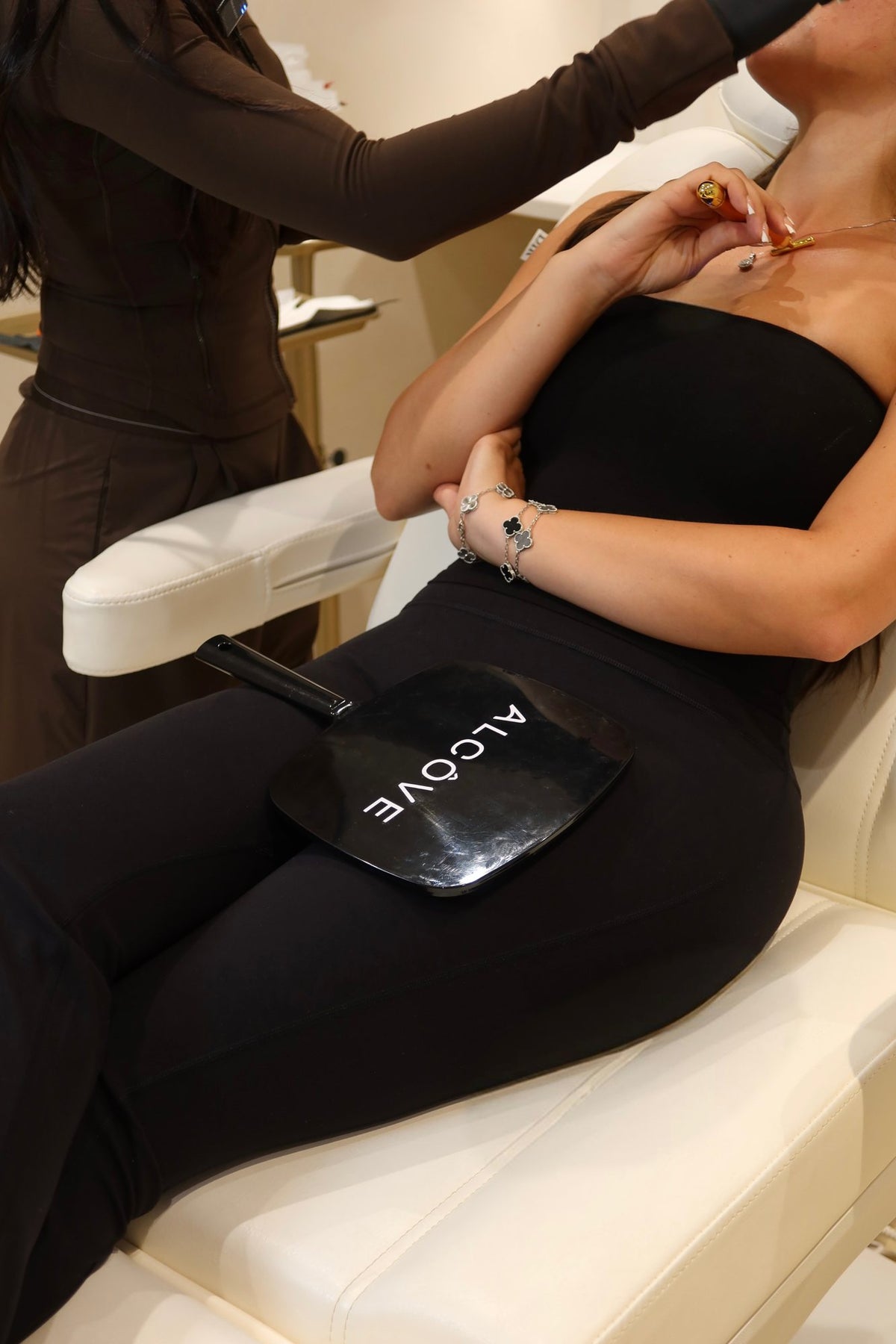
PRP Under-Eye in Atlanta, GA
The under-eye is where tiredness shows first and forgives least. The skin there is the thinnest on the body, and it advertises everything happening underneath it. Platelet-rich plasma in this area is aimed at the skin itself — its thickness, its texture, its ability to hold light — rather than at filling a hollow. That distinction is the whole conversation. Get the cause of your under-eye appearance right and this may be a good option; get it wrong and it is the wrong treatment applied precisely.
The Benefits
Your Own Blood
The preparation is made entirely from your own blood, so there is no donor material and no possibility of an allergic reaction to a foreign substance.
Quality, Not Volume
It targets skin quality — thickness, texture, and light reflection — rather than adding volume, which is the right goal when the problem is the skin itself.
For Thin, Crepey Skin
Thin, crepey, translucent under-eye skin is the clearest indication, and improved dermal thickness is the mechanism by which underlying vessels and muscle become less visible.
No Filler Risks
Because nothing is placed to occupy space, it avoids the specific complications associated with filler in this area — puffiness, a bluish cast from superficial placement, and product that persists longer than expected.
Nothing To Migrate
There is no implanted material that can migrate, shift over time, or need dissolving later.
Where Filler Is Too Heavy
It offers an option for people whose anatomy, skin, or history makes hyaluronic acid filler beneath the eye a poor idea.
Gradual By Design
Change accrues gradually across months rather than appearing at once, which suits an area where sudden change is conspicuous.
Diagnosis First
It requires an honest assessment of what is actually causing your under-eye appearance, which is genuinely useful — pigment, vasculature, and hollowing are three different problems with three different answers.

What PRP Under-Eye Is
Platelet-rich plasma is a concentrate prepared from a small sample of your own blood. The sample is drawn from the arm as for routine laboratory work, spun in a centrifuge to separate it by density, and the platelet-enriched plasma layer is drawn off and used as the treatment. Because it originates in your body and is returned within the same visit, there is no donor material and no possibility of reacting to a foreign substance.
Platelets carry alpha granules packed with signaling proteins — platelet-derived growth factor, transforming growth factor beta, vascular endothelial growth factor, epidermal growth factor and others. Released into tissue, these proteins prompt fibroblasts to proliferate and produce collagen and elastin, and encourage the formation of small blood vessels. In the infraorbital area the intention is to use that signal to improve the quality and thickness of skin that has become thin, crepey, and translucent.
What PRP does not do here is add volume. This matters more under the eye than almost anywhere else, because the commonest reason people dislike their under-eye area is a structural one — a hollow between the lower lid and the cheek that casts a shadow. A shadow cast by a hollow is not improved by better skin quality; it is improved by restoring the contour, which is a filler question, or a surgical one. Any provider offering PRP as an answer to a genuine hollow is answering the wrong question.
Dark circles have three broadly distinct causes and they often coexist. Pigmented circles are excess melanin in the skin itself. Vascular circles are the bluish or purplish appearance of underlying vessels and orbicularis muscle showing through skin too thin to conceal them. Structural circles are shadow from a hollow, a prominent orbital rim, or descending fat. PRP is most relevant to the vascular and textural components, on the reasoning that thickening the skin makes what lies beneath it less visible. It is not a pigment treatment.
As elsewhere in aesthetics, this use of PRP is off-label. The centrifuge systems are cleared as devices for preparing platelet-rich plasma; using the preparation in the infraorbital area for cosmetic purposes has not been through the FDA approval process. The published literature is small and protocols vary. The mechanism is plausible, the treatment is widely offered, and nobody should describe it to you as proven.

How It Works
The infraorbital skin is the thinnest on the body, with very little subcutaneous fat between it and the orbicularis oculi muscle beneath. That anatomy is the reason the area shows fatigue so readily and the reason it is unforgiving to treat. As dermal collagen declines with age and sun exposure, the skin becomes thinner and more translucent, so the bluish tone of underlying muscle and the vessels within it becomes more visible, and the surface develops the fine crumpled texture people describe as crepey.
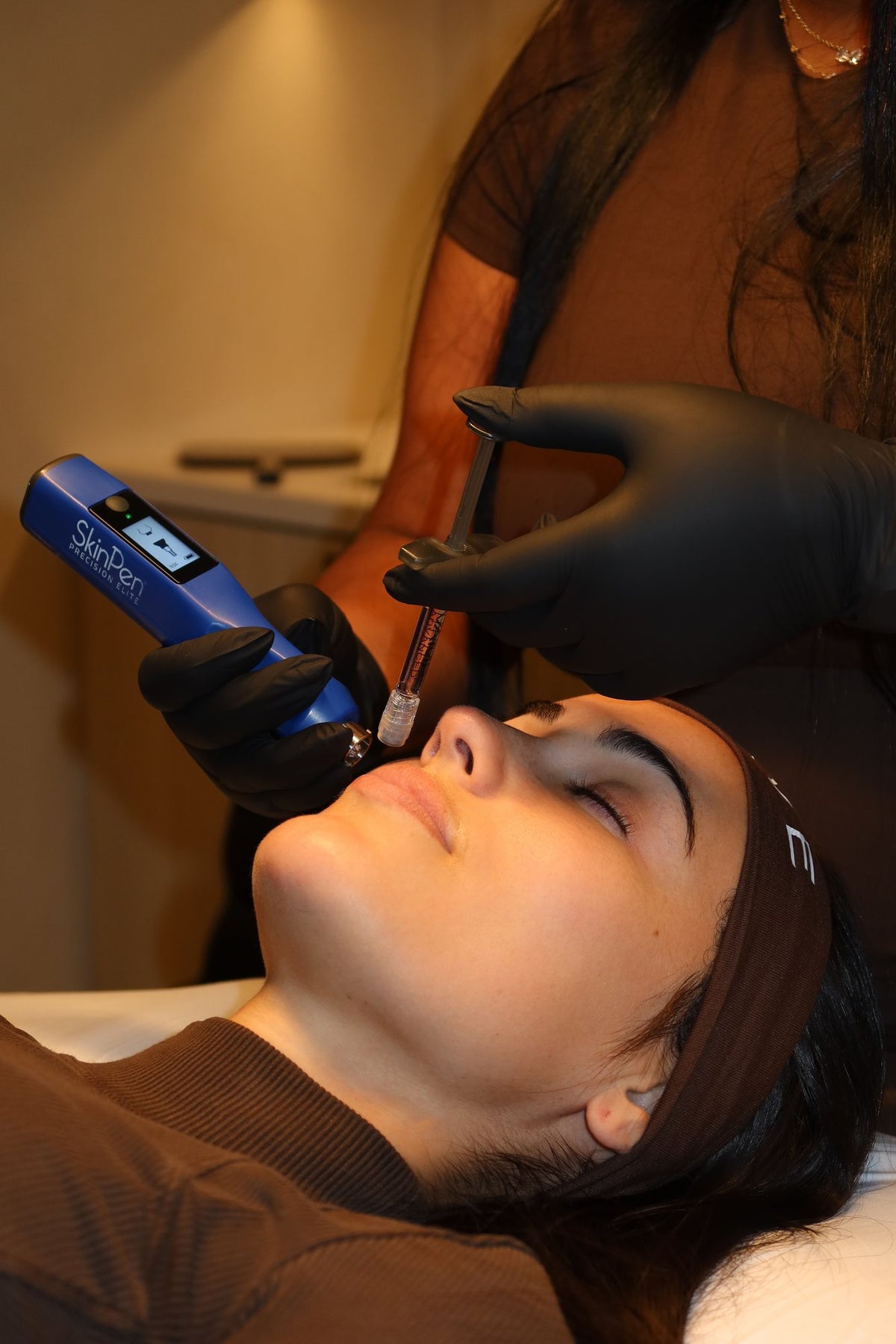
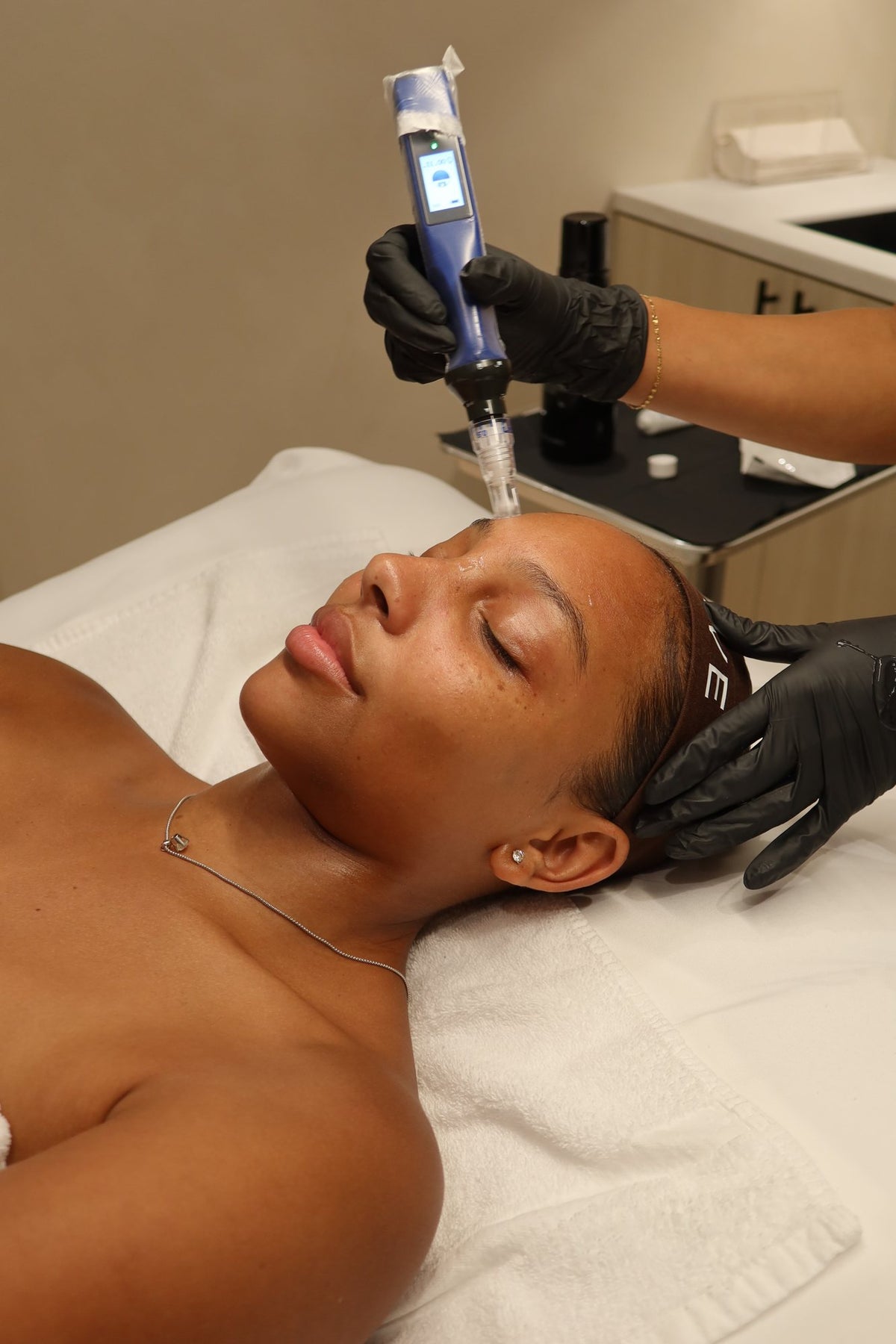
PRP is delivered into this area either as a series of very small, superficial injections placed in the dermis, or with a fine blunt cannula, or in some protocols by microneedling the area and applying the preparation to the surface. The choice depends on the provider's technique and on what is being treated. Volumes used are small, and placement is deliberately superficial, because the intention is to influence the skin rather than to sit beneath it.
Once released, the growth factors bind to receptors on fibroblasts already present in the dermis and prompt them to proliferate and to produce new collagen and elastin. The result, over months, is a modest increase in dermal thickness and an improvement in the organization of the tissue. Thicker, better-organized skin transmits less of what lies beneath it and reflects light more evenly, which is the mechanism by which a vascular dark circle may look less pronounced.
The pace is slow because collagen synthesis and remodeling are slow. Nothing meaningful happens in the first weeks beyond healing. This is also why the treatment is delivered as a series, with sessions spaced weeks apart so each round's signal compounds while the previous round's collagen matures. The under-eye area is also more prone to visible bruising and to swelling that lingers than most of the face, simply because of how thin and vascular the tissue is — which shapes the practical experience more than the biology does.

What PRP Under-Eye Treats
Thin, crepey under-eye skin
The clearest indication. Skin that has become fine, papery, and lined with a crumpled texture is exactly the population a collagen-stimulating approach is aimed at, and it is the change patients most often report.
Fine lines and etched texture beneath the eye
Superficial lines associated with thinning dermal collagen may soften as the dermis thickens. Deeper dynamic lines from squinting and smiling are a different problem, addressed by a neuromodulator rather than by skin quality alone.
Vascular dark circles
Where darkness comes from underlying vessels and muscle showing through translucent skin, thickening that skin can reduce how much shows through. This is a partial improvement in a genuinely stubborn problem, not a solution.
A dull, tired appearance in the lower lid
Improved skin quality and light reflection is what patients most consistently describe. It is subtle, and it is a quality change rather than a structural one.
Under-eye areas where filler is not appropriate
Some people have anatomy, skin quality, or a history of poor filler outcomes that makes hyaluronic acid a bad idea beneath the eye. PRP is sometimes chosen precisely because it adds no volume and cannot be responsible for puffiness or a bluish cast.
Skin quality alongside filler or surgery
PRP is sometimes used to improve the skin envelope while a structural problem is addressed separately. Treating quality and structure as two different problems generally produces a better result than asking one treatment to do both.
Early textural change in younger patients
For someone in their late twenties or thirties noticing crepiness with no meaningful hollowing, a skin-quality approach may be more appropriate than introducing filler into an area that will change over decades.
Not pigmented dark circles
Listed deliberately. Where darkness is melanin in the skin — often familial, often more prominent in deeper skin tones — PRP is not the relevant treatment, and topical or other modalities should be discussed instead.
Is PRP Under-Eye Right For You?
You May Be A Good Candidate If
- Adults whose main under-eye concern is skin quality — thin, crepey, finely lined, or papery skin — rather than a hollow or a shadow.
- People with vascular dark circles, where underlying vessels and muscle show through translucent skin, who understand that improvement is partial rather than complete.
- People who have been told, or have concluded, that filler is not appropriate for their under-eye anatomy, or who have had a poor filler result in this area previously.
- People who want to avoid introducing a synthetic material into a delicate area that will continue to change over decades.
- People with realistic expectations about magnitude. This is a subtle, gradual, quality-level change, and anyone expecting a dramatic transformation will be disappointed.
- People able to commit to a series of sessions spaced weeks apart and to periodic maintenance afterward.
- People who can plan around visible bruising, which is more likely and more conspicuous here than almost anywhere else on the face.
- People in generally good health with a normal platelet count and no bleeding or clotting disorder, as determined at a medical evaluation.
This May Not Be Right For You If
- Anyone whose under-eye appearance is driven by a genuine hollow, a prominent orbital rim, or descending midface volume. That is a structural problem and PRP will not address it; filler or surgical assessment is the relevant conversation.
- Anyone with prominent lower-lid fat pads producing under-eye bags. Skin quality treatment does not address herniated fat, and treating it as though it did wastes time and money.
- Anyone with significant lower-lid laxity, where the tissue does not spring back promptly when gently pulled. That requires surgical assessment, and injecting into a lax lower lid can make things look worse.
- Anyone whose dark circles are primarily pigmented — excess melanin in the skin, often familial and often more prominent in deeper skin tones. PRP is not a pigment treatment.
- Anyone with a platelet disorder, thrombocytopenia, a bleeding or clotting disorder, or diagnosed platelet dysfunction.
- Anyone with a hematologic malignancy or a history of one, without clearance from their treating physician.
- Anyone on anticoagulant or antiplatelet therapy that cannot be safely paused — a decision belonging to the prescribing clinician alone.
- Anyone with an active infection at or near the treatment site, including an active herpes simplex outbreak or any open lesion, until it has resolved.
- Anyone with an active inflammatory eye or eyelid condition, significant untreated dry eye, or recent eye surgery, without input from an ophthalmologist.
- Anyone who is pregnant or breastfeeding, since elective procedures are generally deferred and safety data in this context is absent.
- Anyone with a chronic liver condition, severe anemia, sepsis, or an acute or chronic blood-borne infection, where blood-derived treatment requires specialist input.
- Anyone whose puffiness has a medical cause — thyroid disease, kidney disease, allergy, or fluid retention — which needs diagnosis rather than an aesthetic procedure.
The under-eye is the area where an accurate assessment matters most and where the wrong treatment is most obvious. A proper consultation should establish what is actually producing the appearance you dislike: pigment, visible vasculature through thin skin, shadow from a hollow, herniated fat, laxity, or some combination. Those have different answers, and only some of them involve PRP. Ask directly which component your provider believes is dominant and why, and be cautious of anyone who reaches for a single treatment before answering that question. Because this treatment also involves drawing, processing, and re-injecting your own blood, it is reasonable to ask how the sample is labeled, whether it leaves the room, and how equipment and waste are handled.
How PRP Under-Eye Compares
Under-eye concerns are among the most commonly misattributed in aesthetics, and the treatments are genuinely not interchangeable. The table sets out what each approach targets, so the mismatch between problem and treatment is easier to spot.
| Feature | PRP under-eye | Hyaluronic acid filler | Neuromodulator | Lower blepharoplasty |
|---|---|---|---|---|
| What it addresses | Skin quality — thickness, texture, translucency | Volume loss and shadow from a hollow | Dynamic lines from muscle movement | Herniated fat pads, excess skin, and laxity |
| What it is | A concentrate of your own platelets, prepared from a blood draw | A synthetic hyaluronic acid gel placed to occupy space | A purified protein that temporarily reduces muscle contraction | Surgery performed by an oculoplastic or plastic surgeon |
| Effect on a true hollow | None — it adds no volume | Direct; this is what it is for | None | Addresses the underlying structure |
| Effect on crepey texture | This is its main target | May improve slightly by adding support; not its purpose | None | Removes excess skin rather than improving its quality |
| Onset | Gradual over months | Immediate, settling over several weeks | Within days, peaking over about two weeks | Visible after surgical recovery |
| Reversibility | Not reversible, but nothing was added to remove | Reversible with hyaluronidase | Wears off on its own | Not reversible |
| Specific risks in this area | Prominent bruising and swelling; nodules and milia have been reported | Puffiness, a bluish cast if placed too superficially, persistence beyond expectation, and rare vascular complications | Not typically used directly beneath the eye; can worsen lower-lid function if misplaced | Surgical risk, recovery, and the possibility of lid position change |
| Regulatory status for this use | Off-label | Under-eye use is off-label for most products | Approved for specific facial indications; this is not one | A surgical procedure |
These are frequently combined rather than chosen between — treating skin quality and structure separately usually produces a better result than asking one treatment to solve both. What matters is that the dominant cause of your particular under-eye appearance is identified first. That is a clinical assessment by a provider who has examined the area in good light and tested the tissue, not a decision to make from a table or from a photograph on the internet.
What To Expect
Before The Treatment
- A careful assessment of what is actually causing your under-eye appearance — pigment, visible vasculature, hollowing, fat prominence, laxity, or a combination — since the answer determines whether this is the right treatment at all.
- A full medical history including all medications and supplements, with specific questions about bleeding disorders, anticoagulants, autoimmune conditions, blood-borne infection, cancer history, eye conditions, and any prior treatment or surgery in the area.
- A discussion of what PRP can and cannot do here, including that this use is off-label, that it adds no volume, and that improvement is gradual and subtle.
- Explicit discussion of bruising. This area bruises readily and visibly, and planning around it is a practical necessity rather than a formality.
- Guidance on pausing blood-thinning medications and supplements such as aspirin, non-steroidal anti-inflammatory drugs, fish oil, and vitamin E — but only where your prescribing clinician confirms it is safe. Never stop a prescribed medication on your own.
- Advice to avoid alcohol for a day or two beforehand, since it increases bruising, and to eat and hydrate well on the day.
- If you have a history of cold sores, a prophylactic antiviral prescription may be appropriate given the proximity to the mouth and the micro-injury involved.
- Instructions to arrive with clean skin, without makeup, and to bring nothing to apply afterward until you are cleared to do so.
Results: Onset And How Long It Lasts
Change is subtle, gradual, and assessed over months rather than weeks. The first two weeks are dominated by swelling and bruising rather than by improvement, and nothing meaningful about the outcome can be judged during that period. Where PRP works in this area, patients typically describe skin that looks less crepey and less papery, with better light reflection and a less tired appearance — and, where darkness was vascular in origin, some reduction in how much of the underlying colour shows through. It does not fill a hollow, does not remove under-eye bags, and does not lighten pigmented dark circles. Response varies considerably between individuals and depends heavily on whether the dominant cause of the appearance was one PRP can address at all. Improvement is generally described as modest rather than dramatic, and it is assessed at the end of a series rather than after a single session. This page publishes no numeric outcome figures, because the literature here is small, the protocols vary, and averages would tell you nothing reliable about your own skin. The effect is also not permanent — skin continues to thin with age — so maintenance is part of the plan rather than an afterthought.
During The Treatment
- A blood draw from the arm, taking a few minutes, using the same technique as routine laboratory work.
- The sample is spun in a centrifuge while topical numbing cream is applied to the under-eye area and left in place, usually for around half an hour.
- The platelet-rich fraction is drawn off into a syringe — a small volume, since very little is used in this area.
- Delivery is by a series of very small superficial injections placed in the dermis, or with a fine blunt cannula, or in some protocols by microneedling the area and applying the preparation topically. Technique varies by provider and is discussed beforehand.
- The sensation is usually described as small stings and pressure. The area is sensitive, and most people find it more uncomfortable than the cheek but entirely manageable with numbing.
- You may be asked to look in specific directions during placement so the tissue can be positioned safely.
- Treatment of this area is quick — the appointment is dominated by the draw, the spin, and the numbing rather than by the injections.
- Immediately afterward the area will look puffy and pink, with small raised blebs where the preparation was placed. These settle over hours.
How Often, And Why
Under-eye PRP is planned as a series rather than a single appointment. A common approach is around three sessions spaced several weeks apart, which allows each round's signal to build while collagen from the previous round matures. The exact number and spacing is a clinical decision based on the skin being treated and how it responds, and protocols vary between practices because the evidence base has not settled on one standard.
Spacing matters practically as well as biologically here. Because bruising and swelling in this area are more pronounced and longer-lasting than elsewhere on the face, sessions need to be far enough apart that one has fully settled before the next, and scheduled around anything you want to look well for.
After an initial series, maintenance is typically at intervals of several months to a year, depending on response. The improvement is not permanent, because nothing has halted the underlying process — skin continues to thin with age and continues to accumulate sun exposure. Maintenance is intended to hold a gain rather than to build further on it.
Where the under-eye appearance has more than one cause, which is common, PRP is generally one part of a plan rather than the whole of it. Sequencing it alongside treatment for the structural or pigmentary components is planned at consultation, since the order and spacing of those treatments affects both safety and the final result.
Afterward
- Expect swelling and puffiness, which is often more pronounced than people anticipate and can last a few days. The under-eye holds fluid readily.
- Expect bruising. It is common here, it is visible, and it can take a week or more to fade. Plan the appointment with that in mind rather than hoping to avoid it.
- Apply cool compresses gently if advised, keep your head elevated when sleeping for the first night or two, and avoid rubbing or pressing the area.
- Follow the specific interval your provider gives you before washing your face, applying skincare, or wearing makeup.
- Avoid strenuous exercise, saunas, steam rooms, hot tubs, and swimming for the period specified, since heat and exertion both increase swelling.
- Avoid active skincare — retinoids, exfoliating acids, vitamin C — around the eye until cleared to resume.
- Protect the area from sun and wear sunglasses outdoors. Freshly treated skin is more vulnerable to ultraviolet damage and to post-inflammatory pigmentation, which is a particular concern in a region already prone to darkness.
- Sleep on your back where practical for the first night or two.
- Do not judge results early. What you see in the first two weeks is healing. The change that matters develops over months and is assessed at the end of a series.
- Report any lump that persists beyond the expected settling period, and anything that worsens rather than improves after the first few days.
Side Effects And Downtime
Common And Expected
- Bruising, which is common, visible, and can take a week or more to fade — the most predictable practical consequence of treating this area
- Swelling and puffiness for several days, often more pronounced than expected
- Small raised blebs at injection points immediately after treatment, settling over hours
- Redness and pinkness in the treated area
- Tenderness and a tight or full sensation beneath the eye
- Bruising at the blood draw site on the arm
- Temporary dryness or fine flaking as the surface heals, particularly where microneedling was used
- Lightheadedness or feeling faint at the time of the blood draw, particularly if dehydrated or if you have not eaten
When To Seek Care
- Any change in vision — blurring, loss of vision, double vision — or severe pain in or around the eye. Seek emergency care immediately. This is unlikely with this treatment, but vision change after any periocular injection is never something to wait on.
- Signs of infection: increasing rather than decreasing pain, spreading redness, warmth, swelling worsening after the first few days, pus or discharge, or fever. Infection near the eye needs prompt assessment.
- Severe or worsening pain out of proportion to what you were told to expect.
- Skin that becomes mottled, dusky, white, or blotchy in the treated area, or develops blisters or an ulcer.
- Signs of an allergic reaction — hives, swelling of the face, lips, tongue, or throat, or difficulty breathing. Call 911. This is not expected with an autologous preparation, but topical anesthetics and antiseptics can cause reactions.
- A lump that persists beyond the settling period you were told to expect, or that grows.
- A cold sore outbreak, which should be treated promptly to reduce the risk of scarring in freshly treated skin.
- Drooping of the eyelid, difficulty closing the eye, or any change in lid position.
Less Common, But Important To Know
- Persistent lumps or nodules in the treated area. These have been reported with PRP beneath the eye, are thought to relate to placement and to the tissue's tendency to hold what is put into it, and may take weeks to months to resolve. Report any lump that is not settling.
- Milia — small white keratin cysts — appearing in the treated area during healing.
- Prolonged swelling lasting well beyond the expected window, which the under-eye is more prone to than most of the face.
- Infection at an injection site — uncommon with sterile technique, but a real risk whenever the skin barrier is broken, and one that requires prompt attention this close to the eye.
- Blood-borne infection through unsafe handling of blood products. The risk comes from unsafe practice rather than from the treatment, and is preventable with sterile single-use equipment, correct labeling, and proper disposal.
- Reactivation of herpes simplex producing a cold sore, in anyone with a history of it.
- Post-inflammatory hyperpigmentation — darkening of the treated skin — which is a particular concern in an area already prone to darkness and more likely in deeper skin tones or with inadequate sun protection.
- Vascular complication. This is rare with an aqueous preparation and far less of a concern than with filler, but any injection around the eye carries theoretical risk to the vessels supplying the retina, and sudden vision change is always an emergency.
- Temporary altered sensation or numbness in the treated area.
- Vasovagal syncope — fainting — associated with the blood draw or injections rather than with the preparation itself.
- No improvement at all, which is a real outcome, more likely where the dominant cause of the appearance was structural or pigmentary rather than textural.
Downtime
Plan for visible downtime here, because this is the area of the face least able to hide it. Swelling and puffiness for several days is typical and often more pronounced than people expect — the under-eye holds fluid readily and gravity does not help. Bruising is common, conspicuous, and can take a week or more to fade fully. Small raised blebs at the injection points settle within hours, and pinkness fades over a day or two. None of this prevents ordinary activity, and most people work through it, but it is visible in a way that under-eye treatment particularly tends to be. Makeup waits for the interval your provider specifies, which removes the usual means of covering it. Exercise, heat, and swimming come back on the timeline you are given, since exertion and heat both aggravate swelling. The sensible approach is to treat well ahead of anything you care about looking well for — not the week before.
Who Performs This Treatment

Helen Zhang
Master Injector · Neuromodulators, filler, biostimulators and facial balancingHelen is one of Alcove's master injectors. Your appointment starts with an assessment of your face and your goals, and your plan is built from that conversation rather than from a menu.

Xing Xing Li
Master Injector · Neuromodulators, filler, biostimulators and facial balancingXing Xing is Alcove's master injector. Your appointment starts with an assessment of your face and your goals, and your plan is built from that conversation rather than from a menu.
PRP Under-Eye FAQs
It depends entirely on why they are dark, and this is the question worth settling first. If the darkness is underlying vessels and muscle showing through thin, translucent skin, thickening that skin can reduce how much shows through — a partial improvement in a stubborn problem. If the darkness is excess melanin in the skin, PRP is not a pigment treatment. If it is shadow cast by a hollow, PRP adds no volume and will not change it.
They do different jobs, so neither is better in the abstract. Filler occupies space and addresses a hollow; PRP adds no volume and addresses skin quality. If your problem is a shadow from a hollow, filler is the relevant treatment. If your problem is crepey, papery, translucent skin, PRP is the relevant conversation. Quite often both components are present and both are treated, separately.
Bruising is common here and more visible than almost anywhere else on the face, because the skin is thin and the area is vascular. It can take a week or more to fade. Avoiding alcohol beforehand and pausing blood-thinning supplements where your prescribing clinician confirms it is safe both help, but plan the appointment well ahead of anything you care about looking well for rather than assuming you will escape it.
A series is standard, commonly around three sessions spaced several weeks apart, followed by maintenance at longer intervals. Spacing matters practically as well as biologically here, since bruising and swelling need to settle fully between sessions. The exact plan depends on your skin and your response.
No. Under-eye bags are usually herniated lower-lid fat pushing forward against the skin, which is a structural problem. Improving skin quality does not address it, and treating it as though it did wastes time. Prominent fat pads are a surgical conversation, and a proper assessment should identify that before any injectable is proposed.
The area is sensitive and most people find it more uncomfortable than the cheek, but it is brief and manageable with topical numbing left in place beforehand. The sensation is small stings and a feeling of pressure. The blood draw feels like any routine blood test.
Not for a while. The first two weeks are dominated by swelling and bruising, not improvement, and nothing about the outcome can be judged then. Collagen change accrues over months, and results are assessed at the end of a series rather than after a single session. Anyone describing an immediate result is not describing this treatment.
Persistent lumps and nodules have been reported with PRP in this area, and it is a recognized risk rather than a rare curiosity. They are thought to relate to placement and to the tissue's tendency to hold what is put into it, and they may take weeks to months to settle. Report any lump that is not resolving so it can be assessed rather than waited out indefinitely.
The area demands care and appropriate technique, and it should be treated only by someone who knows the anatomy well. The specific risk profile differs from filler: because PRP is an aqueous preparation rather than a gel, the vascular concerns associated with filler in this region are much less applicable. That said, any change in vision after any periocular procedure is an emergency and should be treated as one.
No. The centrifuge systems used to prepare PRP are cleared as devices, but using the preparation cosmetically in the infraorbital area is off-label. Off-label use is common and legal in medicine, but it means this application has not been through the approval process, and the published literature here is small with protocols that vary considerably between practices.
Not permanently. Skin continues to thin with age and continues to accumulate sun exposure, so any improvement requires maintenance at intervals of several months to a year to sustain. Maintenance is intended to hold what was gained rather than to build further on it.
Not immediately. Your provider will give you a specific interval, and it matters more than usual here because the micro-injury created during treatment is a route for bacteria and the area is close to the eye. It is worth knowing beforehand, since makeup is the usual way people cover bruising, and it will not be available to you for the first stretch.
Frequently, and where the under-eye appearance has more than one cause that is usually the better plan — treating skin quality, structure, and muscle movement as three separate problems rather than asking one treatment to solve all of them. The sequencing and spacing matter for both safety and the final result, and are planned at consultation rather than assembled piecemeal.
Pairs Well With


Book Your Consultation
A consultation is a conversation about your face, not a sales appointment. Bring your questions about PRP Under-Eye and your medical history, and leave with an honest answer about whether it is the right treatment for you.