



Virtual Botox/Filler Consultation in Atlanta, GA
A video call cannot feel how your skin springs back, and that single limitation defines what this appointment is for. What it does well is everything before the examination — your history, your goals, screening for reasons you should not be treated, and a straight conversation about whether what you want is achievable and what it would involve. It is planning rather than assessment, and it is genuinely useful provided nobody pretends otherwise.
The Benefits
From Anywhere
You can have the conversation from anywhere, without travelling, taking time off, or committing to anything.
Ask Before You Commit
It is a low-commitment way to ask the questions you actually want answered before deciding whether to book treatment at all.
History And Screening
History-taking, medication review, and screening for contraindications all transfer to video without loss — and finding a reason you should not be treated is far better done before you travel.
Planning, Not Treatment
It is explicitly planning rather than treatment. Nothing is injected, nothing is prescribed remotely, and no decision is required on the call.
Triage Before Travelling
For anyone travelling any distance, it establishes in advance whether attending is worthwhile and what preparation might be needed.
No Pressure In The Room
Some people find it easier to ask direct questions from home, without the implicit momentum of sitting in a treatment room.
Cannot Replace Hands
It cannot replace hands-on assessment. Skin recoil testing and palpation have no remote equivalent, and any plan discussed stays provisional until someone examines you.
Licensure Applies
Telehealth licensure generally requires the provider to be licensed where you physically are during the call, which is worth confirming when you book.
What Virtual Botox/Filler Consultation Is
A virtual consultation is a scheduled video appointment with a provider, covering your goals, your medical and treatment history, education about the treatments you are considering, screening for contraindications, and a preliminary discussion of what a plan might look like. No treatment is performed, and no injectable is prescribed or administered remotely.
What it does well is substantial. Most of what makes an aesthetic consultation useful is conversation rather than examination: understanding what actually bothers you, establishing what you have had done before, reviewing your medications and medical history, screening for the conditions that would prevent treatment, explaining how a treatment works and what it does not do, and setting expectations honestly. All of that translates to video without loss. So does triage — establishing whether the thing you want is a treatment this practice offers at all, and whether it is the right category for your concern.
What it cannot do is examine you, and the limitation is more consequential than it sounds. The single most important assessment in facial aesthetics is distinguishing volume loss from skin laxity, because filler restores the first and makes the second look heavier. That distinction is established by testing how skin recoils when gently pulled — hands on tissue — and it cannot be judged reliably from a video feed. A provider also cannot palpate to feel where previous filler still sits, cannot assess tissue thickness or mobility, cannot see your face under consistent lighting from angles you never photograph, and is working with compression artifacts, a phone camera's focal length, and whatever lighting you happen to have.
That means a virtual consultation produces a provisional plan rather than a definitive one, and it should be described that way. Anything discussed remains subject to in-person assessment, and it is entirely normal for a plan to change once someone has actually examined you — sometimes substantially.
One administrative point matters. Telehealth is regulated by licensure, and a provider generally must be licensed in the state where you are physically located at the time of the appointment, not where the practice is. This is worth confirming when you book, particularly if you are travelling or considering treatment away from home.

How It Works
The appointment runs as a scheduled video call and is structured much like the history portion of an in-person consultation. You describe what you want to change and what has prompted you to look into it. The provider takes a medical history, reviews every medication and supplement, asks about allergies, previous treatments and reactions, and screens specifically for the conditions relevant to what you are considering — neuromuscular disorders for neuromodulators, autoimmune and connective tissue disease, bleeding disorders and anticoagulants, pregnancy or plans to conceive, and previous complications.
Education follows. What the treatment does mechanically, what it does not do, what the appointment involves, what the recovery looks like, how long results last, and what the realistic range of outcomes is. This is the portion that transfers to video with no loss at all, and for many people it is the main reason to book.
Visual assessment is attempted within understood limits. You may be asked to move closer or further from the camera, to turn your head, to look up and down, and to make specific expressions — frowning, raising your brows, smiling — since dynamic movement is the one thing video conveys reasonably well. You may be asked to send photographs in advance taken under specified conditions, which are generally more useful than the live feed because they can be taken with better lighting and from consistent angles.
What remains unavailable is everything tactile. Skin recoil testing, which distinguishes laxity from volume loss, requires touch. Palpation, which locates existing filler and assesses tissue thickness, requires touch. Neither has a remote equivalent, and no amount of camera quality substitutes. A provider who offers a definitive plan from a video call is overstating what they can know.
The output is therefore a provisional plan and a set of next steps: what appears likely to help, what would need confirming in person, what preparation may be required, and whether attending is worthwhile at all. For some people the honest conclusion is that what they want is not something this practice provides, or not the right category for their concern — and reaching that conclusion remotely is a good use of an appointment.
On licensure: telehealth regulation generally requires the provider to be licensed in the state where you are physically located during the call. That is a practical constraint worth confirming when booking rather than discovering afterward.

What Virtual Botox/Filler Consultation Treats
Finding out whether a treatment is right for your concern
Frequently the most useful outcome. Many people arrive wanting a specific treatment for a problem it does not address, and establishing that costs nothing remotely and saves a wasted trip.
Understanding what a treatment involves before committing
How it works, what the appointment is like, what the recovery involves, what it costs you in time. All of this transfers to video without loss, and it is a reasonable thing to want before booking.
Screening for reasons you should not be treated
Medical history, medications, allergies, pregnancy, neuromuscular conditions, and previous reactions can all be reviewed remotely — and identifying a contraindication before you travel is considerably better than discovering it in the room.
Discussing a previous result you are unhappy with
A useful first conversation, particularly about what the options might be. Any actual assessment of what was placed and where requires palpation and has to happen in person.
Planning before travelling to attend
For anyone travelling any distance, establishing in advance that the treatment is appropriate, that nothing in your history prevents it, and that no preparation is required is genuinely valuable.
Establishing what preparation a treatment requires
Antiviral medication before resurfacing, a period of topical priming before a pigment peel, or pausing certain supplements all need to happen before the appointment, not at it.
Asking questions without pressure
Some people find it easier to ask what they actually want to know from their own home, without the implicit momentum of being in a treatment room. That is a legitimate reason to start here.
Not a substitute for in-person assessment
Listed deliberately. Volume loss cannot be reliably distinguished from laxity on video, existing filler cannot be felt, and any plan discussed remains provisional until someone has examined you.
Is Virtual Botox/Filler Consultation Right For You?
You May Be A Good Candidate If
- Anyone considering injectable treatment for the first time who wants to understand it before committing to an appointment.
- People unsure whether the treatment they have in mind actually addresses their concern, which is a common and easily resolved question.
- People travelling any distance to attend, for whom establishing suitability and preparation requirements in advance is genuinely useful.
- People who want to disclose a complicated medical history and find out whether it prevents treatment before making the trip.
- People considering treatment after a result elsewhere they were unhappy with, as a first conversation about options.
- People who find it easier to ask direct questions from home than in a treatment room.
- People with limited time who want to arrive at an in-person appointment already informed, so that visit can be shorter and more focused.
- People who understand the appointment produces a provisional plan rather than a definitive one.
This May Not Be Right For You If
- Anyone expecting a definitive treatment plan. Volume loss cannot be reliably distinguished from laxity on video, and any plan is provisional until in-person assessment.
- Anyone expecting to be prescribed or to receive injectable treatment remotely, which does not happen.
- Anyone with an undiagnosed lesion, a changing mole, or a skin concern needing diagnosis, who needs an in-person medical assessment rather than a remote aesthetic one.
- Anyone whose primary question is about skin laxity or whether they need surgery, which genuinely cannot be assessed on video and should be an in-person conversation.
- Anyone physically located in a state where the provider is not licensed at the time of the call, which is a regulatory constraint rather than a preference.
- Anyone who cannot give an accurate account of their medical history, medications, and previous treatments, since a remote consultation rests almost entirely on what you report.
- Anyone with an urgent concern about a recent treatment, including pain, discoloration, or vision change, who needs immediate in-person or emergency assessment rather than a scheduled call.
- Anyone with body dysmorphic disorder or expectations no treatment could meet, where a responsible provider will decline and, where appropriate, suggest a different kind of support.
- Anyone hoping a remote consultation will avoid the need for in-person assessment before treatment. It will not, and a practice offering that is not operating safely.
Two things make this appointment worth more. First, prepare: have your medication list, your treatment history with approximate dates and areas, and any questions written down, because the appointment is mostly conversation and getting through it well depends on what you bring. Second, set up properly — natural light facing you rather than behind you, a phone or laptop propped at eye level rather than held, and no makeup. A provider working with backlit, handheld, filtered video is being asked to assess something they genuinely cannot see. Ask directly what the limitations are and what would need confirming in person; a good provider will volunteer that without being asked. And confirm the licensure question when booking if you will not be in your usual state.
How Virtual Botox/Filler Consultation Compares
A remote consultation occupies a specific and useful place. The table sets out what it does relative to the alternatives.
| Feature | Virtual consultation | In-person consultation | Photograph-only assessment | Booking treatment directly |
|---|---|---|---|---|
| History and screening | Full, and this transfers without loss | Full | Usually a form | Usually brief before treatment |
| Assessment of movement | Reasonable — video conveys dynamic expression adequately | Full and three-dimensional | None | Full |
| Skin recoil testing | Not possible | Yes — the most consequential assessment available | Not possible | Yes, if performed |
| Palpation for existing filler | Not possible | Yes | Not possible | Yes, if performed |
| Treatment possible | No | Yes, where appropriate | No | Yes, that is the purpose |
| Commitment required | Minimal | An appointment and a trip | Minimal | A booked treatment |
| Best suited to | Education, screening, triage, and planning before travelling | Assessment and treatment decisions | Very little on its own | Established patients on a known plan |
| Main limitation | Cannot examine; the plan is provisional | Requires attending | Photographs obscure exactly what matters most | Assumes the right treatment was chosen at booking |
The pattern in the table is that everything conversational transfers and everything tactile does not — and the tactile parts happen to include the single most consequential assessment in facial aesthetics. That makes a virtual consultation excellent preparation and a poor substitute. Used as the first of two steps it saves time and prevents wasted trips. Used as a replacement for examination it is unsafe, and any practice offering treatment on that basis is worth avoiding.
What To Expect
Before The Treatment
- Prepare a complete list of your medications and supplements, including over-the-counter items such as fish oil, vitamin E, or aspirin.
- Prepare your treatment history: what you have had, roughly when, in which areas, and which products if you know them.
- Write down your questions. The appointment is mostly conversation and it is easy to leave having forgotten what you meant to ask.
- Send any photographs requested in advance, taken as instructed — usually front, both sides, and at rest and in movement.
- Set up sensibly: natural light in front of you rather than behind, the camera propped at eye level rather than handheld, and a stable connection.
- Remove makeup, and use no filters or beauty settings. A provider assessing a filtered image is assessing something that does not exist.
- Confirm the licensure position if you will not be physically located in your usual state during the call.
- Have somewhere private to take the call, since you will be discussing medical history.
Results: Onset And How Long It Lasts
The deliverable is information and a provisional plan, and judged on that basis a virtual consultation is frequently excellent value. You should finish it understanding what treatment you are considering actually does, what it does not do, whether anything in your history prevents it, what preparation would be needed, what the appointment and recovery involve, and whether attending in person is worthwhile. For many people the most useful outcome is discovering that the treatment they had in mind does not address their concern — a conclusion that costs nothing to reach remotely and saves a wasted trip. What it does not produce is a definitive plan. The single most consequential assessment in facial aesthetics is distinguishing volume loss from skin laxity, and that requires hands on the tissue; palpation for existing filler is equally unavailable. Anything discussed therefore remains subject to in-person assessment, and it is normal for a plan to change once someone has examined you — sometimes substantially, and occasionally to the point of a different recommendation entirely. That is the appointment working as intended rather than failing. No treatment is performed and no injectable is prescribed or administered remotely. A practice offering to skip in-person assessment on the strength of a video call is not operating safely, and that is a reason to look elsewhere rather than a convenience.
During The Treatment
- A conversation about what you want to change and what prompted you to look into it.
- A full medical history: conditions, all medications and supplements, allergies, previous treatments and any reactions, and screening questions specific to what you are considering.
- Education about the relevant treatments — how they work, what they do not do, what the appointment involves, what recovery looks like, and how long results last.
- Visual assessment within understood limits. You may be asked to move relative to the camera, turn your head, and make specific expressions, since dynamic movement is what video conveys best.
- An explicit statement of what cannot be assessed remotely and what would need confirming in person. A good provider volunteers this rather than waiting to be asked.
- A provisional plan: what appears likely to help, what needs confirming, what preparation may be required, and whether attending is worthwhile.
- Sometimes the conclusion that what you want is not the right category for your concern, or not something this practice provides — which is a good use of the appointment.
- Answers to your questions, which is much of the point.
How Often, And Why
Most people have one virtual consultation, and its purpose is to determine whether and how to proceed to an in-person appointment. It is a step rather than a recurring service.
There are circumstances where a second is useful. If your plan changes substantially, if you are considering a different category of treatment from the one first discussed, or if a considerable time has passed and your circumstances have altered, another conversation may be worthwhile before booking. It can also be a reasonable way to discuss a result at a distance, though anything requiring assessment of what was placed still needs in person.
What it does not become is a substitute for reassessment. Once you are being treated, the appointments that matter are in person — treatment, reassessment at two weeks after a first treatment, and periodic review of the whole plan. Those involve looking at and feeling a face that has changed, which is exactly what a remote appointment cannot do.
The honest scheduling advice is to treat this as the first of two steps rather than as a standalone service. Booked that way it saves time, prevents wasted trips, surfaces contraindications early, and lets any preparation start before the in-person visit rather than delaying it.
Afterward
- Expect a written summary or plan if one was offered, and ask for one if it was not.
- Treat the plan as provisional. It is entirely normal for it to change once someone has examined you, sometimes substantially, and that is not a failure of either appointment.
- Book the in-person appointment if you decided to proceed, and mention anything discussed that needs following through.
- Begin any preparation you were given — antiviral medication, topical priming, pausing supplements where your prescribing clinician confirms it is safe — since these need to happen before the treatment appointment rather than at it.
- Take the time you were given if the recommendation was to think about it. There is no pressure to decide on the call and there should not be.
- Follow up on anything referred elsewhere, including any lesion or symptom that needs a physician rather than an aesthetic provider.
- Keep your own record of what was discussed. It is useful at the in-person appointment and afterward.
- Contact the practice with further questions rather than sitting with them, particularly if something has occurred to you since the call.
Side Effects And Downtime
Common And Expected
- No physical side effects — nothing is performed
- Leaving with more questions than you arrived with, which is often a sign the conversation was honest
- Discovering that the treatment you had in mind does not address your concern
- Finding that a definitive answer is not available remotely, which is the expected limitation rather than a shortcoming
- Frustration at being told a plan is provisional, which is nonetheless the accurate description
When To Seek Care
- This appointment is not the route for an urgent concern. If you have pain, discoloration, vision change, or any worrying symptom after a recent treatment, seek immediate in-person or emergency assessment rather than booking a call.
- Immediate severe pain, blanching, or skin becoming mottled or dusky after any injectable treatment is an emergency — contact the treating practice immediately.
- Any change in vision after any facial injectable. Call 911.
- Signs of infection at a treated site: increasing pain, spreading redness, warmth, swelling, pus, or fever.
- Signs of a serious allergic reaction — hives, swelling of the face, lips, tongue, or throat, or difficulty breathing. Call 911.
- Any lesion or symptom identified during the call as needing medical assessment should be pursued in person promptly rather than deferred.
Less Common, But Important To Know
- Being given a definitive treatment plan and a quoted volume from a video call, which overstates what can be known and is a reason for caution about the practice.
- Being offered treatment without any in-person assessment beforehand, which is unsafe and a reason to look elsewhere.
- Being quoted a per-unit neuromodulator price without the product named, which is uninterpretable since units are not equivalent between brands.
- Discovering at the in-person appointment that the remote plan was substantially wrong, which is normal rather than negligent — video genuinely cannot establish some things.
- A licensure problem discovered after booking, where the provider is not licensed in the state you are physically located in.
- Privacy concerns about where the call is hosted and how any images you send are stored, which is a reasonable thing to ask about directly.
- Identification of a lesion or finding that needs in-person medical assessment, which should stop the aesthetic conversation until it is resolved.
Downtime
None. Nothing is performed, nothing is injected, and there is nothing to recover from. The only cost is the time of the appointment itself. What is worth planning is the sequence rather than any recovery: a virtual consultation is the first of two steps, and any treatment that follows will have its own downtime, which should be discussed on the call so you can schedule around it. If a treatment requires preparation — antiviral medication before resurfacing, topical priming before a pigment peel, pausing supplements where your prescribing clinician confirms it is safe — that preparation needs to start before your in-person appointment, and finding that out on the call is one of the more practical benefits of having it.
Who Performs This Treatment

Helen Zhang
Master Injector · Neuromodulators, filler, biostimulators and facial balancingHelen is one of Alcove's master injectors. Your appointment starts with an assessment of your face and your goals, and your plan is built from that conversation rather than from a menu.
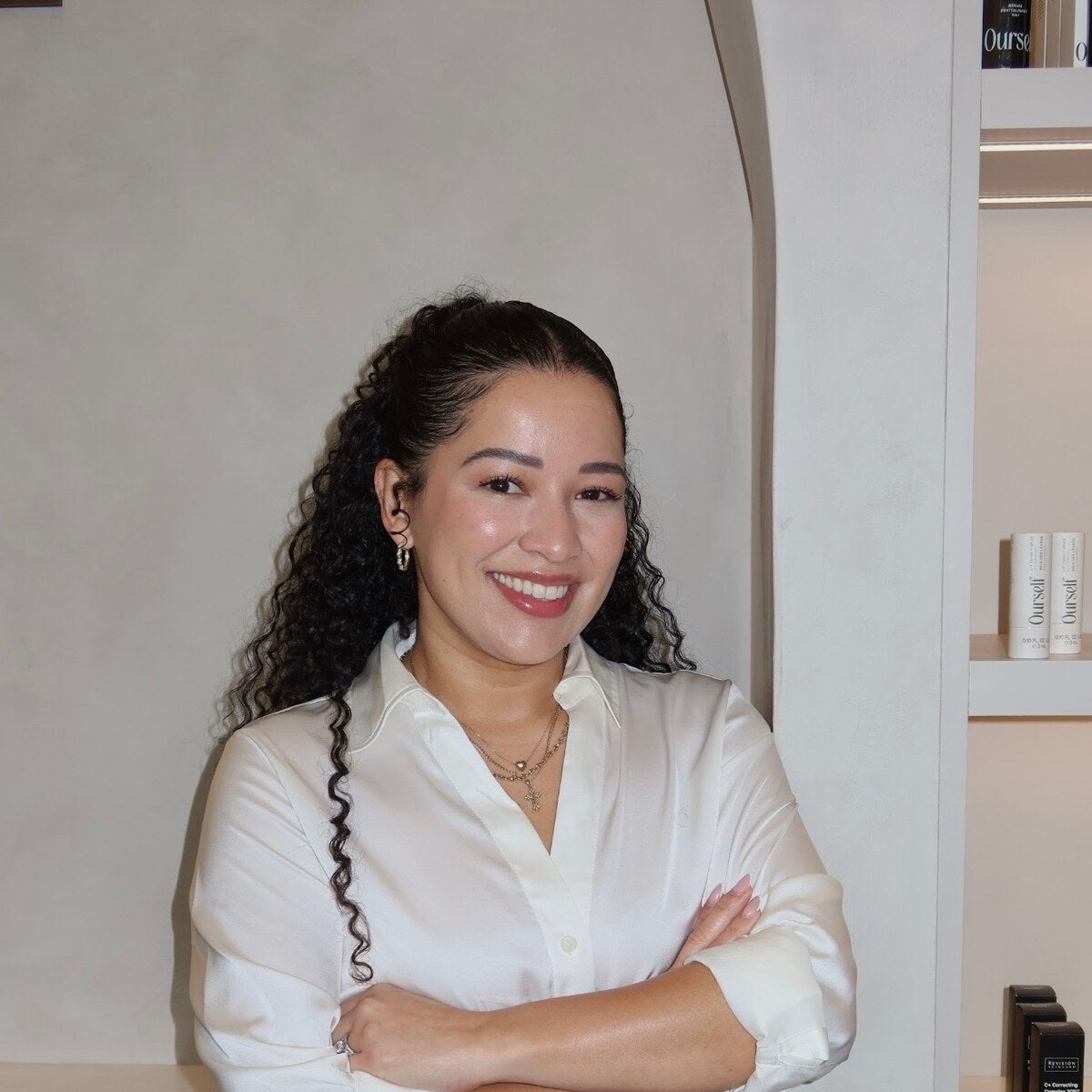
Sharon Williams
Master Injector · Neuromodulators, filler, biostimulators and facial balancingSharon is one of Alcove's master injectors. Your appointment starts with an assessment of your face and your goals, and your plan is built from that conversation rather than from a menu.

Xing Xing Li
Master Injector · Neuromodulators, filler, biostimulators and facial balancingXing Xing is Alcove's master injector. Your appointment starts with an assessment of your face and your goals, and your plan is built from that conversation rather than from a menu.
Virtual Botox/Filler Consultation FAQs
No. No injectable is prescribed or administered remotely, and no treatment is performed on a video call. The appointment produces information and a provisional plan. A practice offering to treat you without in-person assessment is not operating safely, and that is a reason to look elsewhere rather than a convenience.
Your history, your medications, your goals, and dynamic movement — video conveys frowning, brow raising, and smiling reasonably well. What cannot be assessed is anything tactile: skin recoil testing, which distinguishes laxity from volume loss, and palpation, which locates existing filler and assesses tissue thickness. Those happen to include the most consequential assessment in facial aesthetics.
Because filler restores lost volume and makes lax tissue look heavier. Getting that distinction wrong is the commonest route to a result that reads as heavy rather than younger, and it is established by gently testing how skin springs back — hands on tissue. No camera substitutes for it, which is why any remote plan is provisional.
For most people, yes. It establishes whether the treatment you have in mind actually addresses your concern, whether anything in your history prevents it, what preparation is needed, and what recovery involves — all before you take time off or travel. It also lets any required preparation start earlier, which can prevent a delay at the in-person visit.
Natural light in front of you rather than behind, the camera propped at eye level rather than handheld, no makeup, and no filters or beauty settings. A provider assessing a filtered, backlit, handheld image is assessing something that does not exist. Somewhere private is also worth arranging, since you will be discussing medical history.
You may get an indicative range, and you should treat anything more precise with caution. A definitive volume or unit count from a video call overstates what can be known, since the assessment that determines it has not happened. If a neuromodulator price is quoted per unit, make sure the product is named — units are not equivalent between brands, so an unnamed per-unit figure cannot be compared to anything.
Yes. Telehealth regulation generally requires the provider to be licensed in the state where you are physically located at the time of the call, not where the practice is. It is worth confirming when you book, particularly if you are travelling or considering treatment away from home.
As a first conversation, yes, and it is a reasonable use of the appointment — what the options might be, whether dissolving is worth considering, and what to expect. Any actual assessment of what was placed and where requires palpation, so a definitive answer waits for in-person examination.
Frequently, and sometimes substantially. That is the appointment working as intended rather than failing — video genuinely cannot establish some things, and the in-person assessment is where those get established. Anyone presenting a remote plan as final has overstated what they can know.
If asked, yes, and taken as instructed. Photographs are often more useful than the live feed because you can control the lighting and take them from consistent angles rather than relying on a compressed, moving image. Ask how they are stored and who can see them if that matters to you.
That is one of the more valuable outcomes and it costs nothing to reach remotely. Many people arrive wanting a specific treatment for a problem it does not address — filler for laxity, a neuromodulator for lines etched at rest, a facial for scarring. Finding that out on a video call rather than in a treatment room saves a trip and a poor decision.
No, and that is the whole limitation. It is excellent preparation and a poor substitute. Used as the first of two steps it saves time and prevents wasted trips. Used as a replacement for examination it is unsafe, because the assessment that most determines whether a treatment will help cannot be performed through a screen.
Pairs Well With

Book Your Consultation
A consultation is a conversation about your face, not a sales appointment. Bring your questions about Virtual Botox/Filler Consultation and your medical history, and leave with an honest answer about whether it is the right treatment for you.